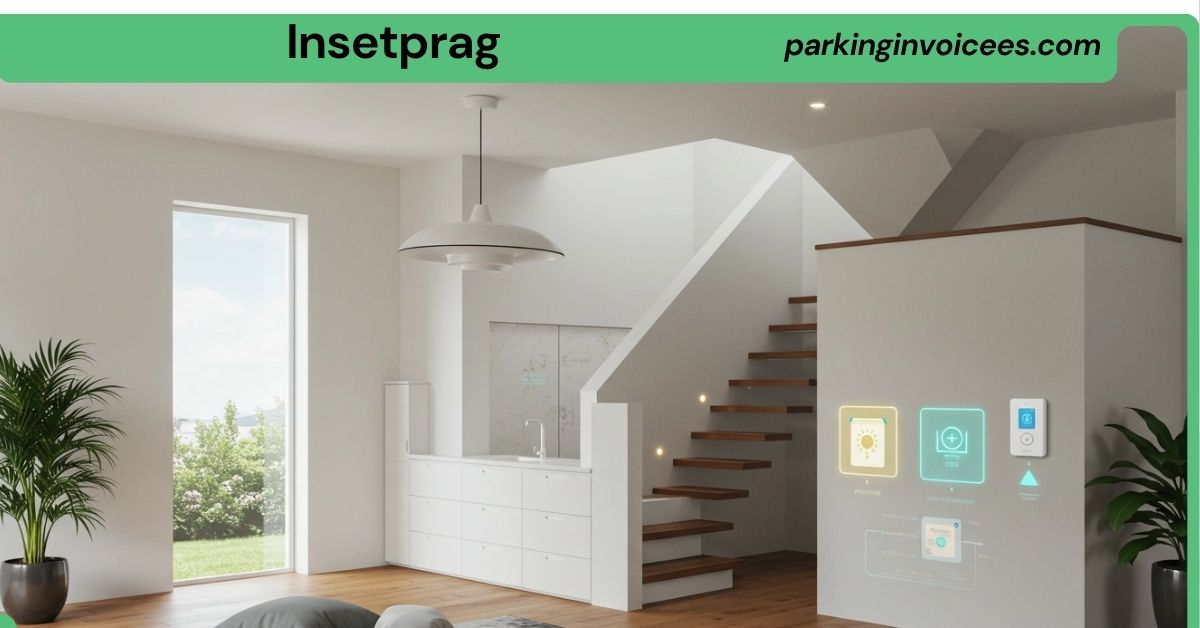
Insetprag: Understanding Integrated, Purpose-Driven Design in Modern Systems
Insetprag is a term that can be understood as a combination of two ideas: “inset,” meaning deeply integrated or built into something, and “prag,” referring to practicality, usefulness, or pragmatic thinking.
In simple terms, insetprag describes design trends and systems that are deeply integrated into their environment while remaining practical and purpose-driven. Instead of adding features simply because they look attractive or seem innovative, an insetprag approach asks a more useful question: Does this feature genuinely improve the experience, solve a problem, or support the main purpose?
The idea is useful when discussing modern design, digital products, architecture, user experience, technology, business systems, and everyday objects. It reflects a growing preference for solutions that feel natural rather than forced.
For example, a good smartphone feature may be built directly into the operating system instead of requiring another application. A modern building may integrate storage, lighting, energy management, and ventilation into its architecture. A website may place navigation where users naturally expect it rather than using a complicated design simply to appear different.
This article explains the meaning of insetprag, how the concept can be understood, where it appears, why it matters, and how people can apply its principles in practical situations.
What Does Insetprag Mean?
Insetprag can be understood as a design philosophy focused on integration and practicality.
The word itself is not a widely established technical term with one universally accepted definition. Based on the supplied meaning, insetprag refers to systems or design trends that are deeply integrated while staying useful, practical, and purpose-driven.
The concept can be divided into two parts:
- Inset: Something is built into, embedded within, or closely connected to a larger system.
- Prag: A focus on practical results, usefulness, and real-world function.
Together, insetprag suggests a design approach where functionality is not treated as an afterthought. Instead, useful features are integrated into the main structure from the beginning.
A simple definition is:
“Insetprag is an approach to design in which useful functions are deeply integrated into a system without sacrificing simplicity, usability, or purpose.”

This definition can apply to many areas. It does not have to describe one specific product, software platform, architectural style, or technology.
Why Is Insetprag Important?
Modern consumers are surrounded by products, applications, websites, buildings, and services that compete for attention.
Many designs try to stand out through visual complexity. Others add large numbers of features without considering whether those features actually help users.
Insetprag takes a different direction.
It emphasizes the relationship between integration and usefulness.
A successful integrated design should ideally feel natural. Users should not need to think about how different parts work together. The system should simply help them complete their goals.
For example, consider a kitchen.
A poorly planned kitchen might have beautiful cabinets but limited storage, inconvenient outlets, and difficult access to commonly used appliances.
An insetprag-inspired kitchen would consider how the entire space works together. Storage, lighting, appliances, movement, cleaning, and safety would be planned around actual use.
The result may look simple, but the simplicity comes from thoughtful planning.
The Core Principles of Insetprag
Several principles help explain the idea of insetprag more clearly.
1. Integration
Integration is the foundation of the concept.
A feature should work naturally with the larger system instead of existing as an isolated addition.
In digital products, this could mean combining tools into one coherent interface.
In architecture, it could mean designing lighting, storage, heating, and ventilation as part of the building rather than treating them as unrelated additions.
Integration can reduce friction because users do not have to manage disconnected components.
2. Practicality
Practicality means that design decisions should have a real purpose.
A feature should ideally solve a problem, save time, improve accessibility, reduce errors, increase comfort, or provide another meaningful benefit.
Practicality does not mean that design must be boring. Attractive design can still be practical.
The important point is that appearance should support function rather than replace it.
3. Purpose-Driven Design
Insetprag encourages designers to begin with a clear purpose.
Before adding a feature, designers can ask:
- What problem does this solve?
- Who benefits from it?
- How often will it be used?
- Does it make the system easier or harder to understand?
- Can the same goal be achieved more simply?
These questions help prevent unnecessary complexity.
Also Read: Plor4d85 Pot: What It Means, Possible Uses, Online Context, and How to Evaluate It
4. Simplicity
A well-integrated system should not require unnecessary effort.
Simplicity can involve fewer steps, clearer controls, better organization, and predictable behavior.
Importantly, simplicity does not always mean fewer features. Sometimes a system can contain many functions while still feeling simple because those functions are organized intelligently.
5. User-Centered Thinking
Insetprag is closely connected to user-centered design.
A designer should consider how real people use a product rather than assuming that users will adapt to the designer’s preferred workflow.
This means paying attention to:
- User goals
- Common behaviors
- Accessibility
- Learning time
- Mistakes
- Feedback
- Convenience
- Different levels of technical knowledge
The best system often feels obvious because it matches users’ expectations.
Insetprag and User Experience Design
User experience, commonly called UX, is one of the areas where insetprag can be particularly useful.
UX designers try to make products easier and more satisfying to use. They consider the complete journey from the user’s first interaction to the completion of a task.
An insetprag approach would encourage designers to integrate useful functions directly into that journey.
For example, imagine an online shopping website.
A customer may need to:
- Search for a product.
- Compare options.
- Check availability.
- Review shipping information.
- Purchase the product.
- Track delivery.
If these activities are scattered across unrelated pages and systems, the experience can become frustrating.
An integrated design connects these steps into one clear journey.
The user does not need to understand the technical architecture behind the website. They simply see a system that works.
That is an important characteristic of integrated design: complexity can exist behind the scenes while the visible experience remains straightforward.
Insetprag in Web Design
Web design provides another useful example.
A website can have excellent graphics but still provide a poor experience if users cannot find information easily.
An insetprag approach to web design could include:
- Clear navigation
- Useful search
- Logical page structure
- Responsive layouts
- Accessible text
- Fast loading
- Helpful error messages
- Simple forms
- Consistent buttons
- Mobile-friendly interactions
These elements are not independent decorations. They work together to support the site’s primary purpose.
For a news website, the purpose may be helping readers discover and understand information.
For an online store, the purpose may be helping customers find, evaluate, and purchase products.
For a business website, the purpose may be explaining services and generating qualified inquiries.
The design should reflect that purpose.
Insetprag and Product Design
Product designers frequently face a difficult balance between features and simplicity.
Consumers often appreciate products that do more. However, additional functionality can make a product harder to understand.
This creates a common design problem: feature overload.
Insetprag offers a useful way to think about this problem.
Instead of asking, “What else can we add?” designers can ask, “What useful capability can we integrate without creating unnecessary complexity?”
A smart home device provides a good example.
A poorly designed device might require several applications, accounts, settings, and complicated procedures.
A better design may integrate common controls into one understandable system.
The technology can remain sophisticated while the user experience remains simple.
Insetprag in Architecture
The concept can also be applied to architecture and interior design.
Modern architecture often combines structure, technology, comfort, sustainability, and aesthetics.
An insetprag perspective would encourage these elements to work together.
For example, a building could integrate:
- Natural lighting
- Energy-efficient systems
- Built-in storage
- Climate control
- Acoustic design
- Flexible spaces
- Accessibility features
- Smart building controls
Rather than adding these systems independently, designers can consider them during the earliest planning stages.
This can improve efficiency and create spaces that feel more coherent.
Built-In Storage as an Example
Built-in storage is a simple example of integrated design.
Instead of placing separate furniture throughout a room, storage can be designed into walls, stairs, beds, or other architectural elements.
This can save space while keeping commonly used items accessible.
The feature is practical because it solves a real problem.
It is integrated because it becomes part of the structure.
That combination closely reflects the idea behind insetprag.
Insetprag in Technology
Technology increasingly depends on integrated systems.
Modern devices are rarely isolated. Phones connect to computers, watches, cars, cloud services, home devices, payment systems, and communication platforms.
Integration can create major benefits.
A user may be able to start a task on one device and continue it on another. Information can synchronize automatically. Settings can remain consistent across platforms.
However, integration also creates risks.
The more systems become connected, the more important security and privacy become.
An insetprag approach should therefore include responsible integration.
Convenience should not automatically take priority over:
- Data protection
- Security
- User control
- Transparency
- Reliability
- Accessibility
A useful integrated system should be designed responsibly.
Insetprag and Artificial Intelligence
Artificial intelligence is another area where integrated design is becoming important.
AI can be added to many products, but simply adding an AI feature does not necessarily improve the product.
A purpose-driven approach asks whether AI solves a real problem.
For example, AI may help with:
- Summarizing large amounts of information
- Organizing documents
- Detecting patterns
- Supporting accessibility
- Automating repetitive tasks
- Providing recommendations
- Helping users navigate complex systems
The key question is not whether AI is present.
The better question is whether the technology is integrated in a way that makes the product more useful.
This distinction is important because technology can become distracting when it is introduced only for marketing purposes.
Insetprag and Minimalism
Insetprag has some similarities with minimalism, but the two ideas are not identical.
Minimalism often focuses on reducing unnecessary visual or physical elements.
Insetprag focuses more strongly on integration and practical purpose.
A minimalist product may have very few visible controls.
An insetprag product could have many functions but organize them so effectively that users can interact with them without unnecessary difficulty.
Therefore, insetprag does not require extreme simplicity.
It requires meaningful simplicity.
Insetprag vs. Trend-Driven Design
Design trends can be useful because they introduce new ideas.
However, following trends without considering purpose can produce weak results.
For example, a website may adopt a popular visual effect even though the effect slows down navigation.
A building may use an unusual architectural feature even though it increases maintenance costs.
A mobile application may add a fashionable interaction pattern that users find confusing.
Insetprag encourages designers to evaluate trends carefully.
The question becomes:
“Does this trend improve the system?”
If the answer is no, the trend may not belong in the design.
This is one of the strongest practical insights associated with the concept.
How Insetprag Can Improve Everyday Products
The idea does not need to remain limited to professional design.
People can apply the same thinking to everyday purchases and projects.
Before buying or creating something, consider:
- What is its main purpose?
- Which features will actually be used?
- Does it work well with existing systems?
- Is it easy to maintain?
- Can users understand it quickly?
- Does it create unnecessary complexity?
- Will it remain useful over time?
These questions can help consumers avoid products that look impressive but do not perform well in real-world situations.
The Role of Context in Insetprag
One important point is that practical design depends on context.
A feature that is useful in one environment may be unnecessary in another.
For example, a professional video-editing application can justifiably have many controls because its users need advanced capabilities.
A simple photo-viewing application may not need the same level of complexity.
The right amount of functionality depends on:
- The user’s goals
- The environment
- Frequency of use
- Technical knowledge
- Available resources
- Safety requirements
- Accessibility needs
Therefore, insetprag should not be interpreted as one fixed visual style.
It is better understood as a decision-making principle.
Benefits of an Insetprag Approach
A thoughtfully integrated and practical system can offer several advantages.
Better Usability
When features are logically connected, users can understand the system more easily.
Lower Friction
Integrated workflows can reduce the number of unnecessary steps.
Better Efficiency
People can complete tasks faster when related functions work together.
Greater Consistency
A coherent system can provide consistent controls, terminology, and behavior.
Improved Accessibility
Purposeful design can make systems easier to use for people with different abilities and needs.
Reduced Clutter
Integration can reduce the need for duplicate tools, screens, or physical components.
Longer-Term Value
Products designed around real needs may remain useful longer than products designed primarily around temporary trends.
Potential Problems With Insetprag
Integration is not automatically beneficial.
Too much integration can create problems.
Over-Integration
If every feature is connected to every other feature, the system can become difficult to understand.
Privacy Concerns
Connected systems may collect or share more information than users expect.
Security Risks
A weakness in one connected component may affect other components.
Vendor Dependence
Users may become dependent on one company or platform when multiple functions are integrated into one ecosystem.
Difficult Maintenance
Highly integrated systems can sometimes be harder to repair or replace.
Loss of Flexibility
A tightly connected system may make customization more difficult.
For these reasons, good integration requires boundaries.
Privacy and Security Considerations
When discussing integrated technology, privacy deserves special attention.
A connected system may involve personal information, usage patterns, location data, account information, or other sensitive details.
Users should understand what information a product collects and why.
Useful questions include:
- What data does the system collect?
- Where is the information stored?
- Who can access it?
- Can data be deleted?
- Can connected services be disconnected?
- What security controls are available?
- Does the company explain its data practices clearly?
Good design should not hide important privacy controls simply because integration is convenient.
A responsible insetprag approach treats privacy as part of the product rather than a separate issue added later.
Accessibility and Insetprag
Accessibility should also be part of practical design.
A system may be beautifully integrated but still fail if some users cannot interact with it.
Accessible design can include:
- Clear text
- Adequate contrast
- Keyboard support
- Screen-reader compatibility
- Captions
- Understandable instructions
- Predictable navigation
- Flexible controls
Accessibility is not only about compliance. It can improve usability for everyone.
For example, captions help people with hearing difficulties, but they are also useful in noisy environments.
Clear navigation helps people with disabilities, but it also helps users who are unfamiliar with a website.
This demonstrates an important point: practical design often produces benefits beyond its original target audience.
Insetprag and Sustainability
Integrated design can also support sustainability when it is planned carefully.
A product that combines multiple functions may reduce the need for additional materials or devices.
In architecture, integrated energy systems can improve building efficiency.
In technology, software optimization can reduce unnecessary processing and resource use.
However, integration should not automatically be described as sustainable.
A highly integrated product may become difficult to repair or upgrade.
If one component fails, the entire product may become unusable.
Also Read: Shani Levni: Who Is She, What Is Known, and Why the Name Is Trending Online?
Therefore, sustainable insetprag design should consider the complete product life cycle.
This includes:
- Materials
- Manufacturing
- Energy use
- Repair
- Upgrades
- Recycling
- End-of-life disposal
Insetprag and Business Strategy
Businesses can use the same concept when developing products and services.
Instead of creating separate solutions for every small customer problem, a company can identify where useful functions naturally belong within the larger customer journey.
For example, a financial service could integrate budgeting information, payment tracking, alerts, and account management into one understandable experience.
The goal should not be to create the largest possible platform.
The goal should be to make important customer tasks easier.
This distinction can help companies avoid unnecessary product expansion.
How Designers Can Apply Insetprag Principles
A practical process can make the concept easier to use.
Step 1: Define the Main Purpose
Start by identifying the most important user goal.
Do not begin with visual features.
Step 2: Understand the User
Study how people currently complete the task.
Look for repeated problems, delays, confusion, and unnecessary work.
Step 3: Identify Necessary Functions
Separate essential functions from optional features.
Step 4: Plan Integration
Determine which functions naturally belong together.
Step 5: Reduce Friction
Remove unnecessary steps and duplicate actions.
Step 6: Test With Real Users
A design may appear logical to its creators but confuse actual users.
Testing reveals these problems.
Step 7: Measure Results
Useful measurements may include:
- Task completion time
- Error rates
- Customer satisfaction
- Accessibility
- Support requests
- Retention
- System reliability
Step 8: Improve Continuously
Good design is rarely finished after one release.
User behavior and technology change over time.
How to Recognize Insetprag Design
There is no official visual checklist that proves something is insetprag.
However, several characteristics can provide clues.
A practical integrated design often:
- Solves a clear problem
- Fits naturally into its environment
- Avoids unnecessary decoration
- Makes important tasks easier
- Connects related functions
- Uses technology for a clear reason
- Considers accessibility
- Protects users
- Avoids unnecessary complexity
- Can be maintained over time
The most important characteristic is not appearance.
It is usefulness.
Is Insetprag a Design Trend or a Design Philosophy?
This depends on how the term is used.
If people use insetprag to describe a particular group of current design patterns, it can be discussed as a design trend.
However, the supplied meaning suggests a broader concept.
It may be more useful to treat insetprag as a design philosophy or framework for thinking about integrated and practical systems.
This distinction matters because trends can change quickly.
A philosophy can remain useful even when specific visual styles become outdated.
For example, interface colors, typography, animations, and device shapes may change.
The need for clear, useful, well-integrated design remains.
Why Insetprag May Matter in the Future
Technology is becoming more connected.
Smart devices communicate with each other. Software services share information. Buildings increasingly use automated controls. Artificial intelligence is being integrated into everyday tools.
As this happens, integration will become more common.
The challenge will be making that integration useful without making systems confusing, intrusive, or difficult to control.
This is where the insetprag idea becomes especially relevant.
Future design may increasingly focus on invisible complexity.
Users may not want to manage every technical detail.
They want systems that work reliably and explain important decisions when necessary.
This creates a balance:
- Complexity behind the system
- Simplicity in the user experience
- Transparency when decisions matter
- Control when users need it
That balance can become a major design goal.
Common Misunderstandings About Insetprag
Insetprag Does Not Mean “Add Everything”
Integration does not mean combining every available feature.
Unnecessary features can damage usability.
Insetprag Does Not Mean “Make Everything Minimal”
A system can contain advanced functionality and still be practical.
Insetprag Does Not Mean “Use the Latest Technology”
New technology is valuable only when it provides a meaningful benefit.
Insetprag Is Not Limited to Digital Products
The principles can apply to physical products, buildings, services, workflows, and organizational systems.
Insetprag Is Not a Guarantee of Good Design
Integration must still be tested.
A poorly planned integrated system can be harder to use than several simple independent systems.
Also Read: Mabinogi Lazy Patch: A Complete Guide to Faster, Easier, and Safer Game Updates
Frequently Asked Questions About Insetprag
1. Is insetprag an official design standard?
No single widely recognized international design standard defines insetprag as a formal standard. The term can instead be understood as a conceptual description of integrated and pragmatic design. Its exact meaning may depend on the context in which it is used.
2. Can insetprag be used in graphic design?
Yes. Graphic designers can apply the principle by making visual elements support communication and function. For example, typography, spacing, icons, layout, and color can work together to help users understand information instead of competing for attention.
3. Does insetprag require expensive technology?
No. Practical integrated design can be created with simple materials and basic technology. The central idea is not technological sophistication. It is using the right solution for the actual problem.
4. Can small businesses use insetprag principles?
Yes. Small businesses can use the concept when designing websites, customer service processes, products, workspaces, or internal workflows. In many cases, identifying unnecessary steps and connecting related tasks can produce meaningful improvements without a large investment.
5. How can consumers evaluate an insetprag-style product?
Consumers can ask whether the product solves a real problem, works well with its intended environment, is easy to use, protects personal information, can be maintained or repaired, and provides meaningful benefits beyond its appearance. These questions are often more useful than simply judging how modern a product looks.
Conclusion
Insetprag can be understood as a useful concept for describing design that is deeply integrated while remaining practical and purpose-driven.
Its central message is simple: good design should work for people.
Whether the subject is a website, smartphone, building, household product, business process, or AI-powered system, integration should have a clear purpose. Features should solve problems rather than exist only because they are possible. Technology should support users rather than force users to adapt to technology.
The strongest application of insetprag combines several ideas: integration, practicality, simplicity, user-centered thinking, accessibility, security, privacy, sustainability, and long-term usefulness.
The concept is also a reminder that good design is not necessarily the most complicated or visually dramatic design. Sometimes the best solution is the one that quietly removes obstacles and makes an important task feel natural.
As technology and design continue to become more connected, this way of thinking may become increasingly valuable. The future will not simply be about adding more features. It will be about integrating the right features in the right places while keeping systems understandable, useful, responsible, and human-centered.
For readers interested in the meaning of insetprag, the most practical takeaway is therefore straightforward: focus on purpose first, integration second, and complexity only when it provides genuine value.