Navigator Pear: Complete Growing, Care, Hardiness, Size, Flowers, Fruit, and Landscape Guide
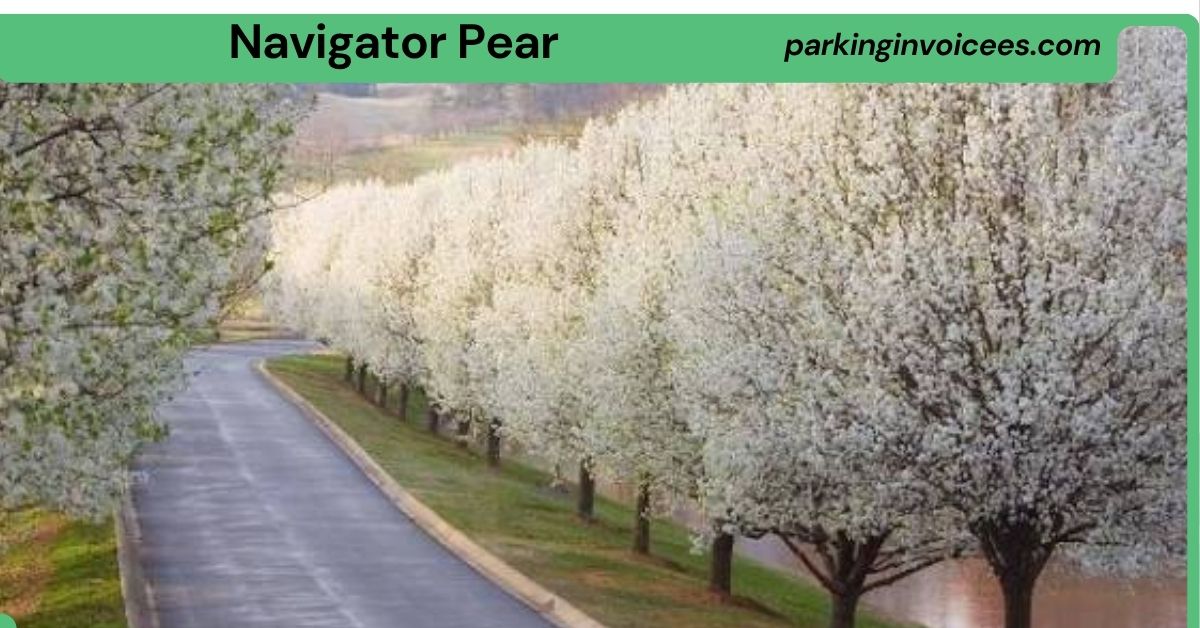
The Navigator pear is an interesting tree for homeowners who want the beauty of a flowering pear without necessarily growing a tree for a large harvest of edible fruit. It is especially valued for its upright or pyramidal shape, white spring flowers, glossy green foliage, and attractive fall color.
One important point can prevent a lot of confusion: the name “Navigator pear” is used in nursery and gardening information primarily for an ornamental pear, commonly identified as Pyrus × ‘DurPSN303’. It should not automatically be confused with a traditional European dessert pear grown for eating. Nursery descriptions generally emphasize the tree’s landscape value, hardy nature, narrow form, and limited fruit production.
For American gardeners, choosing the right planting location is more important than simply buying the tree and putting it in the ground. The mature size, sunlight, soil drainage, winter conditions, available growing space, and local climate can all affect how well a Navigator pear performs.
This guide explains what a Navigator pear is, how large it can become, where it grows best, how to plant and care for it, whether it produces edible pears, how much pruning it needs, and what homeowners should consider before adding one to a landscape.
What Is a Navigator Pear?
Navigator pear is generally sold as an ornamental pear tree rather than a commercial fruiting pear.
The commonly listed botanical name is Pyrus × ‘DurPSN303’. Nursery descriptions characterize it as a dense, upright, pyramidal tree with white flowers in spring and glossy green foliage. Its leaves can develop yellow, orange, or warmer fall tones as the growing season ends.
The tree is attractive because it provides several seasons of visual interest.
In spring, white flowers appear across the branches. During summer, the tree develops a full canopy of green leaves. In autumn, the foliage changes color before the tree becomes dormant and loses its leaves for winter.
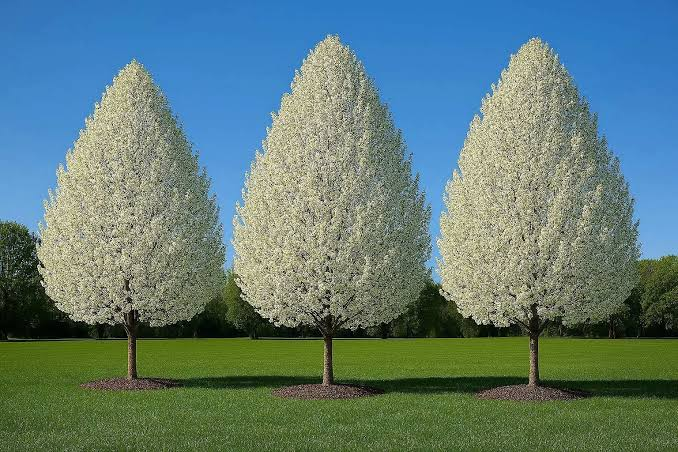
Navigator pear is therefore better understood as a landscape tree than as an orchard tree.
That distinction is important for anyone searching for a “Navigator pear tree” because the word pear can create the expectation of large, sweet fruit. That is not the main purpose of this cultivar.
Some nursery and municipal descriptions report little, minimal, or seldom fruiting.
Navigator Pear Quick Facts
Here is a simple overview of the tree:
- Common name: Navigator pear
- Common landscape description: Navigator ornamental pear
- Botanical name commonly listed: Pyrus × ‘DurPSN303’
- Type: Deciduous ornamental tree
- Growth habit: Upright, dense, pyramidal to oval
- Flowers: White
- Flowering period: Early to mid-spring in many climates
- Summer foliage: Glossy green
- Fall foliage: Often yellow-orange, with some descriptions reporting stronger red tones
- Fruit: Usually limited or minimal
- Main purpose: Landscape and ornamental use
- Light requirement: Full sun is generally preferred
- Soil: Well-drained soil is important
- Mature size: Common listings range around 23 to 26 feet tall and 10 to 13 feet wide, although other nursery catalogs give larger dimensions
- Cold tolerance: Often marketed as a hardy tree, but exact hardiness claims vary by source and local growing conditions
For example, one nursery lists a mature size of approximately 23 to 26 feet tall and 10 to 13 feet wide, while another source lists the tree at approximately 30 feet tall by 18 feet wide.
This variation is a good reason to confirm the expected mature size with your local nursery before planting.
Is Navigator Pear an Edible Pear Tree?
No, not in the way most people think of an edible pear tree.
Navigator pear is primarily an ornamental tree. It is selected for its shape, flowers, foliage, and landscape performance rather than for producing large, high-quality eating pears.
The tree may produce some small fruit under suitable conditions, but nursery descriptions frequently describe fruiting as minimal or uncommon. The City of Saskatoon, for example, describes Navigator pear as having little to no fruit and a pyramidal form, while another nursery describes it as producing minimal fruit.
This makes Navigator pear a different choice from popular fruiting pears such as Bartlett, Anjou, Bosc, Comice, or Asian pear cultivars.
If your main goal is to harvest pears for eating, baking, preserving, or making pear sauce, you should select a cultivar specifically bred and sold for fruit production.
Also Read: Wenrath: A Complete Guide to the Small German Locality
If your goal is a flowering landscape tree with an upright shape and attractive foliage, Navigator pear may be much more appropriate.
Can You Eat Navigator Pear Fruit?
Navigator pear is not normally purchased as an edible fruit tree.
Even when the tree produces fruit, the small fruit should not be treated as equivalent to the large, flavorful pears sold for fresh eating. The cultivar’s primary value is ornamental.
Gardeners sometimes assume that every tree carrying the word “pear” will produce useful kitchen fruit. That assumption can lead to disappointment.
When shopping, look carefully at the botanical name and nursery description. If the listing identifies the plant as Pyrus × ‘DurPSN303’ and describes it as an ornamental pear, you are looking at a landscape tree rather than a conventional dessert pear.
Navigator Pear vs. Fruiting Pear Trees
The easiest way to understand Navigator pear is to compare its purpose with a fruiting pear.
A fruiting pear is selected primarily for characteristics such as fruit flavor, texture, size, harvest time, storage life, and disease resistance.
Navigator pear is selected primarily for:
- Upright growth
- Dense branching
- Spring flowers
- Glossy foliage
- Fall color
- Landscape structure
- Limited fruit production
- Use in relatively narrow planting areas
This difference also changes how you should care for the tree.
With an orchard pear, you may focus heavily on pollination, fruit thinning, harvest timing, pruning for fruit production, and pest management.
With Navigator pear, the priorities are different. You are mainly trying to establish a strong, healthy ornamental tree with an attractive shape.
How Big Does a Navigator Pear Get?
One of the most important questions to answer before planting Navigator pear is its mature size.
A frequently listed mature size is approximately 23 to 26 feet tall with a spread of about 10 to 13 feet.
However, other nursery catalogs give larger measurements. One catalog lists Navigator ornamental pear at about 30 feet tall and 18 feet wide.
Another nursery listing gives a height of approximately 10 meters and a spread of 6 meters.
Why are these numbers different?
Plant size can vary because of climate, soil, irrigation, age, rootstock, pruning, growing conditions, and the way a nursery defines mature size.
For that reason, homeowners should not design a planting location around the smallest published measurement.
A safer approach is to allow enough room for the larger potential canopy.
Is Navigator Pear Good for a Small Yard?
Navigator pear can be useful in a smaller yard because its growth habit is relatively upright.
A narrow tree can provide height without occupying as much horizontal space as a broad shade tree. This can make it attractive for:
- Front-yard planting
- Side yards
- Urban landscapes
- Formal gardens
- Long driveways
- Open areas near property boundaries
- Landscape designs that need vertical structure
However, “narrow” does not mean “tiny.”
A tree that can eventually reach more than 20 feet tall still needs adequate room for roots, branches, sunlight, and maintenance.
Avoid squeezing it into a tiny space between a building and a driveway simply because the young tree looks narrow at the garden center.
Where Should You Plant a Navigator Pear?
The best planting site usually provides full sun, adequate air movement, and soil that drains well.
A location with several hours of direct sunlight helps the tree develop a strong canopy and supports flowering and foliage quality.
Avoid areas where water remains around the roots after heavy rain.
Poor drainage can create long-term root problems. Even a tree described as hardy can struggle when planted in constantly saturated soil.
Before planting, observe the location after a heavy rainfall. If water remains in the planting hole or nearby soil for an extended period, drainage should be considered before planting.
Navigator Pear Sun Requirements
Navigator pear generally performs best in full sun.
A full-sun location typically means roughly six or more hours of direct sunlight per day during the growing season.
More sunlight can help support:
- Better flowering
- Stronger canopy development
- Healthy foliage
- More balanced growth
- Better fall color potential
A tree planted in deep shade may survive, but it may not have the same density, flowering, or overall appearance as one planted in a bright location.
For the best landscape effect, choose a location where the tree receives good sunlight without being exposed to unnecessary physical damage.
What Type of Soil Does Navigator Pear Need?
Navigator pear prefers well-drained soil.
One nursery specifically describes it as preferring moist, well-drained soil with a higher pH.
The key word is “well-drained.”
Moist soil and waterlogged soil are not the same thing.
Healthy roots need access to both moisture and oxygen. Soil that remains saturated for long periods can reduce oxygen around the roots and make trees more vulnerable to root problems.
Before planting, improve compacted soil where appropriate. Do not automatically replace all native soil with rich potting soil. In many landscapes, the better strategy is to loosen the surrounding soil and correct serious drainage or compaction problems.
A soil test can also help determine whether the site has unsuitable pH or nutrient conditions.
How to Plant a Navigator Pear Tree
Planting correctly gives a Navigator pear a much better start.
Choose the Right Location
Select a sunny location with enough room for the tree’s eventual height and width.
Consider nearby:
- Houses
- Garages
- Sidewalks
- Driveways
- Fences
- Utility lines
- Other mature trees
- Underground infrastructure
Do not judge the space by the size of the nursery container.
Dig a Wide Planting Hole
The planting hole should generally be wider than the root ball but not unnecessarily deep.
The goal is to give developing roots access to loosened surrounding soil.
Check the Root Flare
The point where the trunk begins to widen into major roots should not be buried deeply.
Planting too deeply can create long-term health problems.
Backfill With Appropriate Soil
Use the soil removed from the planting area unless a soil professional or local extension recommendation indicates that major amendments are needed.
Avoid creating a small pocket of dramatically different soil around the roots.
Water Thoroughly
After planting, water the root zone thoroughly.
The purpose is to remove large air pockets and provide moisture to the newly disturbed roots.
Add Mulch Carefully
A layer of organic mulch can help conserve soil moisture and moderate soil temperature.
However, keep mulch away from direct contact with the trunk.
Do not create a tall “mulch volcano” around the base of the tree.
How Often Should You Water Navigator Pear?
Water needs depend on climate, soil, rainfall, tree age, and season.
A newly planted Navigator pear requires more attention than an established tree.
During the first growing season, check the soil regularly rather than relying only on a fixed watering schedule.
The goal is to provide deep, consistent moisture without keeping the soil constantly saturated.
During hot and dry weather, newly planted trees may need more frequent watering.
As the tree becomes established, its root system expands and its dependence on frequent irrigation generally decreases.
Even established trees can benefit from supplemental watering during prolonged drought.
Navigator Pear Fertilizer Needs
Do not assume that every tree needs large amounts of fertilizer.
A healthy tree growing in suitable soil may not require heavy feeding.
Excessive nitrogen can sometimes encourage rapid leafy growth that is not necessarily desirable for a landscape tree.
If growth appears weak, leaves show nutrient-related symptoms, or soil fertility is questionable, a soil test is a better starting point than guessing.
A local extension office or qualified horticultural professional can help interpret soil test results.
How Fast Does Navigator Pear Grow?
Navigator pear is commonly described as a relatively fast-growing ornamental tree, although actual growth depends on environmental conditions.
Growth can be affected by:
- Sunlight
- Water availability
- Soil quality
- Root development
- Temperature
- Pruning
- Tree age
- Competition from nearby plants
Young trees may devote significant energy to root establishment before producing strong top growth.
A newly planted tree should not be judged only by its first year’s growth.
Consistent care is more important than forcing rapid growth with excessive fertilizer or irrigation.
Navigator Pear Flowers
One of the strongest ornamental features of Navigator pear is its spring flowering.
The tree produces clusters of white flowers, often appearing in early to mid-spring depending on the local climate.
The flowers provide a bright contrast against the bare branches of late winter and early spring.
For homeowners interested in seasonal landscape design, spring flowers are one of the main reasons to consider Navigator pear.
The exact flowering date can change from one region to another because spring temperatures differ considerably across the United States.
A tree may bloom earlier in a warm region and later in a colder region.
Navigator Pear Leaves and Fall Color
During the growing season, Navigator pear develops glossy green foliage.
The leaves provide a dense summer canopy and help give the tree its polished landscape appearance.
In autumn, the foliage can turn yellow-orange. Some descriptions also report stronger red coloration depending on growing conditions.
Fall color is affected by temperature, sunlight, moisture, and local weather.
This means the same tree may look somewhat different from year to year.
A warm autumn may produce a different display from a season with cool nights and bright sunny days.
Does Navigator Pear Make a Mess?
Compared with many fruiting pear trees, Navigator pear is generally valued for producing little fruit.
Municipal and nursery descriptions describe it as having little, minimal, or seldom fruiting.
This can be an advantage for homeowners who want a flowering tree without dealing with a large amount of fallen fruit.
Still, no ornamental tree should be assumed to produce absolutely nothing.
Individual trees can behave differently because fruit production may be influenced by age, pollination, environmental conditions, and nearby pear trees.
If minimizing fruit is particularly important, ask a local nursery about the behavior of Navigator pear in your area.
Does Navigator Pear Need a Pollinator?
Because Navigator pear is primarily grown as an ornamental tree and usually produces little fruit, pollination is not normally the central reason for planting it.
If fruit production does occur, nearby compatible pear trees could potentially influence pollination and fruit set.
However, homeowners should not purchase Navigator pear with the expectation of using it as a dependable fruit producer.
If your objective is a reliable pear harvest, select a fruiting pear cultivar and research its specific pollination requirements.
Navigator Pear Hardiness Zones
Hardiness zone information deserves special attention because available descriptions are not completely consistent.
The information supplied for this topic indicates that Navigator pear grows best in USDA Hardiness Zones 5 through 8 and benefits from a real winter period cold enough to accumulate chilling hours.
At the same time, several nursery listings market Navigator pear as extremely hardy, with one nursery listing it for Zone 3.
This difference is important.
USDA Hardiness Zones describe average annual extreme minimum winter temperatures, but they do not tell the whole story about how a plant will perform.
A tree’s success also depends on:
- Summer heat
- Winter wind
- Soil moisture
- Spring frost
- Length of the growing season
- Soil type
- Local microclimate
- Exposure
- Snow cover
- Tree establishment
For this reason, gardeners should verify the hardiness rating supplied by the nursery selling the specific plant they intend to purchase.
If you are in Zones 5 through 8, the climate information provided for this topic makes Navigator pear a particularly relevant option to investigate. In colder regions, local nursery experience becomes especially valuable.
Also Read: Glossywise Com: A Complete Guide to the Multi-Niche Content Platform
Does Navigator Pear Need Winter Chilling?
Like other deciduous pear trees, Navigator pear follows a seasonal growth cycle.
Cold winter conditions help deciduous trees enter and complete dormancy. Chilling is part of the biological process that prepares many temperate fruit and ornamental plants for spring growth.
However, gardeners should avoid treating a single “chilling hours” number as a universal guarantee for Navigator pear unless that number is specifically documented for the cultivar.
Climate matters because winter temperatures can vary greatly from one region to another.
A gardener in Minnesota, for example, experiences a very different winter from someone in coastal California or southern Texas.
The supplied information indicates that Navigator pear performs best where genuine winter cold provides adequate chilling. That makes climate matching an important part of the planting decision.
Can Navigator Pear Grow in the Southern United States?
It depends on the specific location.
A tree that performs well in colder regions may not automatically perform equally well in areas with mild winters and long, hot summers.
Southern gardeners should pay attention not only to winter temperatures but also to summer heat, humidity, disease pressure, soil drainage, and local nursery recommendations.
Before purchasing, check the plant’s current hardiness information and ask whether the cultivar has been successfully grown in your specific region.
A local extension service can also provide useful information about ornamental pear performance.
Pruning Navigator Pear
Navigator pear benefits from thoughtful pruning, especially when young.
The goal is not to remove branches simply because pruning is possible.
Instead, pruning should help develop:
- A strong central structure
- Good branch spacing
- Adequate clearance
- Balanced growth
- A visually attractive shape
- Removal of damaged or dead wood
Young trees are often easier to shape than mature trees.
If two branches compete strongly for the same position, correcting the structure while the tree is young may prevent bigger problems later.
When Should You Prune Navigator Pear?
For most deciduous trees, dormant-season pruning is often a practical time for structural work because the tree has lost its leaves and the branch framework is easier to see.
However, local disease conditions can influence the best pruning timing.
Avoid unnecessary heavy pruning.
Removing too much live growth at one time can stress a tree and encourage unwanted vigorous shoots.
If you are unsure how to make a major structural cut, consult an arborist rather than experimenting on an established specimen.
Common Navigator Pear Problems
Navigator pear can experience many of the general challenges associated with ornamental pear trees.
Possible problems include:
- Poor drainage
- Drought stress
- Mechanical injury
- Insect pests
- Fungal diseases
- Bacterial diseases
- Improper pruning
- Soil compaction
- Root damage
- Winter injury
Not every tree will experience these problems.
Good site selection is one of the best forms of prevention.
A tree planted in suitable soil with enough sunlight and adequate water is generally in a better position to tolerate environmental stress.
Fire Blight and Ornamental Pears
Fire blight is an important disease associated with many pear trees.
It is a bacterial disease that can cause blossoms, shoots, and branches to darken and die.
Symptoms may appear suddenly, especially during warm and wet spring weather.
Because susceptibility can vary among cultivars and local conditions, gardeners should not assume that an ornamental pear is automatically immune.
If you notice rapidly blackening shoots or branches that look scorched, seek advice from a local extension service, certified arborist, or plant health professional.
Avoid diagnosing a serious tree disease solely from a photograph or a single symptom.
Is Navigator Pear Invasive?
This question requires careful wording.
Navigator pear is an ornamental cultivar, but it belongs to a broader group of ornamental pears that can raise ecological concerns in certain parts of the United States.
Callery pear and some of its cultivars have become invasive in portions of the country. Invasive plants can spread beyond gardens and compete with native vegetation.
That does not mean every ornamental pear cultivar has exactly the same invasive behavior.
However, the issue is important enough that gardeners should check current state, county, and local recommendations before planting.
Plant regulations can change.
A responsible homeowner should verify whether a particular ornamental pear is recommended, discouraged, or restricted in the local area.
Navigator Pear and Biodiversity
Landscape choices can affect local biodiversity.
A tree may look attractive in a residential yard while still raising questions about its effects outside the property.
When selecting an ornamental tree, consider whether native alternatives could provide similar benefits while supporting local insects, birds, and other wildlife.
This does not mean Navigator pear is automatically a poor landscape choice.
It means homeowners should consider the broader ecological context rather than evaluating a tree only by appearance.
Is Navigator Pear Good for Pollinators?
Its spring flowers can provide a food resource for visiting insects, but gardeners should not automatically classify every flowering ornamental tree as a major pollinator plant.
Native flowering trees and shrubs can sometimes provide stronger ecological value because local insects evolved alongside them.
If supporting pollinators is a major goal, consider combining ornamental trees with native flowering plants that bloom at different times.
A diverse landscape can provide more continuous resources than relying on a single tree species.
Navigator Pear for Urban Landscapes
Navigator pear’s upright shape can make it useful in some urban landscapes.
The tree can provide vertical interest where a broad spreading tree would take up too much space.
Potential locations include:
- Residential front yards
- Open boulevard areas
- Large planting strips
- Institutional landscapes
- Commercial properties
- Parks
- Formal gardens
However, urban conditions can be stressful.
Compacted soil, reflected heat, limited root space, road salt, drought, and mechanical damage can all affect tree health.
The fact that a tree is hardy does not mean it can tolerate every urban condition.
Navigator Pear Near Sidewalks and Driveways
An upright tree can be attractive beside a driveway or walkway, but location still matters.
Consider:
- Mature trunk size
- Canopy width
- Branch clearance
- Root development
- Vehicle access
- Snow removal
- Visibility
- Utility lines
Do not plant so close to a driveway that future trunk growth will interfere with vehicles.
Likewise, maintain adequate clearance from pedestrian paths.
A professional landscape designer or arborist can help with difficult sites.
Navigator Pear vs. Bradford Pear
Gardeners sometimes compare Navigator pear with Bradford pear because both are ornamental pears.
The comparison is understandable, but the trees should not be treated as identical.
Bradford pear is a cultivar of Callery pear that became widely planted because of its fast growth and attractive spring flowers. It later became controversial because of weak branch structure and invasive behavior in many areas.
Navigator pear is commonly listed under Pyrus × ‘DurPSN303’ and is described as having a dense pyramidal form.
Still, homeowners should not assume that the word “ornamental pear” automatically means a tree is environmentally safe or structurally perfect.
Always research the exact cultivar.
Navigator Pear vs. Fruit Pear
If you are deciding between Navigator pear and a fruiting pear, start with your main goal.
Choose Navigator pear if you primarily want:
- Flowers
- Landscape structure
- Glossy foliage
- Fall color
- Limited fruit
- An upright ornamental tree
Consider a fruiting pear if you primarily want:
- Edible fruit
- Harvests for cooking
- Fresh eating
- Canning
- Long-term orchard production
Choosing based on purpose is one of the simplest ways to avoid disappointment.
How Much Maintenance Does Navigator Pear Need?
Navigator pear can be relatively manageable once established.
Routine care generally includes:
- Watering during establishment
- Monitoring soil moisture during drought
- Light structural pruning
- Removing dead or damaged branches
- Checking for disease
- Monitoring pests
- Maintaining mulch correctly
- Protecting the trunk from mechanical injury
The tree should not be described as completely maintenance-free.
All landscape trees require some monitoring.
The good news is that regular observation can catch many problems before they become serious.
How to Mulch Around Navigator Pear
Mulch can help protect the root zone.
Apply a moderate layer of organic mulch over the root area while leaving space around the trunk.
A proper mulch ring can:
- Reduce competition from grass
- Hold soil moisture
- Moderate soil temperature
- Reduce mowing damage
- Add organic matter as mulch breaks down
Do not pile mulch directly against the trunk.
The trunk needs air circulation and should remain visibly separated from the mulch layer.
Navigator Pear in Winter
Because Navigator pear is deciduous, it naturally loses its leaves during the colder part of the year.
This is normal.
Winter care is mostly about protecting the tree from avoidable stress.
Young trees may need extra attention in regions with severe winter conditions.
Avoid unnecessary late-season fertilization that encourages tender new growth when the tree should be preparing for dormancy.
In areas with heavy snowfall, avoid piling excessive snow or ice against young branches.
Buying a Navigator Pear Tree
When purchasing Navigator pear, check the plant label carefully.
Look for:
- Botanical name
- Cultivar name
- Mature height
- Mature width
- Hardiness information
- Container size
- Nursery growing region
- Disease information
- Shipping restrictions
- Local planting recommendations
The botanical name is particularly useful because common names can sometimes be used inconsistently.
If you specifically want the ornamental Navigator pear, ask whether the plant is Pyrus × ‘DurPSN303’.
Also Read: Nadeshda Ponce: Career, Art, Entrepreneurship, Wellness, and What Is Publicly Known
How Much Does a Navigator Pear Cost?
Prices vary widely.
Tree cost depends on:
- Tree size
- Container size
- Nursery
- Region
- Shipping
- Availability
- Planting service
A small nursery tree may be relatively affordable, while a large established landscape specimen can cost substantially more.
When comparing prices, do not compare only the sticker price.
Consider whether the nursery is providing a healthy, properly grown tree with an appropriate root system.
A slightly more expensive healthy tree may be a better long-term value than a cheap tree with poor structure or damaged roots.
Frequently Asked Questions About Navigator Pear
1. Is Navigator pear the same as a regular pear tree?
No. Navigator pear is generally sold as an ornamental pear, commonly identified as Pyrus × ‘DurPSN303’. It is grown primarily for its upright shape, white flowers, foliage, and fall color rather than for large edible fruit.
2. How tall does a Navigator pear tree become?
Published nursery measurements vary. Common descriptions place it around 23 to 26 feet tall, while other listings give larger mature dimensions.
For landscape planning, it is safest to allow for a mature tree considerably taller than a typical small ornamental shrub.
3. Does Navigator pear have strong fall color?
Navigator pear is known for fall foliage that can turn yellow-orange. Some nursery descriptions also report red tones.
The exact color can vary according to climate, weather, sunlight, and tree health.
4. Does Navigator pear require another tree to produce flowers?
No. You do not need another tree simply to enjoy the ornamental flowers.
If you are interested in fruit production, however, the situation is different. Navigator pear is not normally selected as a fruit-production tree, and its fruiting is generally limited.
5. Can Navigator pear be planted near a house?
It can be planted near a house only when enough mature space is available.
Because mature-size estimates vary, homeowners should plan using the larger expected dimensions rather than the small size of a young nursery tree.
Keep adequate clearance from walls, foundations, rooflines, utility wires, sidewalks, and driveways.
Navigator Pear Planting Checklist
Before planting your tree, check these points:
- Confirm the exact cultivar.
- Verify the local hardiness recommendation.
- Choose a sunny location.
- Check soil drainage.
- Estimate the mature tree size.
- Look for overhead utility lines.
- Check underground utilities before digging.
- Keep enough space from buildings and pavement.
- Plant with the root flare at the correct level.
- Water thoroughly after planting.
- Maintain appropriate mulch.
- Monitor the tree during its first several growing seasons.
- Prune only when necessary.
- Watch for disease and insect problems.
- Check local regulations concerning ornamental pear trees.
Common Mistakes When Growing Navigator Pear
Even a hardy tree can struggle when planted incorrectly.
One common mistake is choosing a site based only on the tree’s appearance when it is young.
A five-foot nursery tree can eventually become a 20-plus-foot landscape tree.
Another mistake is planting too deeply.
A third is keeping grass directly around the trunk. Lawn equipment can repeatedly damage young bark.
Overwatering is another problem. Gardeners sometimes assume that more water always means faster growth. In reality, constantly wet soil can harm roots.
Heavy pruning is also unnecessary in many cases.
A final mistake is assuming that all pear trees have the same characteristics. Different cultivars can vary substantially in size, disease resistance, fruit production, hardiness, and ecological behavior.
How to Get the Best Results From Navigator Pear
For a healthy Navigator pear, focus on the basics.
Start with the right tree.
Then select a suitable site.
Give it enough sunlight.
Make sure water can drain through the soil.
Plant at the correct depth.
Water consistently while the root system becomes established.
Use mulch correctly.
Inspect the tree regularly.
Prune with a purpose.
These simple steps often matter more than expensive products or complicated maintenance schedules.
Is Navigator Pear Worth Planting?
For the right landscape, Navigator pear can be a useful ornamental tree.
Its strongest qualities are its upright form, spring flowers, glossy foliage, and seasonal fall color.
It can be especially appealing to homeowners who want a tree that adds height without immediately creating the broad canopy associated with large shade trees.
However, it is not the right choice for everyone.
If your primary goal is a reliable supply of large, sweet pears, choose a dedicated fruiting cultivar.
If you live in an area where ornamental pears are discouraged because of invasive-plant concerns, investigate native or non-invasive alternatives.
If your yard is extremely small, carefully check the mature dimensions before buying.
And if your local climate falls outside the commonly recommended hardiness range, get region-specific advice before planting.
Alternatives to Consider
If Navigator pear does not fit your goals, there are many alternatives.
For edible pears, look at fruiting pear cultivars suited to your climate.
For native wildlife value, consider native flowering trees recommended for your region.
For a narrow ornamental shape, compare other columnar or upright trees.
For spring flowers, consider flowering crabapple, serviceberry, redbud, or other locally appropriate flowering species.
The best tree is not necessarily the one with the most attractive online photograph.
It is the tree that matches your soil, climate, available space, maintenance ability, and long-term landscape goals.
Final Thoughts on Navigator Pear
Navigator pear is best understood as an ornamental landscape tree rather than a conventional fruiting pear.
Its appeal comes from a combination of characteristics: a dense upright or pyramidal form, white spring flowers, glossy green foliage, and attractive autumn color. Nursery sources commonly identify the ornamental form as Pyrus × ‘DurPSN303’.
One of the most important lessons for gardeners is to look beyond the common name.
The word “pear” can suggest an edible fruit tree, but Navigator pear is generally grown for landscape appearance. Fruit production is usually limited, and it should not be selected as a replacement for a dedicated orchard pear.
Hardiness information also deserves careful attention. Different sources provide different zone recommendations, so gardeners should confirm the current rating for the plant being sold in their region. The information provided for this topic identifies Zones 5 through 8 as a preferred range, while some nursery listings describe the cultivar as hardy into colder zones.
For American homeowners, the safest approach is simple: identify the exact cultivar, check your local climate, allow enough room for mature growth, choose full sun and well-drained soil, and follow local recommendations about ornamental pears.
When those factors line up, Navigator pear can provide an attractive seasonal presence in the landscape without requiring the intensive fruit-production approach associated with an orchard pear.
The tree’s greatest strength is not the size of its fruit. It is the combination of structure, flowers, foliage, and seasonal interest that makes it useful as a landscape specimen.