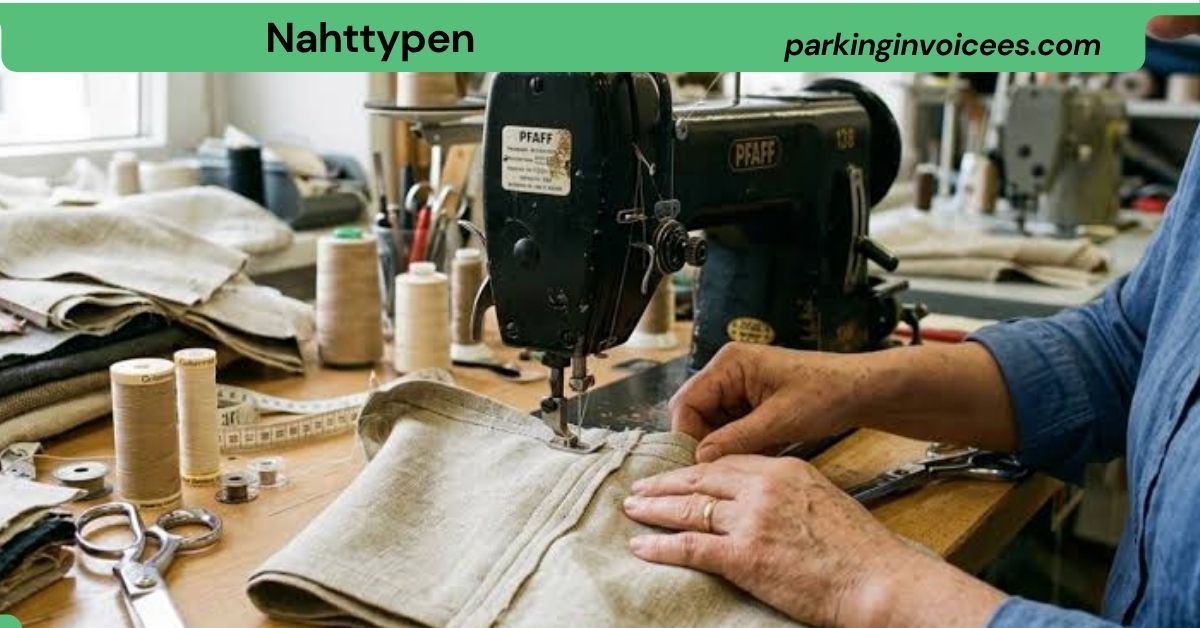
Nahttypen: A Complete Guide to Seam Types in Sewing, Fashion, and Textile Manufacturing
If you enjoy sewing, making clothes, quilting, or learning about textiles, you have probably heard the term nahttypen. The word comes from German and simply means “seam types.” A seam is created when two or more pieces of fabric are joined together using stitches. While seams may seem simple, choosing the right seam type has a major impact on the strength, appearance, comfort, and durability of a finished product.
From everyday T-shirts to heavy-duty workwear, elegant dresses, sports clothing, upholstery, and outdoor gear, every fabric project depends on carefully selected seam types. Professional designers, tailors, and manufacturers spend considerable time choosing the best seam because each one serves a different purpose.
Understanding nahttypen is useful for beginners, hobby sewers, fashion students, and professionals alike. Even if you never plan to sew your own clothes, learning about seam types can help you recognize quality garments and understand why some clothing lasts longer than others.
This guide explains the most common seam types, where they are used, their advantages and disadvantages, and how to choose the right seam for different fabrics and projects.
What Does Nahttypen Mean?
The German word nahttypen translates directly into English as “types of seams” or “seam types.”
A seam is the connection between two or more pieces of fabric. The connection is usually made using thread and stitches, although industrial products may also use adhesives, welding, or ultrasonic bonding.
In sewing, seam types are selected based on several factors, including:
- Fabric thickness
- Fabric stretch
- Clothing style
- Strength requirements
- Appearance
- Comfort
- Manufacturing cost
- Durability
- Ease of construction
Every seam has a specific purpose. Some are designed to be nearly invisible, while others become an attractive decorative feature.
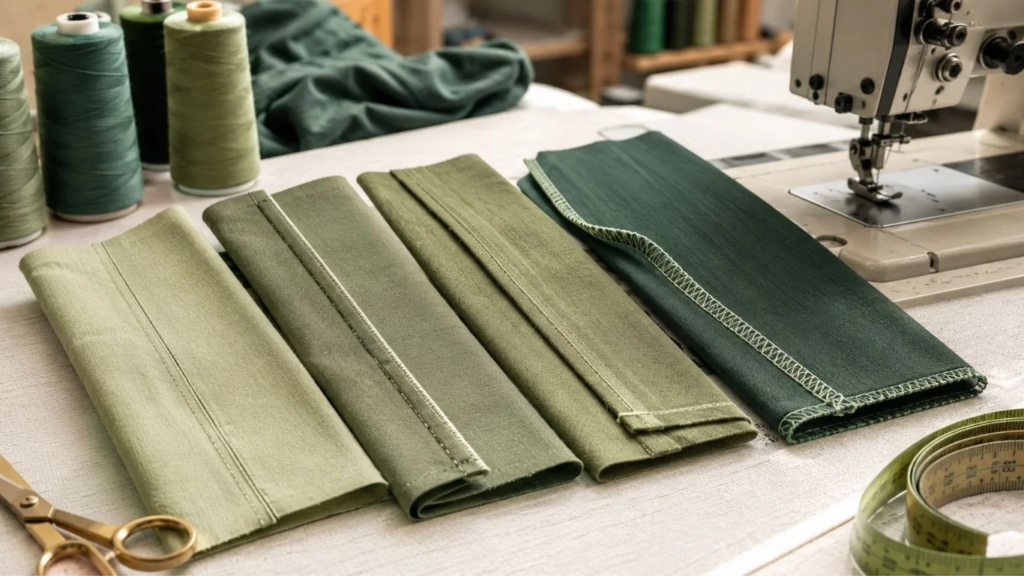
Why Are Seam Types Important?
Many beginners focus only on fabric and thread. However, professionals know that the seam is one of the most important parts of any textile product.
The correct seam type helps improve:
Strength
Strong seams prevent garments from tearing during daily use.
Examples include:
- Work uniforms
- Outdoor jackets
- Jeans
- Sportswear
- Luggage
Comfort
Poorly chosen seams can rub against the skin.
Flat seams reduce irritation, making them ideal for:
- Athletic clothing
- Baby clothes
- Underwear
- Medical garments
Appearance
Certain seam types create a clean, professional finish.
Fashion designers often choose decorative seams to enhance the overall look of clothing.
Durability
Quality seams extend the lifespan of garments by reducing stress at connection points.
Ease of Repair
Simple seams are often easier to repair if they become damaged.
A Brief History of Nahttypen
Seams have existed for thousands of years.
Early humans joined animal skins using bone needles and natural fibers.
Also Read: Pyntekvister: The Decorative Branches for Modern Home Design
As civilizations developed, people learned to produce woven fabrics from cotton, linen, silk, and wool. Different stitching methods gradually evolved to meet different needs.
The Industrial Revolution transformed sewing forever. Sewing machines allowed manufacturers to create stronger and more consistent seams at much higher speeds.
Today, modern factories use advanced sewing machines capable of producing dozens of seam types with remarkable precision. Some industries even use laser welding and ultrasonic technology instead of traditional stitching.
Despite these technological advances, many classic seam types remain unchanged because they continue to provide excellent performance.
The Main Categories of Nahttypen
Although there are many variations, most seam types fall into several broad categories.
These include:
- Plain seams
- Flat seams
- Enclosed seams
- Decorative seams
- Reinforced seams
- Bound seams
- Lapped seams
- Specialty seams
Each category serves different purposes depending on the garment or textile product.
Plain Seam
The plain seam is the most common seam type in sewing.
It is created by placing two fabric pieces together with their right sides facing each other and stitching along the seam allowance.
After sewing, the fabric is opened, and the seam allowances are pressed flat.
Advantages
- Very easy to sew
- Works with almost every fabric
- Fast production
- Beginner friendly
- Cost-effective
Disadvantages
- Raw edges may fray
- Usually requires seam finishing
- Less durable than some reinforced seams
Common Uses
- Shirts
- Dresses
- Pants
- Skirts
- Pillowcases
- Curtains
Because of its simplicity, the plain seam is often the first seam beginners learn.
French Seam
The French seam completely encloses the raw fabric edges inside the seam.
Instead of leaving exposed edges, the seam is folded and sewn twice, creating an elegant finish.
Advantages
- Beautiful inside appearance
- Prevents fraying
- Professional finish
- Excellent durability
- Ideal for lightweight fabrics
Disadvantages
- Takes more time
- Requires precise measurements
- Not suitable for very thick fabrics
Common Uses
French seams are commonly found in:
- Silk garments
- Chiffon dresses
- Lingerie
- Luxury clothing
- Lightweight blouses
Many premium fashion brands use French seams because the inside of the garment looks just as attractive as the outside.
Flat-Felled Seam
The flat-felled seam is one of the strongest seam types available.
It completely encloses the raw edges while creating two visible rows of stitching.
This seam distributes stress evenly across the fabric.
Advantages
- Extremely strong
- Long-lasting
- Clean appearance
- Comfortable to wear
- No exposed fabric edges
Disadvantages
- More difficult to sew
- Uses more fabric
- Takes additional time
Common Uses
You can easily recognize flat-felled seams on:
- Blue jeans
- Denim jackets
- Workwear
- Outdoor clothing
- Heavy shirts
These seams withstand repeated washing and heavy wear.
Lapped Seam
A lapped seam is created when one piece of fabric overlaps another.
The overlapping sections are stitched together.
Unlike many seam types, the fabric edges do not meet edge to edge.
Advantages
- Strong construction
- Excellent for thick materials
- Good decorative appearance
Common Applications
- Leather products
- Outdoor equipment
- Heavy coats
- Protective clothing
Because thick fabrics are difficult to fold, lapped seams simplify construction while maintaining strength.
Bound Seam
Bound seams cover raw fabric edges using an additional strip of fabric or binding tape.
This technique improves both appearance and durability.
Advantages
- Attractive finish
- Prevents fraying
- Comfortable edges
- Professional look
Common Uses
Bound seams are frequently used in:
- Jackets
- Unlined garments
- Bags
- Blankets
- Home décor
- Quilting
Bias tape is commonly used to create bound seams.
Mock Flat-Felled Seam
This seam imitates the appearance of a traditional flat-felled seam but is easier to sew.
Instead of fully enclosing the seam allowance, one allowance is folded and stitched down.
Advantages
- Faster construction
- Professional appearance
- Less fabric bulk
- Easier for beginners
Common Uses
- Casual shirts
- Children’s clothing
- Sportswear
- Lightweight denim
Many ready-to-wear garments use mock flat-felled seams because they balance appearance with production efficiency.
Double-Stitched Seam
As the name suggests, this seam uses two rows of stitching.
The second row provides additional strength.
Advantages
- Increased durability
- Better stress resistance
- Decorative effect
- Reduced seam failure
Popular Applications
Double-stitched seams are common in:
- Backpacks
- Heavy jackets
- Sports uniforms
- Cargo pants
- Outdoor gear
Manufacturers often reinforce areas that experience frequent movement using this seam.
Welt Seam
A welt seam resembles a flat-felled seam but is simpler to produce.
Only one seam allowance is folded before topstitching.
Advantages
- Decorative finish
- Moderate strength
- Easier than flat-felled seams
Applications
Welt seams appear in:
- Uniforms
- Casual jackets
- Shirts
- Decorative garments
The visible stitching can also become an attractive design element.
Slot Seam
A slot seam is primarily decorative.
Two folded fabric edges are stitched over a separate strip of fabric, leaving a narrow opening between them.
Advantages
- Decorative appearance
- Unique texture
- Adds visual interest
Common Uses
- Fashion garments
- Decorative pillows
- Designer clothing
- Couture dresses
Because of its decorative nature, slot seams are less common in everyday clothing.
Corded Seam
Corded seams include a narrow cord sewn inside the seam.
The cord creates raised lines that improve both strength and appearance.
Advantages
- Decorative texture
- Better edge definition
- Enhanced durability
Applications
Corded seams are popular in:
- Upholstery
- Luxury cushions
- Designer handbags
- Furniture covers
They help products maintain their shape while adding an elegant finish.
How to Choose the Right Nahttypen
Choosing the correct seam type depends on more than personal preference. Professional sewists evaluate several important factors before beginning a project.
Fabric Type
Different fabrics behave differently during sewing.
For example:
- Cotton works well with plain seams and French seams.
- Denim performs best with flat-felled seams.
- Leather is often sewn using lapped seams.
- Silk benefits from French seams because they hide raw edges.
- Stretch fabrics usually require specialized stretch seams or overlock stitching.
Matching the seam type to the fabric helps improve both appearance and durability.
Garment Purpose
Think about how the finished item will be used.
A wedding dress, for example, prioritizes elegance and clean finishes, while hiking pants require strength and resistance to wear. Sportswear needs seams that allow movement without causing discomfort.
The intended purpose of the garment should always guide the seam selection.
Appearance
Some seam types are designed to stay hidden, while others become part of the overall design.
Decorative seams, topstitched seams, and corded seams can add style and character to clothing, bags, and home décor items.
Skill Level
Beginners often achieve the best results with plain seams because they are straightforward and forgiving.
As sewing skills improve, techniques such as French seams, flat-felled seams, and bound seams become easier to master and can give projects a more polished, professional finish.
Time and Production Needs
In home sewing, spending extra time on a strong or elegant seam may be worthwhile.
In commercial manufacturing, however, speed and efficiency are also important. Many factories choose seam types that provide a balance between quality, durability, and production cost.
Industrial vs. Home Sewing Nahttypen
Although the basic principles of seam construction remain the same, home sewing and industrial sewing often use different techniques and equipment.
Home sewing focuses on flexibility, creativity, and customization. A person sewing at home may spend extra time creating neat French seams or carefully pressing each seam for a professional finish.
Industrial sewing, on the other hand, prioritizes speed, consistency, and large-scale production. Factories use specialized sewing machines designed to create thousands of identical seams every day.
Some common industrial seam types include:
Overlock Seam
An overlock seam is made using a serger or overlock machine. The machine trims the fabric edge while wrapping thread around it.
Advantages include:
- Fast production
- Prevents fraying
- Clean finish
- Excellent for knit fabrics
- Flexible stitching
This seam is commonly found in:
- T-shirts
- Sweatshirts
- Athletic clothing
- Children’s clothing
- Casual wear
Coverstitch Seam
A coverstitch machine creates parallel rows of stitching on the outside with looped threads underneath.
This seam provides flexibility without breaking.
Common uses include:
- Shirt hems
- Sleeve hems
- Activewear
- Yoga clothing
- Stretch garments
Most ready-made knit garments use coverstitch seams because they allow fabric to stretch comfortably.
Safety Seam
A safety seam combines two stitching operations into one.
It provides extra strength for garments that experience heavy stress.
Industries using safety seams include:
- Uniform manufacturing
- Workwear production
- Medical textiles
- Protective clothing
Decorative vs. Functional Seam Types
Not every seam exists only to hold fabric together.
Also Read: Monika Leveski: The Complete Story, Public Life, Career, and Lasting Impact
Some seams also improve the appearance of a garment.
Functional Seams
Functional seams focus on:
- Strength
- Durability
- Comfort
- Long-term performance
Examples include:
- Plain seam
- Flat-felled seam
- French seam
- Overlock seam
- Safety seam
Decorative Seams
Decorative seams are intended to enhance visual appeal.
Examples include:
- Corded seams
- Slot seams
- Topstitched seams
- Welt seams
- Piped seams
Fashion designers often combine decorative and functional seams to create garments that are both beautiful and durable.
Seam Finishes and Why They Matter
A seam finish is the method used to protect the raw edges of fabric after sewing.
Without proper finishing, fabric can fray, reducing the lifespan of the garment.
Some popular seam finishes include:
Zigzag Finish
A zigzag stitch is sewn along the raw edge.
Benefits:
- Easy for beginners
- Works on many fabrics
- Requires only a standard sewing machine
Overlock Finish
The overlock machine trims and seals the fabric edge at the same time.
Benefits:
- Professional appearance
- Excellent durability
- Prevents fraying
Pinked Edge
Pinking shears cut fabric into a zigzag pattern.
Benefits:
- Quick solution
- Reduces fraying
- Good for woven fabrics with minimal wear
Bias Binding Finish
Bias tape covers raw edges completely.
Benefits:
- Decorative
- Durable
- Comfortable
- Professional appearance
Choosing the Best Seam for Different Fabrics
Different fabrics require different seam types to achieve the best results.
Cotton
Recommended seams:
- Plain seam
- French seam
- Bound seam
Cotton is stable and easy to sew, making it suitable for most seam types.
Denim
Recommended seams:
- Flat-felled seam
- Double-stitched seam
- Lapped seam
Denim is heavy and durable, so strong seams are essential.
Silk
Recommended seams:
- French seam
- Narrow rolled seam
These seams create a clean finish while protecting delicate fibers.
Linen
Recommended seams:
- Plain seam
- French seam
- Bound seam
Linen can fray easily, making enclosed seams a smart choice.
Stretch Fabrics
Recommended seams:
- Overlock seam
- Coverstitch
- Stretch stitch
Stretch fabrics require seams that move with the material.
Leather
Recommended seams:
- Lapped seam
- Topstitched seam
Leather does not fray like woven fabrics, so overlapping seams often work best.
Common Mistakes When Selecting Nahttypen
Many sewing problems occur because the wrong seam type is used.
Here are some of the most common mistakes.
Ignoring Fabric Weight
Heavy fabrics place more stress on seams.
Using a simple plain seam on thick denim may cause early failure.
Choosing Appearance Over Strength
Decorative seams look attractive but may not provide enough support for high-stress garments.
Always balance appearance with function.
Not Finishing Raw Edges
Even a perfectly sewn garment can begin to fray if raw edges remain unfinished.
Proper seam finishing extends garment life.
Using the Wrong Needle or Thread
The seam type is only one part of successful sewing.
Using thread and needles that match the fabric is equally important.
Skipping Pressing
Pressing each seam after sewing helps the garment lie flat and improves the final appearance.
Professional tailors often say that pressing is just as important as stitching.
Expert Tips for Better Seams
Whether you are a beginner or an experienced sewist, these tips can improve your results.
- Test the seam on scrap fabric before sewing the actual project.
- Match thread quality to the fabric.
- Use the correct needle size.
- Press every seam after stitching.
- Trim seam allowances when needed to reduce bulk.
- Reinforce stress points.
- Replace worn sewing machine needles regularly.
- Keep sewing machine tension properly adjusted.
- Read the fabric care instructions before choosing a seam.
- Practice difficult seam types before using expensive fabric.
Small improvements in technique often make a noticeable difference in the quality of the finished product.
Nahttypen in Fashion Design
Fashion designers use seam types as both structural and creative elements.
A well-chosen seam can:
- Shape a garment.
- Improve comfort.
- Highlight design lines.
- Add decorative detail.
- Strengthen high-stress areas.
- Enhance the overall quality.
Luxury clothing often includes enclosed seams, careful topstitching, and refined finishing because these details reflect craftsmanship.
In contrast, athletic wear focuses on flat, flexible seams that reduce friction and support movement.
Nahttypen in Home Décor and Upholstery
Seam types are important beyond clothing.
Home décor projects also rely on suitable seams for strength and appearance.
Examples include:
- Curtains
- Cushion covers
- Sofa upholstery
- Table linens
- Bedding
- Quilts
- Decorative pillows
Heavy upholstery fabrics typically require reinforced seams, while decorative cushions may feature corded or piped seams for added style.
Sustainability and Modern Sewing
Sustainability has become an important focus in the textile industry.
High-quality seams contribute to sustainable fashion because they help garments last longer.
A durable garment is less likely to need replacement, reducing waste and conserving resources.
Modern manufacturers are also improving seam construction by:
- Using recycled sewing threads.
- Reducing fabric waste during cutting.
- Developing energy-efficient sewing equipment.
- Improving quality control to minimize defective products.
- Designing garments that are easier to repair.
Consumers also benefit by learning basic sewing skills. Repairing a loose seam instead of discarding a garment supports a more sustainable lifestyle.
Future Trends in Nahttypen
Technology continues to shape the future of seam construction.
Several innovations are becoming more common:
- Automated sewing robots for consistent stitching.
- AI-assisted quality inspection in textile factories.
- Ultrasonic welding for technical fabrics.
- Bonded seams that reduce bulk in sportswear.
- Waterproof seam sealing for outdoor equipment.
- Eco-friendly threads made from recycled materials.
While these technologies improve manufacturing, traditional seam types remain essential because they are reliable, versatile, and well understood.
Also Read: Türk Idla: The Turkey’s Digital Identity Movement and Creative Culture
Frequently Asked Questions (FAQ)
Can one garment contain multiple seam types?
Yes. Many garments use several seam types in different areas. For example, a shirt may have flat-felled seams on the sides, French seams on delicate sections, and overlock finishes on internal edges.
How do I know if a garment has high-quality seams?
Look for even stitching, straight seam lines, secure thread tension, enclosed or neatly finished raw edges, and reinforced areas where the garment experiences stress.
Do seam types affect garment comfort?
Yes. Flat seams and properly finished seams reduce rubbing and irritation, making clothing more comfortable for extended wear.
What is the difference between a seam and a stitch?
A stitch is a single loop or pass of thread created by a needle. A seam is the complete line where two or more pieces of fabric are joined using many stitches.
Can seam types influence clothing durability?
Absolutely. A well-chosen seam distributes stress evenly and prevents tearing, helping garments maintain their shape and strength through repeated use and washing.
Are decorative seams less durable than functional seams?
Not always. Some decorative seams also provide excellent strength. The design, fabric, and construction method determine overall durability.
Why do professional tailors press seams while sewing?
Pressing helps flatten seam allowances, improves accuracy, reduces bulk, and gives the finished garment a polished, professional appearance.
Do sewing machines create every seam type automatically?
No. Standard sewing machines can create many common seams, but specialized machines such as sergers, coverstitch machines, and industrial equipment are required for certain seam types.
Is learning seam types important for beginners?
Yes. Understanding seam types helps beginners choose the right construction method, avoid common mistakes, and produce stronger, more attractive sewing projects.
Can seam types affect garment maintenance?
Yes. Some seams are easier to repair, while others provide greater resistance to frequent washing, ironing, and everyday wear.
Conclusion
Understanding nahttypen, or seam types, is one of the most valuable skills in sewing, fashion design, and textile production. Although seams may appear to be small details, they determine how a garment looks, feels, performs, and lasts over time.
From the simple plain seam to the durable flat-felled seam and the elegant French seam, each type has a specific purpose. Choosing the correct seam depends on the fabric, the intended use of the project, the desired appearance, and the level of durability required.
As modern textile technology continues to evolve, new construction methods such as bonded seams and automated stitching are becoming more common. Even so, traditional seam types remain the foundation of quality sewing because they combine proven performance with versatility.
Whether you are a beginner learning basic sewing techniques, a fashion student exploring garment construction, or a professional working in the textile industry, understanding different nahttypen will help you create stronger, more comfortable, and longer-lasting products.
By selecting the right seam, using proper finishing techniques, and paying attention to detail, every sewing project can achieve a higher level of quality and craftsmanship. Knowledge of seam types is not only a practical sewing skill but also an important step toward producing durable, attractive, and sustainable textile products.