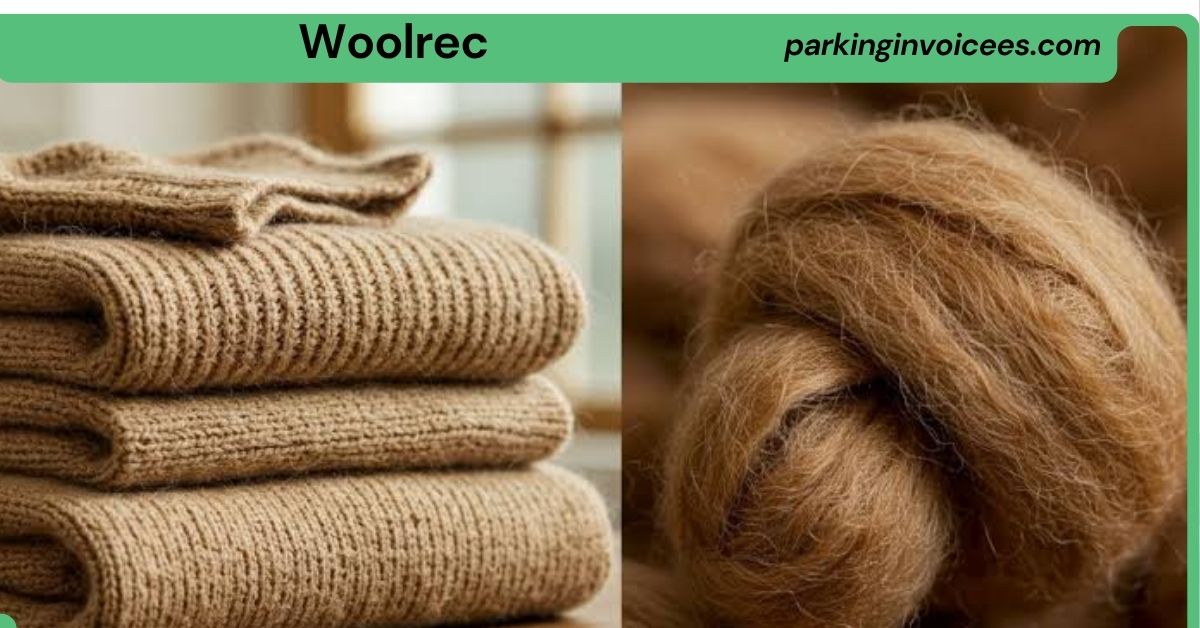
Woolrec: A Complete Guide to Wool Recycling, Its Process, Benefits, and Future
Wool has been valued for centuries because it is warm, durable, comfortable, and naturally versatile. A good wool sweater, coat, scarf, or blanket can remain useful for many years. But even durable wool products eventually reach the end of their first useful life. When that happens, throwing them into the trash is not the only option.
This is where Woolrec comes into the picture.
Woolrec can be understood as the process of recovering old wool textiles and turning them into useful fiber or other products instead of sending them directly to landfill. Old sweaters, coats, scarves, blankets, fabric scraps, and other wool-containing textiles can potentially be collected, sorted, cleaned, mechanically processed, and converted into materials for new products.
The basic idea is simple: keep valuable wool fiber in use for as long as possible.
Wool recycling is not a new idea. Industrial wool recycling has a history stretching back more than 200 years, and modern textile manufacturers continue to use mechanical recycling to recover fibers from both post-consumer clothing and production waste.
For consumers in the United States, understanding Woolrec is useful because textile waste is a growing environmental concern. It also helps shoppers understand what terms such as recycled wool, reclaimed wool, circular fashion, closed-loop recycling, and open-loop recycling really mean.
What Is Woolrec?
Woolrec refers to the recovery and recycling of unwanted or discarded wool textiles so that their material value can be used again.
Instead of treating an old wool garment as ordinary waste, a recycling system attempts to recover its fibers. Depending on the quality and construction of the material, the recovered wool may be turned into new yarn and fabric or used for products such as insulation, padding, and other nonwoven materials.
A typical wool recycling pathway includes several stages:
- Collection of unwanted wool products
- Sorting by material, color, quality, and construction
- Removal of buttons, zippers, linings, labels, and other unwanted components
- Cutting or shredding
- Fiber opening
- Cleaning and preparation
- Carding or other fiber preparation
- Spinning when the fiber is suitable for yarn
- Knitting or weaving into new products
- Manufacturing and distribution
Not every wool item goes through every step. The final process depends on the type of wool, the condition of the textile, the presence of blended fibers, and the intended use of the recovered material.
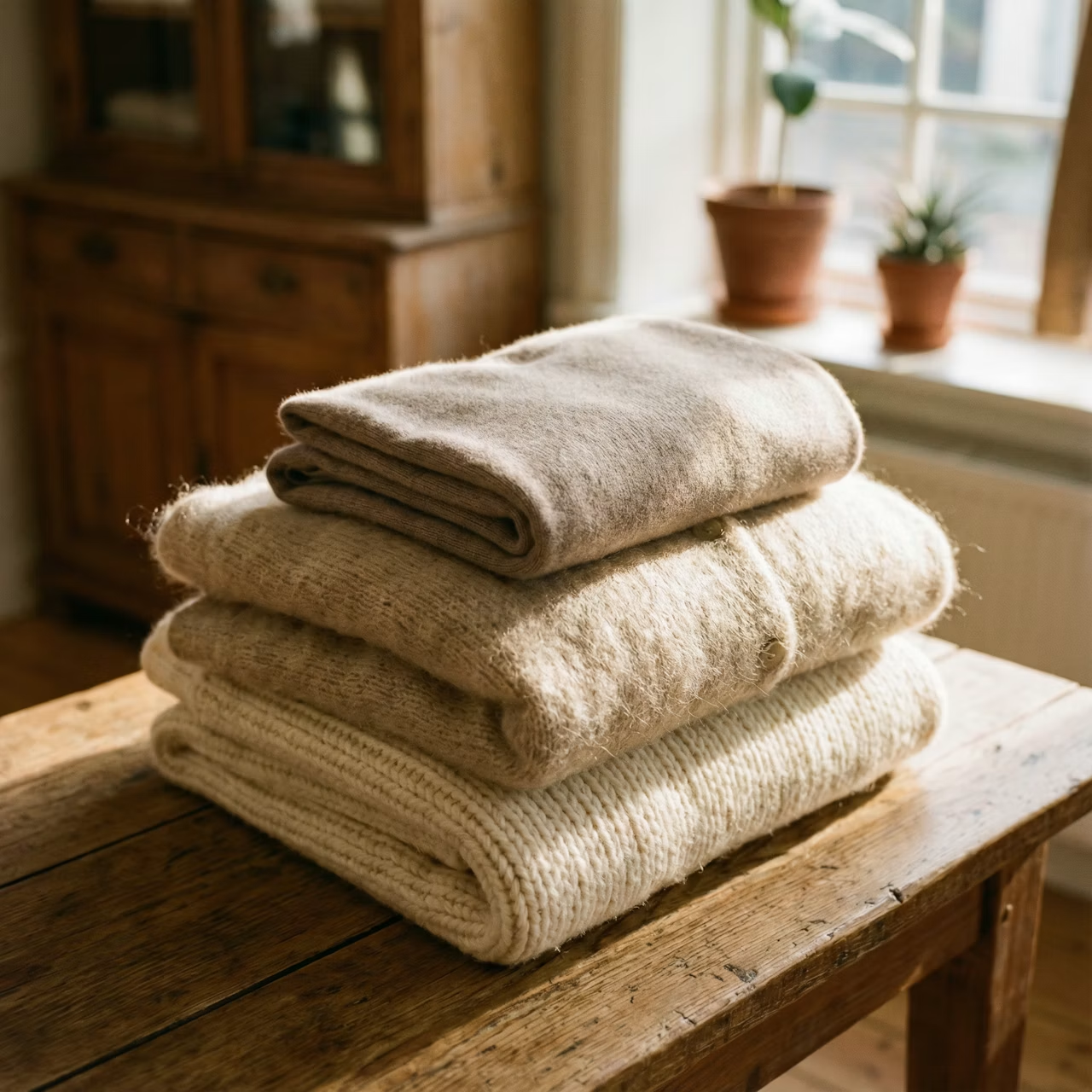
The International Wool Textile Organisation identifies three broad approaches to wool recycling: closed-loop recycling, open-loop recycling, and re-engineering.
Why Is Wool Recycling Important?
Wool is a valuable natural fiber, so recovering it can help extend the useful life of material that has already been produced.
There are several reasons why wool recycling matters.
First, it can reduce the amount of textile material sent to landfill or incineration.
Second, recycling can reduce the need to produce entirely new raw materials for every product.
Third, recovered wool can become a useful input for the textile and manufacturing industries.
Fourth, recycling supports the broader idea of a circular economy. In a circular economy, products and materials are kept in use for longer rather than being used once and discarded.
Wool is particularly interesting in this area because it is naturally durable. Research cited by the International Wool Textile Organisation indicates that wool products can potentially remain in active use for 20 to 30 years or longer when they are properly cared for and kept in circulation.
That does not mean every wool product will last for decades. Product quality, wear, washing, storage, construction, and consumer behavior all matter. However, the durability of wool creates opportunities for reuse and recycling that are important when considering its complete life cycle.
How Does the Woolrec Process Work?
The Woolrec process is easier to understand when it is broken into individual stages.
1. Collection of Old Wool Textiles
The process begins with material that is no longer wanted or cannot continue in its original form.
Possible sources include:
- Old wool sweaters
- Wool coats
- Wool scarves
- Wool blankets
- Damaged wool garments
- Textile manufacturing scraps
- Cutting waste
- Unwanted inventory
- Old wool fabrics
- Certain wool carpets and interior textiles
There are two important categories of textile waste: post-consumer waste and post-industrial waste.
Post-consumer waste comes from products that have already been used by consumers. An old sweater sitting in someone’s closet or a worn wool coat that is no longer wanted would fall into this category.
Post-industrial waste comes from manufacturing. Examples include fabric offcuts, yarn waste, and production scraps.
Both sources can have value in a recycling system.
2. Sorting the Wool
Sorting is one of the most important stages.
A recycling facility cannot simply put every textile into one machine and expect the same result. Wool products can differ in fiber type, color, quality, fabric construction, and fiber blend.
Also Read: Sodiceram: A Complete Guide to Next-Generation Sodium-Infused Ceramic
Materials may therefore be separated according to characteristics such as:
- Fiber composition
- Color
- Quality
- Fabric construction
- Yarn construction
- Fiber fineness
- Condition
- Presence of non-wool materials
Color sorting can be especially useful because wool textiles may sometimes be recycled into new materials without requiring the same amount of additional dyeing.
Research on wool recycling describes sorting by color, fiber content, fabric construction, and yarn construction as an important preparation step.
3. Removing Non-Wool Components
Before wool can be mechanically recycled, unwanted components need to be removed.
A sweater might contain:
- Buttons
- Zippers
- Sewing thread
- Labels
- Linings
- Decorative pieces
- Elastic components
- Synthetic trims
These materials can interfere with recycling equipment or reduce the quality of the recovered fiber.
Careful preparation therefore helps improve the efficiency and quality of the recycling process.
4. Cutting and Preparing the Material
Large garments and fabrics are often cut into manageable pieces before mechanical processing.
This prepares the material for the machinery used to open the textile structure.
At this stage, the objective is not simply to destroy the garment. The goal is to separate the textile structure and recover useful fibers while causing as little unnecessary fiber damage as possible.
5. Mechanical Fiber Recovery
Mechanical recycling is one of the best-known methods used for wool.
Specialized machinery pulls, tears, opens, or shreds the textile structure until the fibers are separated.
The process may be described using terms such as shredding, pulling, fraying, or garnetting depending on the equipment and textile industry involved.
The result is a mass of recovered wool fiber.
However, there is an important limitation: mechanical processing can shorten or damage fibers.
This is one of the central technical challenges in wool recycling.
Recent research has examined how mechanical recycling affects fiber length and found that process settings and the original fiber characteristics can influence how much fiber length is retained.
6. Cleaning the Recovered Fiber
After mechanical processing, the recovered material may contain dust, small contaminants, or other unwanted particles.
Cleaning helps prepare the fiber for its next application.
The exact cleaning process depends on the material and the recycling system.
Some processes may use dry preparation, while others can involve wet processing. The goal is to obtain fiber that is clean and suitable for the next manufacturing stage.
7. Carding and Fiber Preparation
When recovered wool is intended for yarn production, the fibers need to be prepared for spinning.
Carding helps organize and prepare fibers into a more uniform structure.
This stage is important because recycled fibers may have different lengths and characteristics from virgin wool.
A well-managed process can improve the consistency of the material before it enters yarn production.
8. Spinning Recycled Wool Into Yarn
If the recovered fiber has suitable characteristics, it can be spun into yarn.
The yarn may then be used to make:
- Sweaters
- Jackets
- Scarves
- Blankets
- Home textiles
- Upholstery fabrics
- Other textile products
Recycled wool may also be blended with virgin wool or other fibers when additional strength, consistency, or performance is required.
Blending is not automatically a sign that a recycled material is low quality. In many textile applications, blending is a practical way to meet performance requirements.
9. Making New Fabric
Recovered wool yarn can be knitted or woven into new fabric.
At this point, the material can return to the textile market as part of a new product.
This is the basic idea behind closed-loop wool recycling: an old textile is returned to fiber form and becomes a raw material for another textile product.
What Is Closed-Loop Wool Recycling?
Closed-loop recycling is the process most closely associated with the idea of turning old wool clothing into new wool products.
In a simplified example:
Old wool sweater → sorting → fiber recovery → preparation → yarn → new fabric → new wool product
The objective is to keep the same material within the textile system.
The Woolmark Company describes closed-loop wool recycling as a process in which collected and sorted wool textiles are mechanically broken down into fibers that can be used to create yarn and ultimately new textile products.
Closed-loop recycling can be valuable because it gives the recovered fiber another opportunity to become a relatively high-value textile material.
However, closed-loop recycling is not unlimited.
Every mechanical recycling cycle can affect fiber properties. Shorter fibers can make it harder to produce certain types of high-quality yarn.
For this reason, recyclers must carefully control processing conditions and material selection.
What Is Open-Loop Wool Recycling?
Open-loop recycling uses recovered wool for a different type of product rather than returning it to the same type of textile product.
For example, recovered wool may be used in:
- Insulation
- Mattress padding
- Furniture materials
- Automotive felt
- Nonwoven products
- Sound-related materials
- Other industrial applications
The International Wool Textile Organisation describes this pathway as an open-loop system in which wool from a previous product becomes the basis for a new, often industrial product.
Open-loop recycling is important because not every old garment has fiber characteristics suitable for making new clothing.
Instead of throwing lower-quality or highly damaged wool away, an open-loop application can give that material another useful life.
What Is Recycled Wool?
Recycled wool is wool fiber recovered from previously existing wool products or wool textile waste.
It is different from virgin wool.
Virgin wool is newly processed wool fiber that has not previously been incorporated into a textile product.
Recycled wool has already had at least one previous use or manufacturing stage.
The quality of recycled wool depends on several factors, including:
- Original fiber quality
- Fiber length
- Fabric construction
- Amount of contamination
- Recycling method
- Sorting accuracy
- Processing conditions
- Blending strategy
Therefore, “recycled wool” should not be treated as one single quality level.
Two products can both contain recycled wool while having very different performance characteristics.
Is Recycled Wool as Good as New Wool?
This is one of the most common questions about wool recycling.
The answer is: it depends.
Recycled wool can be high quality, but mechanical recycling can shorten fibers. Fiber length is important because it influences how the recovered material behaves during spinning and fabric production.
Research published in 2024 found that mechanical recycling can have relatively little effect on the tensile strength of wool or cashmere fibers, while also showing that fiber length retention is an important consideration in repeated recycling.
For some applications, recycled wool can perform very well.
For others, manufacturers may blend recycled wool with virgin wool or other fibers to achieve the required performance.
The right question is therefore not simply “Is recycled wool as good as virgin wool?”
A better question is:
“What type of recycled wool is being used, how was it processed, and what product is it being used to make?”
Can Wool Be Recycled More Than Once?
Yes, wool can potentially go through multiple recycling cycles, but there are practical limits.
Mechanical processing can cause fiber breakage. As fibers become shorter, producing certain types of yarn becomes more difficult.
This is why researchers are studying the concept of repeated closed-loop recycling.
A 2024 study introduced a Recycling Index intended to help estimate how many times wool or cashmere could potentially be recycled in a closed-loop process based on fiber properties.
The exact number of cycles is not the same for every wool product.
Factors include the original fiber length, fabric construction, processing method, machine settings, and the quality requirements of the next product.
A realistic view of circularity recognizes these physical limits instead of assuming that materials can be recycled forever without change.
What Happens to Wool Fibers During Recycling?
The most important physical change is often related to fiber length.
Wool is made of individual fibers. When a fabric is mechanically opened, the fibers are subjected to forces that can cause some breakage.
Recent research describes mechanical recycling as a process involving tension, bending, friction, and interaction with opening machinery. These forces help separate fibers but can also cause some fiber damage.
This creates an important balance.
If the machinery is too gentle, the textile may not open effectively.
If it is too aggressive, excessive fiber damage can occur.
Modern recycling research therefore focuses on optimizing machinery and process settings to recover useful fiber while reducing unnecessary breakage.
What Types of Wool Can Be Recycled?
Many wool products can potentially enter a recycling system, but suitability varies.
Common examples include:
Wool Sweaters
Old wool sweaters are among the most recognizable sources of recyclable wool.
Their knitted construction can make them suitable for mechanical recovery when the fiber composition and condition are appropriate.
Wool Coats
Coats can also contain recyclable wool, but they may require more preparation because they often contain linings, buttons, zippers, shoulder structures, and other materials.
Wool Scarves
Simple wool scarves can be relatively straightforward to prepare if they have limited non-wool components.
Wool Blankets
Blankets can contain substantial quantities of wool, making them potentially useful sources of recovered fiber or open-loop material.
Textile Factory Scraps
Manufacturing waste is also valuable because it can sometimes be cleaner and more consistent than heavily used post-consumer textiles.
This type of material is commonly referred to as pre-consumer or post-industrial textile waste.
What Products Can Be Made From Recycled Wool?
The final product depends on the quality and characteristics of the recovered material.
Recycled wool may be used in:
- New clothing
- Sweaters
- Jackets
- Coats
- Scarves
- Blankets
- Rugs
- Upholstery
- Mattress materials
- Insulation
- Automotive textiles
- Nonwoven products
- Industrial materials
The Woolmark Company notes that recycled wool can be reclaimed and reprocessed into yarn, knitted or woven fabric, apparel, and footwear, while open-loop systems can produce products such as insulation and mattress padding.
This variety is important because it means recycling does not have to end with another sweater.
Environmental Benefits of Woolrec
Wool recycling can provide several environmental advantages, although the actual benefit depends on the complete recycling system.
Reducing Textile Waste
The most obvious benefit is keeping usable material in circulation.
Instead of sending an old wool product directly to landfill, recycling can recover part of its material value.
Extending Material Life
Recycling gives wool an opportunity to serve another purpose after its original product has reached the end of its useful life.
This supports the principles of circular textile production.
Reducing Demand for New Raw Materials
When recovered fibers replace some virgin material, manufacturers may reduce the amount of newly produced fiber required for a product.
However, the size of this benefit depends on the specific product, recycling process, transportation, energy use, and material mix.
Potentially Reducing Dyeing Requirements
Color sorting can sometimes allow recovered wool to be processed into products without complete recoloring.
This can reduce the need for certain dyeing steps.
The practice of sorting recycled wool by color is well established in the industry.
Supporting a Circular Economy
Perhaps the biggest conceptual benefit is keeping materials in circulation.
Instead of the traditional model of:
Make → Buy → Use → Throw away
circular systems aim for:
Make → Use → Recover → Reuse → Recycle → Use Again
Wool recycling fits naturally into this broader approach.
Is Wool Recycling Always Better for the Environment?
Recycling should not be described as automatically impact-free.
A responsible analysis considers the entire system.
Factors include:
- Collection
- Transportation
- Sorting
- Cleaning
- Mechanical processing
- Energy use
- Water use
- Blending
- Dyeing
- Manufacturing
- Distribution
- Product lifespan
For example, transporting a very small quantity of waste over a very long distance may change the environmental calculation.
Similarly, recycling a textile into a short-lived product may provide less benefit than using the material in a durable product.
A life-cycle approach is therefore more useful than simply labeling something “recycled.”
Research into recycled wool has used life-cycle assessment to compare recycled wool products with alternative material pathways and examine the environmental impacts of collection, processing, spinning, knitting, dyeing, and finishing.
Woolrec and the Circular Economy
The circular economy is based on a simple principle: products and materials should remain useful for as long as possible.
Woolrec supports this idea by treating old wool as a resource instead of automatically treating it as waste.
There are several stages of circularity.
The first is often reuse.
If someone else can wear the same coat or sweater, reuse may be preferable to recycling because the existing product remains intact.
The next option may be repair.
A small hole or damaged seam does not necessarily mean a garment should be discarded.
When reuse and repair are no longer practical, recycling can become an important next step.
This creates a hierarchy:
Reuse → Repair → Recycle → Recover
The best choice depends on the condition of the product.
Wool Recycling vs. Reusing Wool Clothing
Recycling and reuse are not the same thing.
Suppose you have a wool sweater that no longer fits but is still in excellent condition.
Giving it to another person may be better than mechanically recycling it because the original garment remains intact.
Mechanical recycling breaks down the existing textile structure.
Reuse preserves that structure.
This distinction is important when thinking about sustainable fashion.
Consumers should not assume that recycling is always the first choice. If a wool garment can be worn again, donated, repaired, or resold, keeping it in its original form may extend its useful life more efficiently.
How Consumers in the United States Can Support Wool Recycling
Consumers can make a difference without needing to understand industrial machinery.
Buy Durable Wool Products
Quality matters.
A well-made wool product that lasts for many years can reduce the need for frequent replacement.
Look for Recycled Content
When shopping, consumers can check product labels for recycled wool or other verified recycled content.
Third-party standards can help buyers distinguish between specific recycled-content claims and general sustainability marketing.
Repair Wool Clothing
Repairing a sweater can be a simple way to extend its life.
Small holes, loose seams, missing buttons, and worn areas may sometimes be repaired rather than replacing the entire garment.
Donate Carefully
Do not assume that every donation center accepts every textile.
Check the organization’s rules before dropping off damaged or heavily soiled wool items.
Follow Local Textile Recycling Rules
Textile recycling programs vary by location.
Some communities accept textiles through dedicated collection systems, while others rely on nonprofit organizations, retailers, or specialized recyclers.
Consumers should check the instructions provided by their local waste authority or recycling organization.
How Should You Prepare Old Wool Clothing for Recycling?
A few simple steps can make textile recovery easier.
First, make sure the garment is reasonably clean and dry.
Second, check the label to understand its fiber composition.
Third, avoid putting ordinary household waste inside textile donation or recycling bags.
Fourth, remove personal items from pockets.
Fifth, follow the instructions provided by the specific collection program.
Most importantly, do not assume that a garment labeled “wool” is made entirely of wool.
Many modern garments are blends.
A sweater might contain wool along with polyester, nylon, acrylic, cotton, or other fibers.
Blended textiles can require different recycling methods.
What Are the Challenges of Wool Recycling?
Wool recycling has real benefits, but it also faces important challenges.
Mixed Fiber Materials
Many modern garments contain multiple fibers.
Separating these fibers can be technically difficult and expensive.
Fiber Damage
Mechanical recycling can shorten fibers.
Shorter fibers can limit the type of products that can be made from recovered material.
Contamination
Used garments may contain dirt, finishes, coatings, or other materials that complicate processing.
Collection Systems
A recycling industry needs a reliable supply of suitable material.
If collection systems are weak, valuable textiles may never reach a recycling facility.
Consumer Awareness
People cannot recycle wool correctly if they do not know where textile recycling is available.
Clear labeling and better public education can help.
Economics
Recycling must also make economic sense.
Collection, sorting, transportation, labor, equipment, cleaning, and processing all cost money.
A successful system needs both environmental value and practical economics.
The Role of Technology in Woolrec
Technology is helping the wool recycling industry become more precise.
Modern research examines how machine settings influence fiber recovery.
Researchers are also studying the relationship between initial fiber length and the amount of fiber length retained after mechanical recycling.
This matters because better sorting and controlled processing can help recyclers preserve more useful fiber.
Future advances may also improve automated sorting, material identification, fiber separation, and quality control.
The long-term goal is not simply to recycle more material.
The better goal is to recover higher-quality material and keep it useful for longer.
Woolrec and Recycled Wool Certifications
Consumers may encounter different sustainability claims when shopping for recycled wool products.
One important issue is verification.
The Woolmark Company has a recycled wool certification scheme covering products made from reclaimed pre-consumer and post-consumer wool. Its certification framework is designed to verify recycled wool content in qualifying products.
Other recognized standards, such as the Global Recycled Standard and Recycled Claim Standard, can also play a role in verifying and tracking recycled content.
Certification does not automatically mean a product is perfect from an environmental perspective.
Instead, certification can provide more confidence that a specific material claim has been checked against defined requirements.
Also Read: Sosoactive: A Complete Guide to a Balanced and Sustainable Way of Living
Is Woolrec the Same as Upcycling?
No.
Although the terms are related, recycling and upcycling describe different approaches.
Recycling generally involves breaking down material and processing it into another raw material or product.
Upcycling often means turning an existing product into something new while preserving more of its original material.
For example, transforming an old wool coat into a bag could be considered a form of upcycling.
Breaking the same coat down into fibers and using those fibers to produce yarn would be closer to mechanical recycling.
Both approaches can help reduce waste.
What Is the History of Wool Recycling?
Wool recycling has a long history.
Industrial wool recycling developed in Europe more than two centuries ago.
The historic “shoddy” process involved recovering fibers from old wool textiles and using them again. The development of wool recycling became especially associated with textile manufacturing regions in the United Kingdom and later with major recycling centers such as Prato in Italy.
This history is important because it shows that textile circularity is not simply a modern marketing trend.
The modern industry is building on a long tradition while adding better machinery, testing, traceability, and environmental analysis.
Woolrec in Modern Sustainable Fashion
Sustainable fashion is increasingly focused on what happens to clothing after consumers stop using it.
For many years, fashion discussions concentrated heavily on production.
Today, the end-of-life stage is receiving more attention.
This includes questions such as:
- Can the product be repaired?
- Can someone else use it?
- Can the material be recycled?
- Can fibers be separated?
- Can recycled content be verified?
- What happens after the second life?
- Can the next product also be recycled?
Wool is particularly relevant because it has a long history of reuse and recycling.
Recent research is now looking beyond the first recycling cycle and asking whether fabrics containing recycled wool can themselves be mechanically recycled again. A 2025 study found that fiber length and fabric construction are important factors in understanding this second-generation recycling potential.
That research direction could become increasingly important as the textile industry tries to move from “recycled once” toward genuinely circular material systems.
What Does Woolrec Mean for American Consumers?
For consumers in the United States, Woolrec represents more than a recycling technique.
It is part of a larger change in how people think about clothing.
An old wool sweater does not necessarily have to become waste.
It might be:
- Donated
- Resold
- Repaired
- Repurposed
- Recycled into fiber
- Used in an industrial application
The best choice depends on the garment’s condition and the recycling options available in the local area.
Consumers should also be cautious about sustainability claims.
Words such as “eco-friendly,” “green,” and “sustainable” can be broad marketing terms.
A stronger question is:
“What exactly is recycled, how much recycled content does the product contain, and is the claim independently verified?”
That type of question encourages better digital literacy and more informed shopping.
Common Misunderstandings About Wool Recycling
Myth 1: Every Wool Garment Can Become a New Sweater
Not necessarily.
Some textiles are too damaged, contaminated, short-fibered, or blended for high-value closed-loop clothing applications.
They may be better suited to open-loop products.
Myth 2: Recycled Wool Means Low Quality
Not automatically.
Quality depends on the source material, sorting, processing, fiber characteristics, and final manufacturing process.
Myth 3: Wool Can Be Recycled Forever Without Any Loss
This is also incorrect.
Mechanical recycling can shorten fibers, and repeated processing can eventually affect suitability for particular applications.
Myth 4: Recycling Is Always Better Than Reuse
Not necessarily.
If a garment can still be worn, reuse may preserve more of its existing value than breaking it down into fiber.
Myth 5: All “Sustainable Wool” Claims Mean the Same Thing
They do not.
Consumers should look at the exact claim, supporting information, recycled content, certification, and product details.
Frequently Asked Questions About Woolrec
1. Can I recycle a wool sweater with a small hole?
Possibly. A damaged sweater may still be suitable for textile recycling, but the accepted condition depends on the local recycling or collection program. If the hole can be repaired, repairing and continuing to use the sweater may be an even better option.
2. Does wool recycling remove the original color?
Not always. Some recycling systems sort wool by color before processing. This can allow recovered fibers to retain useful color characteristics and may reduce the need for additional dyeing. However, the final color treatment depends on the manufacturer and product requirements.
3. Can wool blends be recycled through the same process as 100% wool?
Not necessarily. Blended fabrics can be more difficult to recycle because different fibers may have different physical and chemical properties. The appropriate method depends on the blend and the intended end product.
4. Can recycled wool be used for baby or children’s clothing?
Potentially, but the specific product must meet applicable safety, performance, labeling, and chemical requirements for its intended market. Consumers should look for products from reputable manufacturers that provide appropriate material and safety information rather than assuming that “recycled” alone guarantees suitability.
5. How can I tell whether a wool product really contains recycled wool?
Look for a clear recycled-content claim and, where applicable, recognized certification or verification. A trustworthy product description should explain what portion of the material is recycled and what standard or certification supports the claim. Avoid relying only on vague words such as “green” or “eco-friendly.”
The Future of Woolrec and Wool Recycling
The future of wool recycling will likely depend on better collection, better sorting, better machinery, and better information.
One particularly important area is fiber preservation.
If recycling equipment can recover more usable fiber while reducing breakage, manufacturers may be able to create higher-value products from a larger share of textile waste.
Another important area is product design.
Manufacturers can make recycling easier by thinking about end-of-life issues before a garment is even produced.
Design choices can include:
- Reducing unnecessary material mixtures
- Making components easier to remove
- Improving product durability
- Providing clear fiber information
- Designing for repair
- Designing for eventual recycling
This is sometimes called design for circularity.
The idea is straightforward: a product should not be designed only for its first life.
It should also be designed with its future life in mind.
Why Woolrec Matters Beyond Recycling
The deeper lesson behind Woolrec is that waste is often a design and systems problem.
A wool sweater becomes “waste” when the current owner no longer has a use for it.
But the material itself may still have value.
A different person might wear it.
A repair specialist might restore it.
A manufacturer might recover its fibers.
An insulation producer might use the recovered material.
The challenge is creating systems that connect unwanted products with their next useful purpose.
That is the foundation of a circular economy.
Also Read: Sodziu: Meaning, History, Culture, and Lithuanian Heritage
Final Thoughts on Woolrec
Woolrec represents an important approach to keeping wool and other textile materials in circulation.
The concept is simple: collect old wool products, sort them carefully, remove unwanted components, recover useful fibers, and give those fibers another purpose.
The process can support both closed-loop textile production and open-loop applications such as insulation and padding. Wool recycling also has a long industrial history, while modern research is improving our understanding of fiber length, mechanical processing, and repeated recycling.
At the same time, wool recycling should not be presented as a perfect solution.
Not every wool item can be turned into a new garment. Blended fabrics, contamination, fiber damage, transportation, processing costs, and collection systems all create challenges.
For consumers, the most practical approach is to think about the entire life of a product.
Buy products that are made to last. Take care of them. Repair them when possible. Reuse or donate them when they are still useful. When they can no longer serve their original purpose, look for appropriate textile recycling options.
That approach turns Woolrec from simply a recycling process into part of a much larger goal: using materials responsibly and keeping valuable resources in circulation for as long as possible.