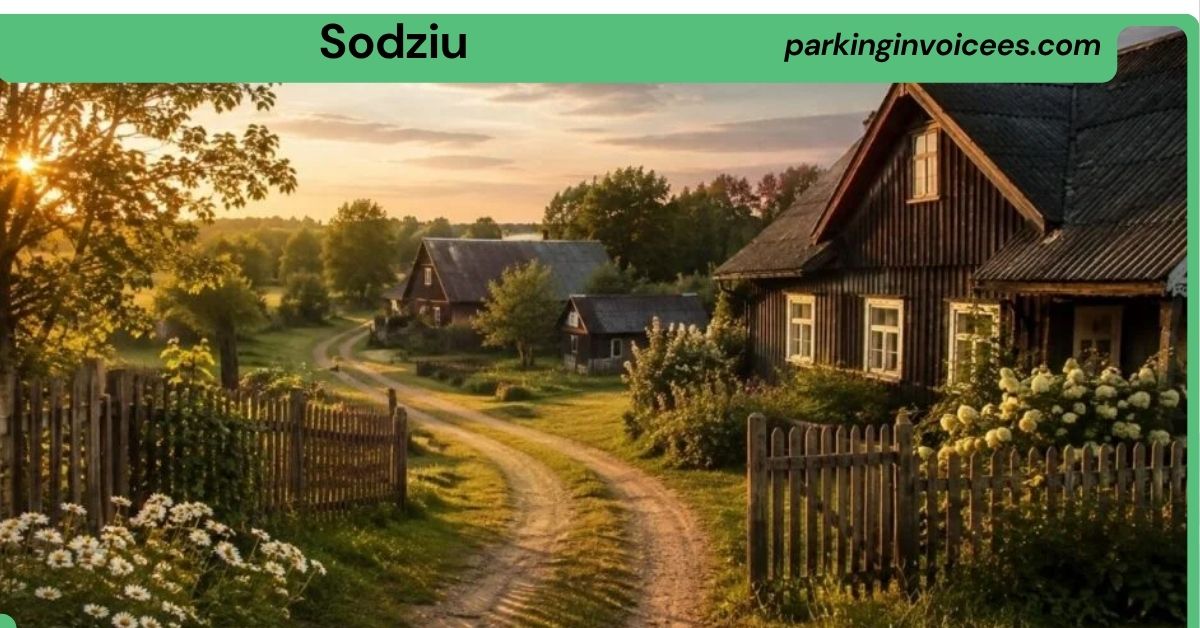
Sodziu: Meaning, History, Culture, and Lithuanian Heritage
The word Sodziu may look simple, but finding its exact meaning requires a little care. The spelling is commonly seen without Lithuanian special characters, and online sources sometimes use it for more than one Lithuanian word. This can make the term confusing for English-speaking readers, especially people in the United States who are discovering it through search engines, genealogy research, travel content, language learning, or cultural discussions.
In the most useful cultural interpretation, Sodziu is associated with the Lithuanian word sodžius, which refers to a village, rural settlement, or traditional peasant community. Historical sources describe sodžius as a type of Lithuanian rural settlement, especially in discussions of medieval and early modern village development. The term later became associated more broadly with the idea of a village.
At the same time, readers should know that Sodziu is not the precise Lithuanian spelling of sodžius. Lithuanian uses the letter ž, and the established form is sodžius. The unaccented spelling can appear when people type without Lithuanian characters.
There is another important source of confusion. žodžiu is a different Lithuanian word form related to žodis, meaning “word.” Depending on context, žodžiu can be used in expressions that mean “in a word,” “in short,” or “verbally.” It should not automatically be treated as another spelling of sodžius.
Understanding these differences gives us a much clearer picture of what people may mean when they search for Sodziu.
What Does Sodziu Mean?
Sodziu is best understood as a non-standard or simplified spelling that may refer to the Lithuanian term sodžius, meaning a village or rural settlement.
The historical word sodžius is particularly important because it does not describe only a physical location. In historical and cultural discussions, it can bring together ideas about rural settlement, farming, family life, community, land, and traditional ways of living.
The Lithuanian Universal Encyclopedia describes sodžius as a historical type of rural settlement that existed approximately from the 12th through the 16th centuries. It explains that these settlements developed as families became distributed across areas of emerging field communities. Some settlements later developed into larger village forms.
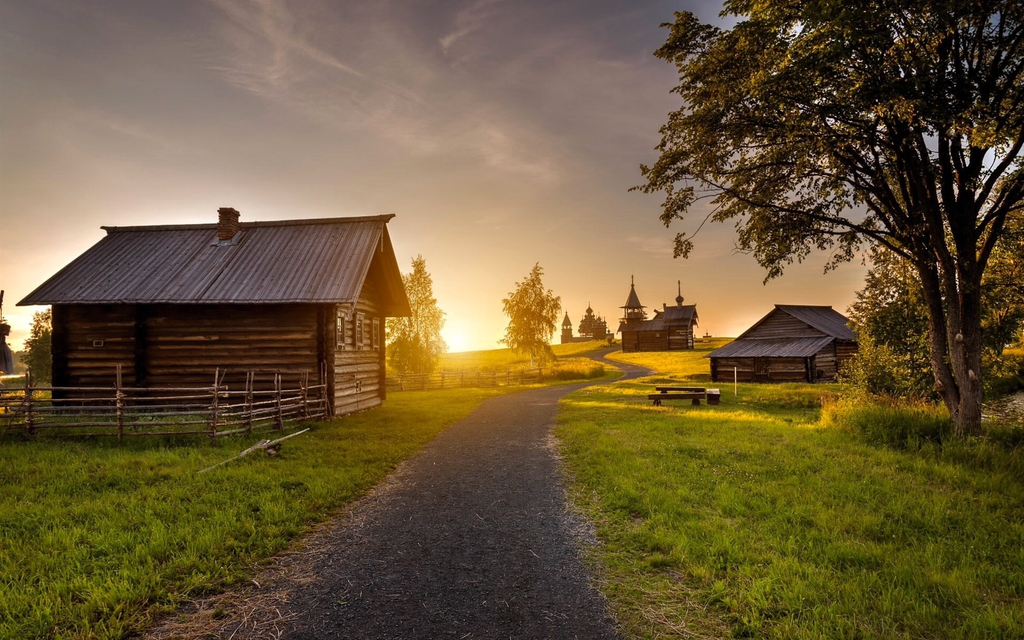
In simple English, the closest everyday explanation is:
Sodziu → often intended to refer to sodžius → village or rural settlement.
However, the exact meaning depends on where the spelling was found.
If the word appears in a discussion about:
- Lithuanian villages
- rural history
- traditional homes
- farming
- countryside heritage
- Lithuanian genealogy
- rural communities
- historical settlements
then sodžius is probably the intended reference.
If it appears in a discussion about speech, summaries, or expressions such as “in short,” the writer may actually be referring to žodžiu, which is a different Lithuanian form.
Is Sodziu a Lithuanian Word?
The answer needs some qualification.
Sodziu is not the standard Lithuanian spelling of the historical word sodžius. The standard form includes the Lithuanian letter ž.
The Lithuanian spelling is:
sodžius
The simplified form commonly written online is:
Also Read: Viltnemnda: Understanding Norway’s Local Wildlife Management Committees
sodziu or sodžius without Lithuanian characters, depending on the writer.
Lithuanian has several characters that are not found in the basic English alphabet. The letter ž is one of them. When someone is using an English keyboard, an international website, an older computer system, or a search box that does not make special characters convenient, Lithuanian letters may be removed.
This explains why a person might search for sodzius instead of sodžius.
But there is an additional issue with Sodziu: it does not simply remove the accent from sodžius. The final letters are also different.
That means it is better to describe Sodziu as an online spelling or search form rather than claim that it is the exact standard Lithuanian dictionary form.
For serious writing, language research, academic work, genealogy, or cultural research, sodžius is the safer spelling when referring to the historical rural-settlement term.
Sodziu vs. Sodžius: What Is the Difference?
The difference is mainly one of spelling and precision.
Sodžius is the Lithuanian word form associated with a village or rural settlement.
Sodziu is a simplified Latin-letter spelling that may appear online when Lithuanian characters are removed or when the original word has been entered incorrectly.
This distinction matters because search engines do not always show linguistic differences clearly. A search result can use a simplified spelling and then present information as if that spelling were the official form.
For an English-speaking reader, the easiest way to remember the difference is:
- Sodžius = established Lithuanian form
- Sodziu = simplified or non-standard online spelling
- Village/rural settlement = the main historical meaning associated with sodžius
A Lithuanian dictionary source defines sodžius in connection with a peasant place of residence and a village.
What Does Sodžius Mean in Lithuanian History?
The historical meaning of sodžius is especially interesting because Lithuanian rural settlements changed considerably over time.
According to the Lithuanian Universal Encyclopedia, sodžius was a type of rural settlement believed to have existed from roughly the 12th to the 16th centuries. The encyclopedia describes it as a settlement of rural inhabitants and explains that its development was connected with changes in the organization of communities and agricultural land.
These settlements were not simply modern villages in the same form people recognize today.
Early rural settlements could have a less regular layout. Homes and farm buildings were not necessarily arranged in the straight, planned pattern that became more common later.
This makes sodžius useful when studying how Lithuanian people organized rural life before major land reforms changed settlement patterns.
The term therefore has both a geographical and historical dimension.
It can tell us something about:
- where people lived
- how families organized themselves
- how farmland was used
- how settlements developed
- how communities interacted
- how Lithuanian rural landscapes changed
This historical background is one reason the word can carry a deeper cultural feeling than the simple English translation “village.”
The Historical Development of Lithuanian Villages
Lithuanian rural history is closely connected to agriculture.
For centuries, much of everyday life outside towns was shaped by farming, livestock, seasonal work, forests, waterways, and access to cultivated land.
A village was therefore more than a collection of houses.
It was a place where economic and social relationships developed.
People worked the land, cared for animals, exchanged help, raised children, shared traditions, and participated in seasonal activities. The exact organization changed over time, but the community remained an important part of rural life.
Historical sodžius settlements were part of this larger process.
The Lithuanian Universal Encyclopedia explains that some settlements developed from earlier community arrangements as families became distributed through field communities. As houses and farmsteads increased, some of these places developed into sodžius settlements.
This history shows why translating the word only as “small village” can miss some of its historical importance.
Sodziu and the Valakas Land Reform
One important event in Lithuanian rural history was the Valakas land reform of the 16th century.
This reform changed the organization of agricultural land and rural settlements. Historical heritage information explains that the reform resulted in major changes to older village structures and encouraged the creation of more regularly organized street-based settlements.
The transformation was significant.
Instead of homes and holdings being arranged in older, less regular patterns, new settlements could be organized along roads and paths. Land was divided into strips, and homes and agricultural buildings were arranged in relation to those plots.
This helps explain why the historical concept of sodžius should not be confused with every modern Lithuanian village.
A settlement can be called a village today, but its physical layout and historical origins may be very different from those of a medieval or early modern sodžius.
The history of settlement planning also demonstrates an important point about language: words can survive even when the physical structures and social systems they once described change.
Why Sodziu Can Represent More Than a Place
When people use Sodziu in cultural writing, they may be thinking about more than geography.
A rural settlement can represent:
- family roots
- community
- agriculture
- local traditions
- memories of childhood
- connection with land
- seasonal rhythms
- traditional architecture
- cultural identity
These associations are understandable, but they should be described as cultural interpretations, not as the strict dictionary definition of the word.
The historical term itself refers to a type of settlement or village. The emotional meanings develop from the role rural communities have played in Lithuanian history.
This distinction is important for trustworthy writing.
A good explanation should separate:
Dictionary meaning from cultural association.
The dictionary-level idea is a rural settlement or village.
The cultural associations include community, heritage, family, land, tradition, and a slower rural rhythm.
Both can be useful, but they are not exactly the same thing.
Sodziu and Lithuanian Rural Heritage
Lithuania’s countryside contains many layers of cultural history.
Traditional rural homes, farm buildings, fields, gardens, roads, forests, rivers, and village structures all form part of the broader landscape.
The word Sodziu can therefore appear naturally in conversations about Lithuanian rural heritage.
For people researching family history, this can be particularly interesting.
A family record may refer to a village, settlement, parish, district, or homestead. Older records may use different languages and spellings because Lithuania’s history involved periods of political and administrative change.
Researchers may encounter Lithuanian, Polish, Russian, German, Latin, or localized forms in historical records.
That is why spelling should be handled carefully.
A modern search for “Sodziu” may lead to information about sodžius, but the historical document itself could contain a different spelling.
What Is the Difference Between Sodziu, Kaimas, and Sodyba?
Three Lithuanian terms can sometimes become confused when English speakers research rural life:
sodžius, kaimas, and sodyba.
They are related to rural life, but they are not identical.
Sodžius
Sodžius is associated with a village or rural settlement and has an important historical meaning in discussions of Lithuanian settlement development.
Kaimas
Kaimas is the ordinary modern Lithuanian word for “village.”
The historical term sodžius eventually became used as a synonym for kaimas in broader usage.
Sodyba
Sodyba refers more specifically to a homestead or rural household property.
A useful way to think about the difference is:
Sodžius = village or rural settlement
Kaimas = village
Sodyba = homestead or rural household
These words can appear together in discussions of Lithuanian countryside life, but replacing one with another can change the meaning.
Sodziu and Lithuanian Language Learning
For American readers learning Lithuanian, Sodziu is a good example of why diacritics matter.
Lithuanian uses letters that English does not normally use, including:
- ą
- č
- ę
- ė
- į
- š
- ų
- ū
- ž
Removing these characters can make online searches easier, but it can also make different words look more similar.
For example, a searcher who types without Lithuanian characters may not immediately know whether a word originally contained š, ž, or another special character.
This is common in international digital communication.
A person may have the right general idea but an imperfect spelling.
That does not necessarily mean the person is careless. It may simply reflect the limitations of the keyboard or search platform.
For reliable language research, however, restoring the original Lithuanian spelling is valuable.
Sodziu and the Word Žodžiu
One of the most important points in understanding Sodziu is that it can be confused with žodžiu.
These are not the same word.
The form žodžiu comes from the Lithuanian word žodis, meaning “word.”
In certain expressions, žodžiu can convey ideas such as:
- in a word
- in short
- verbally
- in other words
This is a linguistic use, not a reference to a rural village.
Some online articles have incorrectly combined the meanings of sodžius and žodžiu. A careful explanation should keep them separate.
This is particularly important for SEO content because repeated online claims do not automatically make a linguistic claim correct.
Search engines can surface many pages that copy or repeat the same interpretation.
Good research requires checking the underlying language evidence.
Why Online Information About Sodziu Can Be Confusing
The internet contains many pages about unusual words, but quality varies widely.
Some pages may be based on dictionaries or encyclopedias.
Others may repeat information from another website without checking the original source.
This can create a problem known as information drift.
One person makes a small mistake.
Another website copies it.
A third website adds another interpretation.
After several repetitions, the incorrect claim may look established simply because many pages say the same thing.
The Sodziu keyword is a good example of why readers should check primary or authoritative language sources.
For this topic, a reliable Lithuanian encyclopedia and established Lithuanian dictionary resources are much more useful than anonymous blogs.
The Lithuanian Universal Encyclopedia specifically describes sodžius as a historical rural settlement type and explains its later relationship with the word kaimas.
Is Sodziu a Place in Lithuania?
Not necessarily.
Sodziu should not automatically be interpreted as the name of one particular Lithuanian town or village.
In many online contexts, the word is being used as a search spelling connected with sodžius.
That is different from a proper place name.
Lithuania has many settlements with individual names, and some names contain elements related to rural settlement vocabulary. Researchers studying a particular location should therefore identify the exact village, municipality, historical district, or parish rather than assuming that “Sodziu” identifies a single place.
This distinction is especially important for travel and genealogy searches.
If you encounter Sodziu in a historical record, look for additional information such as:
- district
- parish
- municipality
- nearby town
- family name
- date
- map reference
- original spelling
Those details can help identify the intended location.
Sodziu in Genealogy Research
Lithuanian genealogy is one area where understanding the word can be useful.
Many Lithuanian-American families have roots in rural communities. Family documents may mention villages, parishes, estates, farms, or rural settlements.
A person searching an English-language genealogy database might enter “Sodziu” because that is the spelling they encountered online.
However, genealogy databases can use different transliteration systems.
A historical record may also have been created in another language.
For that reason, genealogy researchers should search several variants.
Useful possibilities can include:
- Sodziu
- sodzius
- sodžius
- sodžiai
- kaimas
- sodyba
The correct choice depends on what you are researching.
It is also useful to preserve the original spelling when documenting family history.
Changing every historical spelling into modern English can remove valuable information.
What Does Sodziu Tell Us About Community?
The deeper cultural value of the concept comes from the role of villages in Lithuanian society.
A village was often a social environment as well as a physical settlement.
People depended on relationships.
Neighbors could exchange labor, share information, assist families, and participate in community traditions.
Agricultural life also created a strong connection to seasons.
Spring could bring planting and preparation.
Summer involved growing crops and maintaining animals.
Autumn brought harvesting and preservation.
Winter created a different rhythm, with more indoor work, storytelling, crafts, and social activities.
It would be incorrect to assume that every Lithuanian village operated in exactly the same way.
Still, rural life historically connected work, family, land, and community.
That is why modern cultural discussions may give Sodziu a feeling of heritage and belonging even when the strict linguistic meaning is simply related to a village.
Traditional Lithuanian Rural Life
Traditional Lithuanian rural life was shaped by the environment.
Woodlands, agricultural land, rivers, lakes, and changing seasons all influenced where and how people lived.
Homes and farm buildings were designed around practical needs.
Agriculture required places for crops, animals, tools, storage, and household activities.
The village environment also supported cultural traditions.
Folk songs, stories, seasonal customs, food traditions, clothing, crafts, and celebrations helped communities preserve identity.
Not every tradition belonged exclusively to villages, and modern Lithuania has changed considerably.
Still, rural heritage remains an important part of understanding Lithuanian history.
The concept behind sodžius can therefore act as an entry point into a much larger subject: how ordinary people lived, worked, raised families, and maintained traditions.
Also Read: Wollmatten: A Complete Guide to Natural Sheep’s Wool Mats
Sodziu and Lithuanian Cultural Identity
Language often carries history.
A word connected to a settlement can preserve memories of how communities once organized themselves.
This is particularly meaningful for smaller nations and cultures whose historical experiences involved political change, migration, occupation, modernization, and movement from rural areas to cities.
Lithuanian cultural identity contains both urban and rural elements.
The countryside is not the whole of Lithuanian identity, but it is an important part of it.
The concept of sodžius can therefore be understood as one small piece of a much larger cultural picture.
It reminds us that heritage is not only found in famous monuments.
It can also be found in:
- old settlement patterns
- family stories
- traditional houses
- place names
- agricultural practices
- local dialects
- food
- songs
- crafts
- landscapes
- historical records
How to Pronounce the Lithuanian Form
The exact pronunciation of sodžius is Lithuanian, so an English approximation can only be a guide.
The letter ž has a sound similar to the “s” sound in the English word “measure.”
The safest approach for language learners is to listen to a native Lithuanian speaker or use a reputable Lithuanian pronunciation resource.
Avoid treating the English spelling “Sodziu” as a perfect pronunciation guide.
The lack of Lithuanian diacritics changes what readers can see, and the final letters do not fully represent the standard Lithuanian spelling.
Is Sodziu Related to the Lithuanian Word for Garden?
Readers sometimes notice similarities between sodžius and other Lithuanian words connected with rural life, such as sodas and sodyba.
These words can appear together in cultural discussions, but similar-looking words should not automatically be treated as having identical meanings.
Lithuanian is an inflected language with a rich system of word formation and grammatical endings.
Historical and etymological relationships can be complex.
An etymological database, for example, records relationships involving Lithuanian sodà and sodžius and related Latvian forms.
For ordinary readers, the important lesson is simple:
Similar spelling does not always mean identical meaning.
When a precise linguistic relationship matters, use a dictionary or etymological source rather than guessing from appearance.
Common Misunderstandings About Sodziu
Several misconceptions appear repeatedly online.
Misunderstanding 1: Sodziu is always the official spelling
It is not.
The established Lithuanian historical term is sodžius.
Misunderstanding 2: Sodziu and žodžiu are the same word
They are not.
Sodžius relates to a village or rural settlement, while žodžiu is connected with the Lithuanian word žodis, “word.”
Misunderstanding 3: Sodziu always names one village
Not necessarily.
The term can function as a reference to a type or concept of rural settlement rather than a single geographic location.
Misunderstanding 4: Every cultural claim about Sodziu is historically proven
No.
The historical meaning of sodžius is supported by Lithuanian reference sources, but broader statements about nostalgia, spirituality, simplicity, or emotional identity should be presented as cultural interpretations rather than strict dictionary definitions.
Misunderstanding 5: Online repetition proves a definition
It does not.
Language research should prioritize dictionaries, encyclopedias, academic research, and recognized cultural institutions.
Why the Keyword Sodziu Matters for Digital Literacy
The topic also offers a useful lesson in digital literacy.
When a person searches an unfamiliar word, the first page of search results may contain:
- accurate information
- simplified information
- copied content
- machine-generated explanations
- personal interpretations
- outdated material
- unsupported claims
Readers should not assume that every result has equal authority.
A useful verification process is:
- Find the original spelling.
- Look for a reputable dictionary.
- Check an encyclopedia or academic source.
- Compare multiple independent sources.
- Separate literal meaning from cultural interpretation.
- Check whether the source provides evidence.
- Be cautious when several sites use almost identical wording.
This approach is especially useful when researching foreign-language words.
How Americans Can Understand Sodziu
For a United States audience, the easiest comparison is to think about the difference between a village, a rural settlement, and a homestead.
The United States has its own long history of rural communities.
A small farming community might have a few families, farms, roads, a church, a school, and shared local traditions.
However, Lithuanian rural settlements developed under different historical, political, geographic, and agricultural conditions.
Therefore, an American comparison can help explain the general idea but should not be treated as a perfect historical equivalent.
The best simple translation remains:
sodžius = village or rural settlement
The cultural background explains why the concept can mean more to researchers than the English word “village” suggests.
Sodziu and Modern Lithuania
Modern Lithuania is very different from the rural Lithuania of earlier centuries.
Urbanization, technology, transportation, modern agriculture, education, migration, and economic change have transformed daily life.
Many people now live in cities and towns rather than traditional rural communities.
At the same time, rural heritage remains visible.
Historic villages, traditional architecture, museums, cultural events, family traditions, regional foods, and protected landscapes continue to connect modern Lithuania with its past.
The word sodžius therefore belongs to both linguistic history and cultural memory.
Its historical settlement meaning helps researchers understand the past, while its continued presence in language and cultural discussions demonstrates how old vocabulary can remain meaningful after society changes.
Why Sodziu Appears in Online Searches
There are several reasons someone might search for Sodziu.
Language curiosity
A reader may have encountered the term and simply want to know its translation.
Genealogy
A person researching Lithuanian ancestors may find the term in a historical record or family story.
Travel research
Someone planning a trip to Lithuania may encounter discussions of villages and rural heritage.
Cultural research
Students and writers may be exploring Lithuanian history, architecture, traditions, or community life.
Search without Lithuanian characters
A user may type “Sodziu” because their keyboard does not easily support Lithuanian characters.
Confusion between similar terms
Some users may have seen sodžius or žodžiu and entered a simplified or incorrect spelling.
These different search intents explain why results for the keyword can appear inconsistent.
Sodziu for Students and Researchers
Students researching Lithuania should be especially careful with terminology.
A strong research paper should use the correct Lithuanian spelling when possible.
Instead of writing only “Sodziu,” a student can explain that the search form is associated with sodžius, a Lithuanian term connected with a village or rural settlement.
This gives readers both the searchable keyword and the linguistically accurate form.
It also demonstrates good research practice.
When discussing historical settlements, students should cite reputable sources rather than relying on general lifestyle blogs.
The Lithuanian Universal Encyclopedia is particularly useful for the historical definition of sodžius.
Sodziu and Rural Architecture
The concept of the historical Lithuanian village is also connected to architecture.
Rural settlements traditionally contained buildings designed for both household and agricultural purposes.
Depending on the period and region, a rural property might include a dwelling, storage buildings, barns, animal shelters, and other structures.
Settlement arrangement mattered because it reflected land ownership and agricultural organization.
Historical information about Lithuanian settlement patterns shows how later land reforms produced more regular street-based village layouts, with buildings placed along roads and agricultural plots organized in strips.
This means that studying a word such as sodžius can lead to the study of architecture, land management, economics, and social history.
Sodziu and Community Memory
For descendants of Lithuanian immigrants, rural vocabulary can sometimes have personal importance.
A family may remember the name of a village where grandparents or great-grandparents lived.
Even if the modern family lives thousands of miles away, the original place can remain part of the family’s story.
In that context, a word related to village life can become a bridge between generations.
However, researchers should distinguish between the historical meaning of a word and an individual family’s emotional association with it.
Both are valuable, but they answer different questions.
History asks:
What did the term mean?
Family memory asks:
What did this place mean to our family?
Keeping those questions separate can produce a more accurate and meaningful genealogy project.
How to Research Sodziu Correctly
If you want to research Sodziu further, start with the Lithuanian spelling.
Search for:
sodžius
Then compare results with:
kaimas
and, where relevant:
sodyba
If your search is about language rather than rural settlement, investigate:
žodis
and:
žodžiu
This approach reduces the chance of mixing two unrelated terms.
For historical research, also record the date and context in which the word appeared.
A word in a medieval historical source may not have exactly the same practical meaning as the same-looking word in modern speech.
Also Read: Mariano Iduba: Meaning, Background, Online Search Intent, and Digital Context
Frequently Asked Questions About Sodziu
1. Is Sodziu an official Lithuanian dictionary word?
The spelling Sodziu should not automatically be treated as the standard dictionary form of the rural-settlement term. The established Lithuanian form is sodžius. “Sodziu” is better understood as a simplified or non-standard spelling that may appear online when Lithuanian characters are removed or changed.
2. Can Sodziu be used as a Lithuanian baby name?
There is no good reason to assume that Sodziu is a traditional Lithuanian personal name simply because it appears as a searchable term. Anyone considering it as a name should first establish the intended Lithuanian word, its grammatical form, and its cultural appropriateness with a reliable native-language source.
3. Does Sodziu refer to modern Lithuanian village life?
It can be used in modern cultural discussions about Lithuanian rural life, but its strongest historical connection is with sodžius, a term for a village or rural settlement. Modern Lithuanian commonly uses kaimas for “village,” so the historical and modern uses should not be treated as identical.
4. Why do some websites say Sodziu means “in short”?
This is most likely caused by confusion between sodžius and žodžiu. The latter comes from žodis, meaning “word,” and can appear in expressions that mean “in a word,” “in short,” or “verbally.” It is a different Lithuanian form from sodžius.
5. Is Sodziu important for Lithuanian genealogy?
It can be useful when researching Lithuanian rural history, especially if the spelling appears in a family document, translated record, or online genealogy discussion. Researchers should search for the original Lithuanian spelling sodžius as well as possible place names and historical variants. A single word is usually not enough to identify a specific village.
Conclusion: Understanding the Real Meaning of Sodziu
Sodziu is a small keyword with a surprisingly complicated linguistic background.
For most discussions about Lithuanian rural heritage, the important word is sodžius, which refers to a village or rural settlement and has a specific historical role in understanding the development of Lithuanian countryside communities. The Lithuanian Universal Encyclopedia describes sodžius as a historical type of rural settlement and explains how the term later became associated with the broader idea of a village.
The spelling Sodziu should therefore be treated carefully. It may be a simplified online spelling, a search-engine version, or an inaccurate rendering of a Lithuanian word.
It is also important not to confuse sodžius with žodžiu. Although the spellings can become confusing when Lithuanian characters are removed, they have different meanings. Sodžius is connected with village and rural settlement history, while žodžiu is related to žodis, or “word,” and can be used in expressions such as “in short.”
For readers in the United States, the simplest takeaway is this:
If you see “Sodziu” in a discussion about Lithuania’s villages, countryside, genealogy, or rural heritage, the intended term is likely related to the Lithuanian word sodžius.
But if the surrounding text discusses speaking, summarizing, or the expression “in short,” check whether the intended word is actually žodžiu.
The larger lesson is valuable beyond this single keyword. Foreign words can lose important information when special characters are removed, and online repetition can create confusion between similar-looking terms. Checking authoritative dictionaries, encyclopedias, and historical sources is the best way to separate established meaning from internet speculation.
Ultimately, Sodziu can serve as an entry point into the history of Lithuanian villages, rural communities, language, family heritage, and cultural memory. Its importance comes not from treating the simplified spelling as a mysterious standalone concept, but from understanding the Lithuanian language and historical context behind it.