Schoology Alfa: The Learning Platform, Dashboard, Features, Login, Safety, and Digital Learning
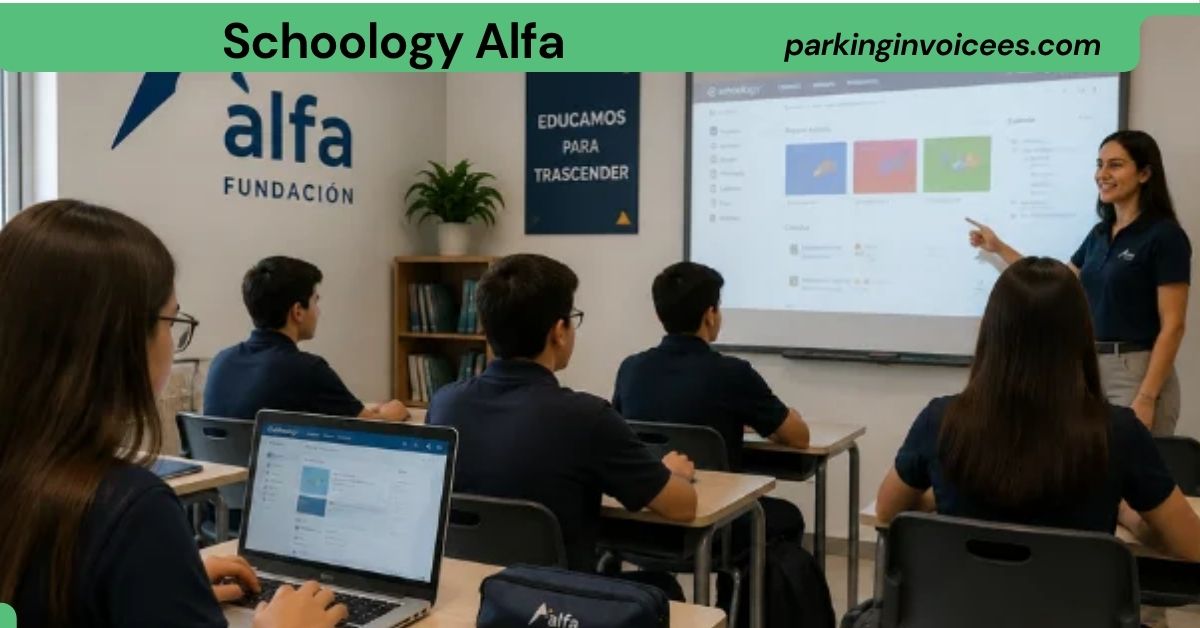
Schoology Alfa is a search term used by people who want to learn about a Schoology-based digital learning environment connected with Alfa or Fundación Alfa. The phrase can be confusing because Schoology is the established learning management system, while “Alfa” appears to identify a particular institutional environment or implementation rather than a completely separate learning management system.
Recent online references commonly describe Schoology Alfa as a Schoology environment associated with Fundación Alfa. However, public information about the exact configuration, current login address, and institution-specific settings is limited. For that reason, users should rely on their school or organization for the correct login instructions instead of assuming that every website using the phrase “Schoology Alfa” is an official source.
The underlying Schoology platform is designed to bring many parts of digital education into one place. Depending on how an institution configures it, students and educators can use Schoology for courses, assignments, assessments, discussions, grades, learning materials, calendars, announcements, and communication.
PowerSchool’s current Schoology documentation shows that the home page can include Recent Activity, a Course Dashboard, reminders, and a To Do area. The Course Dashboard displays courses as tiles, while the To Do area can show assignments, tests, quizzes, discussions, and other items with due dates.
This guide explains what Schoology Alfa means, how the platform works, what students and teachers can do with it, how the dashboard can help with organization, and what users should know about privacy and online safety.
What Is Schoology Alfa?
Schoology Alfa generally refers to a Schoology learning environment associated with Alfa rather than a completely independent LMS.
A learning management system, or LMS, is software used to organize teaching and learning activities online. Instead of keeping assignments in email, grades in one system, class announcements in another system, and learning resources somewhere else, an LMS can bring these activities together.
Schoology is the underlying LMS. It provides tools that allow educational organizations to create courses and provide digital learning materials to students.
The term “Schoology Alfa” is therefore best understood as an institution-specific use or branding of Schoology when discussing the Alfa educational environment.
This distinction is important for search users. Someone searching for “Schoology Alfa” may actually be looking for:
- A Schoology login page
- A student dashboard
- An Alfa-related course
- Assignment information
- Grades or feedback
- School announcements
- A parent access area
- Help with account access
- Information about Fundación Alfa
- Guidance for using Schoology
Not every page that mentions Schoology Alfa is necessarily operated by Schoology or Alfa. This is especially important when searching for login information.
Is Schoology Alfa a Separate LMS?
Based on the available public information, it is more accurate to describe Schoology Alfa as an Alfa-related implementation or use of Schoology rather than claim that it is a completely separate LMS.
Schoology itself is an established education technology platform. PowerSchool announced its agreement to acquire Schoology in 2019, describing Schoology as a K-12 learning management system and explaining plans to integrate its learning tools with PowerSchool’s broader education technology ecosystem.
This history helps explain why Schoology Alfa should not automatically be treated as a new software company or independent educational technology product.
The exact experience can still differ from one institution to another. Schools and educational organizations can configure courses, permissions, integrations, branding, grading systems, and access rules according to their needs.
That means two users can use Schoology and see somewhat different screens or features.
What Does the Schoology Alfa Dashboard Do?
The dashboard is one of the most important parts of a Schoology-based learning environment.
A good dashboard answers a simple question:
“What do I need to know or do today?”
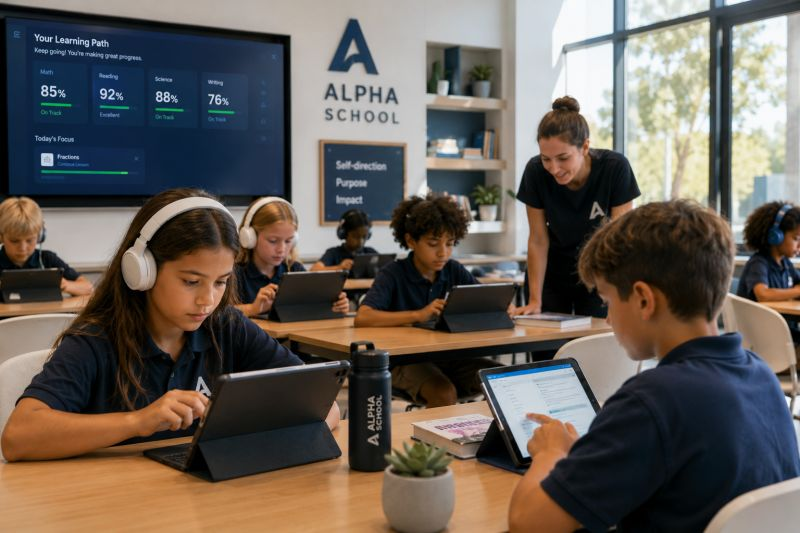
Schoology’s current documentation describes a home page that can provide Recent Activity, a Course Dashboard, Reminders, and a To Do list. The Course Dashboard can display courses in a tiled format, while the To Do area helps users identify upcoming and overdue academic activities.
This type of design supports the idea behind a clean, easy-to-use dashboard.
Instead of requiring a student to open every course individually, the dashboard can provide a quick overview.
A typical dashboard experience may help a student identify:
- Current courses
- New announcements
- Upcoming assignments
- Due dates
- Recent grades
- Recently completed work
- Discussions
- Course updates
- Other academic reminders
The exact information shown depends on the institution’s settings and the user’s role.
Why a Simple Dashboard Matters for Students
Technology can become a barrier when students have to remember too many menus, websites, passwords, and applications.
Also Read: TozyMagazine.com USA: A Complete Guide
A simple dashboard reduces this problem.
For example, imagine a student has five classes. Without a centralized learning platform, the student might need to check five different systems for homework.
With an LMS, the student can start from one central location.
This does not guarantee better grades. However, it can reduce the amount of time spent searching for information.
That is an important difference.
An LMS does not replace learning. It organizes the digital environment around learning.
For students who are not confident with technology, simple navigation can make a significant difference.
Schoology Alfa for Students
Students are often the most frequent users of a school LMS.
A student may use the platform to access course materials, read instructions, complete assignments, participate in discussions, take assessments, and review grades.
The experience normally begins with the student’s school or organization providing access credentials.
After signing in, the student can review the home page and select the relevant course.
Inside a course, the student may find folders, pages, assignments, tests, quizzes, discussions, files, links, and other learning materials.
Schoology’s documentation confirms that instructors can create assignments with descriptions, due dates, submission settings, grading options, rubrics, learning objectives, and other controls.
This creates a structured digital classroom.
How Students Can Use Schoology Alfa Effectively
Students can get more value from a learning management system by developing a simple routine.
Start by checking the dashboard.
Look for new announcements and upcoming work.
Next, review the To Do area or course calendar.
Then open each assignment before the due date rather than waiting until the final hours.
Students should also read teacher instructions carefully. An assignment may require a file upload, online response, discussion post, quiz, or another form of submission.
After submitting work, students should confirm that the submission was successfully recorded.
This habit is particularly useful when an assignment affects a grade.
Assignments and Submissions in Schoology
Assignments are one of the core functions of Schoology.
Teachers can create assignments inside courses and provide instructions, attachments, links, due dates, grading settings, and submission options.
According to current PowerSchool documentation, assignment due dates can appear in the Course Calendar and Upcoming area. Overdue notifications can also be enabled when a student does not submit work by the deadline.
This creates a direct connection between the assignment and the student’s planning process.
A student can therefore use the platform not simply to submit work, but also to organize the work.
That distinction is valuable.
The best use of an LMS is not “open it when homework is due.” It is “use it as an academic planning system.”
Grades and Feedback in Schoology Alfa
Grades are another important part of a Schoology environment.
Schoology’s Gradebook allows instructors to manage grades for assignments, tests, quizzes, assessments, and discussions. Students can review grades through the Grades area when their institution has enabled the appropriate features.
Feedback can be just as important as the grade itself.
A numerical score tells students how they performed.
Teacher comments can help explain why.
Rubrics can make this process more structured. Schoology allows rubrics to be used with assignments and discussions, among other supported materials. Rubrics can include custom criteria or align with learning objectives and standards.
For students, this means a grade should not always be viewed as the end of an activity.
It can be the beginning of the next improvement.
Assessments and Quizzes
Schoology also supports online assessments.
PowerSchool’s documentation explains that instructors can create assessments to measure student understanding or readiness. Many assessment questions can be automatically graded, while subjective questions such as essays may require manual grading.
This can help teachers collect information about student understanding.
For example, a teacher might use a short assessment after a lesson to determine whether students understand the main concept.
If many students struggle with the same question, the teacher can use that information to review the topic.
This is one of the stronger educational uses of an LMS: it can help turn student activity into useful feedback for instruction.
Schoology Alfa Discussions and Collaboration
Digital learning does not have to mean studying alone.
Schoology supports discussion tools that allow students to respond to teacher prompts and interact with classmates.
PowerSchool documentation describes threaded discussions where students can respond to classmates. Teachers can also moderate posts and control settings such as whether students see other responses before participating.
This can support activities such as:
- Class discussions
- Reading responses
- Opinion questions
- Peer interaction
- Reflection activities
- Collaborative learning
Students should remember that online classroom communication is still communication.
They should use respectful language, avoid sharing private information, and follow school rules.
Schoology Alfa for Teachers
Teachers can use Schoology to organize digital course content and manage student activities.
A teacher may use the platform to:
- Create assignments
- Upload learning resources
- Build assessments
- Grade student work
- Give feedback
- Create discussions
- Use rubrics
- Set due dates
- Align activities with learning objectives
- Communicate with students
- Track course activity
The platform can therefore function as a digital classroom workspace.
However, technology should support teaching rather than replace good teaching.
A well-designed course still needs clear instructions, appropriate workloads, useful feedback, and meaningful learning activities.
Personalized Learning and Individual Assignments
One useful feature is the ability to assign certain course materials to specific students or groups.
PowerSchool documentation states that instructors can individually assign materials such as assignments, tests, quizzes, assessments, discussions, pages, files, links, and other supported materials.
This can be useful in several educational situations.
A teacher may need to give one student a modified assignment.
Another student may need additional practice.
A student may need a make-up activity.
A teacher may also want to provide extra credit to selected students.
This type of flexibility is important because students do not always learn at exactly the same speed.
Schoology Alfa and Google Workspace
Many schools use multiple education technology tools together.
Schoology can integrate with Google Assignments in supported configurations.
PowerSchool’s current documentation explains that instructors can create Google assignments within Schoology, allowing students to work with Google Docs, Sheets, Slides, or Drawings. Depending on the configuration, teachers can manage grading and feedback through Schoology or Google.
This kind of integration can reduce the need for students to repeatedly switch between unrelated systems.
However, integrations also introduce complexity.
A student may have a Schoology account and a school-managed Google account.
If the accounts do not match, access can fail.
That is why students should use the account provided by their school when working with connected applications.
Schoology Alfa Mobile Access
Schoology is also available through mobile applications.
The current Google Play listing identifies Schoology as an app from PowerSchool Group LLC and describes features such as managing classrooms, creating and submitting assignments, participating in discussions, completing assessments, and collaborating with peers. The listing was updated in June 2026.
The Apple App Store also lists Schoology as an education application from PowerSchool Group LLC.
Mobile access can be useful for checking announcements, reviewing deadlines, and completing supported activities away from a computer.
However, students should not assume that every feature works exactly the same way on mobile and desktop.
For example, PowerSchool documentation states that some instructor functions, such as creating and editing assessments, require the web version, while students can complete and submit assessments from mobile devices.
How to Approach a Schoology Alfa Login
If you are trying to access Schoology Alfa, the safest approach is to start with your educational institution.
Use the login address provided by:
- Your school
- Your teacher
- Your institution’s official website
- An official welcome email
- Your student handbook
- Your organization’s IT support team
Avoid choosing a login page only because it appears high in a search engine.
Search results can include unofficial guides, advertisements, copied content, and unrelated websites.
If you are unsure, confirm the website address with your school.
This is especially important because usernames and passwords are private account information.
What to Do If Schoology Alfa Login Does Not Work
Login problems can happen for many normal reasons.
Common causes include:
- Incorrect username
- Incorrect password
- Wrong school portal
- Expired credentials
- Browser problems
- Account restrictions
- Single sign-on problems
- Internet connection problems
- Institution-side technical issues
A sensible troubleshooting process is simple.
First, confirm that you are using the correct official login page.
Second, check that your username and password are entered correctly.
Third, try the password recovery option if one is provided.
Also Read: GrammarVista.com USA: The Grammar, Vocabulary, Writing, and Online Language Resources
Fourth, try another supported browser or device if the problem appears technical.
Finally, contact your school’s IT support team if you still cannot access the account.
Do not repeatedly guess passwords.
Repeated failed login attempts can sometimes trigger security controls.
Schoology Alfa Privacy and Data Protection
Privacy matters because educational technology systems may contain information about students.
Depending on the institution and configuration, a school LMS may contain names, course information, grades, assignments, communications, and other educational records.
Students and parents should therefore treat their Schoology accounts as private educational accounts.
Never share your password with classmates.
Do not post personal information in public discussion areas.
Avoid uploading documents that contain information unrelated to the assignment.
Also remember that privacy settings can vary between institutions and integrations.
The Apple App Store currently notes that the Schoology app’s developer has indicated that certain data may be collected, including user content and identifiers, while usage data and diagnostics may also be collected without being linked to the user. Apple also notes that privacy practices can vary depending on features and age.
This does not mean users should avoid the platform.
It means users should understand that digital education involves data and should follow responsible privacy practices.
Schoology Alfa and Online Safety
A school learning platform should be treated as an educational environment, not as a social media site.
Students should be careful with messages, comments, uploaded files, and shared information.
Good digital safety habits include:
- Use a strong, unique password
- Do not share login credentials
- Log out on shared computers
- Keep devices updated
- Use school-approved applications
- Check website addresses before signing in
- Avoid suspicious links
- Report unusual account activity
- Do not share private information with strangers
- Ask an adult or teacher when something online seems suspicious
Digital literacy is especially important for younger students.
A clean dashboard may make technology easier to use, but users still need to understand online risks.
How Parents Can Use Schoology Alfa
Parents can play an important role in digital learning.
Where parent access is enabled, Schoology can provide visibility into a student’s academic activity.
PowerSchool’s parent guide describes areas where parents may view student activity, enrollments, grades, attendance information, overdue work, and upcoming assignments.
The best use of parent access is not constant monitoring.
Instead, parents can use the information to support good habits.
For example, a parent might ask:
“What assignments are due this week?”
rather than:
“Why did you get this grade?”
This small change can encourage planning and responsibility.
Benefits of Schoology Alfa
A Schoology-based Alfa environment can offer several practical benefits.
Centralized Learning
Students can access many academic activities from one digital environment.
Better Organization
Dashboards, calendars, reminders, and upcoming work can make deadlines easier to manage.
Teacher Feedback
Students can receive grades, comments, and rubric-based feedback.
Digital Collaboration
Discussions and shared activities can support communication between students and teachers.
Flexible Access
Supported mobile applications allow users to access learning activities from mobile devices.
Integration
Schoology can work with other educational technology tools, including Google Assignments in supported configurations.
Personalized Activities
Teachers can assign selected materials to specific students or groups.
Progress Visibility
Grades and course activity can give students, teachers, and authorized parents a clearer picture of academic progress.
Limitations of Schoology Alfa
No learning platform solves every educational problem.
There are also limitations to consider.
First, the quality of the experience depends heavily on how the institution sets up its courses.
A well-organized LMS can feel simple.
A poorly organized course can feel confusing even when the software itself is powerful.
Second, students need reliable internet access and compatible devices.
Third, technical problems can interrupt learning.
Fourth, too many notifications can become distracting.
Fifth, students can become overly dependent on digital reminders instead of developing their own planning skills.
These limitations show why technology should be combined with good teaching practices.
Does Schoology Alfa Improve Learning?
The answer is more complicated than simply saying yes.
Schoology can make learning management easier.
It can help teachers organize materials and students find assignments.
It can provide assessment information and feedback.
But the platform itself does not automatically make students learn better.
The educational value comes from how teachers and students use it.
For example, a well-designed assignment with clear instructions can support learning.
A confusing assignment with poor instructions remains confusing even if it is delivered through an advanced LMS.
This is an important insight for schools considering digital transformation.
The goal should not be “use more technology.”
The goal should be “use technology where it improves learning.”
Schoology Alfa vs. Traditional Classroom Tools
A traditional classroom may rely on paper worksheets, printed textbooks, classroom announcements, and physical gradebooks.
A digital LMS can move many of these processes online.
That provides convenience, but it also changes student behavior.
Students must become responsible for checking digital information.
Teachers must become responsible for keeping digital courses organized.
Parents may need to understand new digital workflows.
In other words, an LMS changes the organization of education as much as it changes the location of educational materials.
How to Make the Schoology Alfa Dashboard Easier to Use
Students can make a simple daily routine.
Start by checking the dashboard once each school day.
Review upcoming assignments.
Open important announcements.
Check whether previously submitted work has received feedback.
Then create a personal priority list.
A useful approach is to divide work into three groups:
- Due today
- Due soon
- Long-term work
This prevents the dashboard from becoming just another screen to look at.
The purpose of the dashboard is to help turn information into action.
Common Mistakes Students Should Avoid
One common mistake is checking Schoology only when a teacher reminds the class.
Another is assuming that every notification means an assignment is due immediately.
Students should read the actual due date.
Another mistake is submitting a file without confirming that the submission worked.
Students should also avoid waiting until the final minutes before a deadline.
Technical problems can happen at any time.
A final common mistake is ignoring teacher feedback.
Feedback is often one of the most educational parts of an LMS.
How Teachers Can Create a Better Schoology Experience
Teachers can improve the user experience by keeping course structures consistent.
For example, each course can use predictable sections such as:
- Start Here
- Weekly Lessons
- Assignments
- Assessments
- Resources
- Discussion
- Grades
The exact structure can vary.
The main principle is consistency.
Students should not have to learn a new navigation system for every class.
Clear assignment titles also matter.
“Chapter 4 Essay” is easier to understand than “Task 7.”
Due dates should be accurate.
Instructions should explain what students need to submit.
Files should have clear names.
These small choices can make the platform feel much easier to use.
Why Search Intent Matters for the Keyword Schoology Alfa
The keyword “Schoology Alfa” has several possible search intents.
Some users may have informational intent.
They want to know what the term means.
Others may have navigational intent.
They may simply be looking for their institution’s login page.
Some may have troubleshooting intent because they cannot access their account.
Others may be parents or teachers looking for platform guidance.
Understanding this search intent helps explain why the keyword can appear in many different contexts.
For a user who simply needs to log in, a long explanation of LMS history is not enough.
For someone researching digital education, however, the background can be useful.
Good educational content should address both needs without confusing the two.
Is Schoology Alfa Safe to Use?
A Schoology-based educational environment can be used safely when users access the correct institution-approved portal and follow good security practices.
The larger risk is often not the LMS itself.
The risk can come from unsafe behavior around the LMS.
For example, users may click a fake login page, reuse a password, install an unofficial application, or share credentials.
Students should therefore verify links before entering account information.
Also Read: SSIS-950: SQL Server Integration Services, Data Integration, and Online Search Intent
If a message says that a Schoology account needs urgent verification, users should not automatically click the link.
Instead, they should open the institution’s known official website or contact school support.
Schoology Alfa and Digital Literacy
Digital literacy means more than knowing where to click.
A digitally literate student can evaluate information, protect personal data, communicate respectfully, identify suspicious websites, and use online tools responsibly.
Schoology can become a useful environment for developing these skills.
Students learn to manage deadlines.
They learn how to upload files.
They learn how digital feedback works.
They learn how online discussions should be handled.
They also learn an important modern lesson: digital organization is part of academic organization.
These skills can remain useful beyond school.
Future of Schoology Alfa and Digital Learning
Digital learning platforms are likely to continue changing.
Current Schoology documentation already includes AI-related capabilities such as PowerBuddy in supported assignment configurations. PowerSchool documentation describes options that allow instructors to enable PowerBuddy chat in assignments, including research and Socratic modes.
This points toward a broader shift in education technology.
Future LMS platforms may increasingly combine:
- Course management
- Assessments
- Learning analytics
- AI assistance
- Personalized learning
- Digital collaboration
- Automated feedback
- Mobile learning
- Parent communication
However, new technology also creates new responsibilities.
Schools will need to consider accuracy, student privacy, academic integrity, teacher oversight, and appropriate use of AI.
The most useful digital education systems will not simply add more features.
They will make important tasks easier while keeping students and teachers in control.
Frequently Asked Questions About Schoology Alfa
1. Can students use Schoology Alfa without a school-issued account?
Access depends on the institution’s configuration. If Schoology Alfa is being used as an institution-specific learning environment, students generally need the account or invitation provided by the relevant school or organization. A person should not assume that creating an unrelated public Schoology account will provide access to a private institutional course.
2. Can a student have access to Schoology from more than one device?
Schoology supports web and mobile access, but the exact experience depends on the institution, device, account configuration, and available features. Students should use official applications and supported browsers rather than downloading unknown software that claims to provide special access.
3. Can teachers see everything a student does on a personal device?
Students should not assume that an LMS gives teachers unlimited access to a personal device. Schoology records information related to the platform and its configured activities, but monitoring capabilities depend on the institution, integrations, and other technology used by the school. Students should review their school’s technology and acceptable-use policies for specific details.
4. Can Schoology Alfa replace email between teachers and students?
It can reduce the need for some academic communication through ordinary email, but whether it replaces email depends on the school. Some institutions use Schoology messaging and announcements for course communication while keeping email for administrative communication. Students should follow the communication method specified by their teachers and school.
5. What should a student do if an assignment disappears from Schoology Alfa?
First, check the course and assignment area again. Then verify whether the assignment was moved, unpublished, locked, individually assigned, or affected by a due-date or course-setting change. If the assignment should still be available, contact the teacher rather than repeatedly refreshing the page or searching for an unofficial copy. Teachers can configure visibility and individual assignment settings, so the teacher or school administrator is usually the best source for a course-specific problem.
Conclusion: Key Takeaways About Schoology Alfa
Schoology Alfa is best understood as a Schoology-based educational environment associated with Alfa rather than automatically treating it as a completely separate learning management system.
The underlying Schoology platform is designed to organize digital teaching and learning.
Its tools can support courses, assignments, assessments, discussions, grades, feedback, calendars, learning resources, and communication.
One of the most valuable ideas behind the Schoology dashboard is simplicity. A clean dashboard can help students quickly understand what courses they have, what work is coming, and what needs attention.
For teachers, the platform can provide a central place to organize instruction and evaluate student work.
For parents, authorized access can provide useful visibility into academic activity.
For schools, an LMS can reduce fragmentation by bringing many digital learning activities into one environment.
However, technology alone does not create effective education.
The quality of the experience depends on course design, teacher communication, student habits, technical support, accessibility, and responsible use.
Users should also be careful when searching for Schoology Alfa online. Because the phrase is used by many third-party websites, the safest approach is to obtain login information and account instructions directly from the relevant educational organization.
The most important takeaway is simple: Schoology Alfa should be viewed as part of a broader digital learning experience. Its real value comes from making education more organized, accessible, and understandable without allowing technology to become more complicated than the learning it is designed to support.