Sodiceram: A Complete Guide to Next-Generation Sodium-Infused Ceramic
Sodiceram is a term associated with a next-generation sodium-infused ceramic concept that aims to combine visual appeal with high-performance material properties. The idea sits at the intersection of advanced ceramics, architectural design, surface engineering, and industrial materials.
For people searching for sodiceram in the United States, one important point is that the term does not appear to have the same level of established public documentation as widely recognized ceramic materials such as porcelain, alumina, zirconia, or silicon carbide. Therefore, it is useful to approach sodiceram as an emerging or specialized material concept rather than assuming that every claim associated with the name has already been independently established.
This guide explains the concept in simple language, explores how sodium can influence ceramic materials, discusses possible applications, compares the idea with conventional ceramics, and explains what buyers, designers, engineers, and researchers should consider before treating sodiceram as a proven commercial material.
What Is Sodiceram?
Sodiceram can be understood as a ceramic material concept involving sodium within a specially engineered ceramic composition. Based on the description provided for the term, its purpose is to combine attractive appearance with performance characteristics suitable for demanding environments.
Ceramics are inorganic, nonmetallic materials that are usually produced by shaping raw materials and then heating them to high temperatures. Their properties can vary greatly depending on their chemical composition, manufacturing method, porosity, grain structure, surface treatment, and firing conditions.
Sodium is already important in many ceramic systems. Sodium-containing compounds can act as fluxes, helping other ingredients melt or react during firing. Sodium can also occur in glass-ceramic systems and certain aluminosilicate materials.
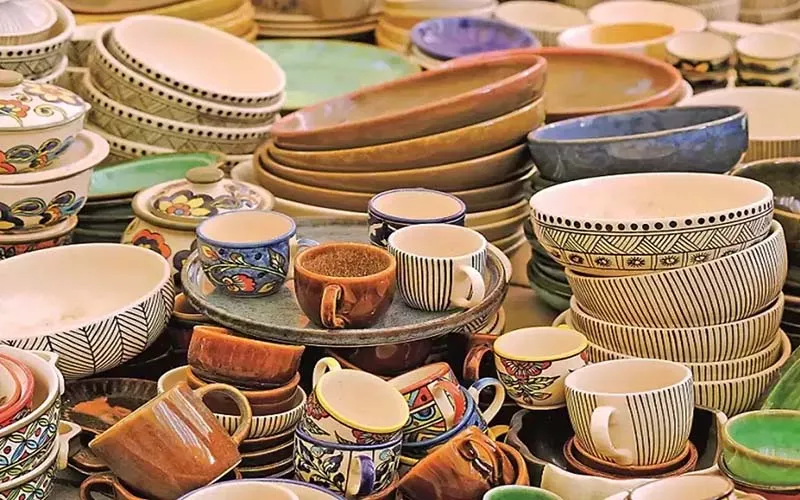
The phrase “sodium-infused ceramic,” however, should not automatically be interpreted as meaning that sodium is simply added to an ordinary ceramic after manufacturing. In advanced materials, the exact way an element is incorporated into a ceramic structure matters greatly.
A material’s real-world performance depends on measurable properties such as:
- Hardness
- Strength
- Fracture toughness
- Thermal stability
- Chemical resistance
- Water absorption
- Porosity
- Surface durability
- Electrical properties
- Resistance to thermal shock
- Manufacturing consistency
Without standardized test data, it is difficult to determine exactly how sodiceram performs compared with established ceramic products.
Why Is Sodiceram Getting Attention?
Interest in sodiceram can be connected to a larger movement toward advanced materials that are expected to perform well while also supporting modern design.
Traditional ceramic materials are already extremely useful. However, architects, manufacturers, engineers, and interior designers continue to look for materials that can provide combinations such as:
- Attractive finishes
- High durability
- Easy maintenance
- Low water absorption
- Resistance to heat
- Resistance to chemicals
- Consistent color
- Long service life
- Manufacturing flexibility
This creates demand for materials that can bridge the gap between decorative surfaces and technical performance.
The concept behind sodiceram is interesting because sodium-containing ceramic systems can be engineered in different ways. The exact formulation determines whether sodium primarily influences processing, melting behavior, microstructure, surface characteristics, or another property.
That makes the term potentially relevant to both design-oriented and industrial discussions.
How Sodium Can Influence Ceramic Materials
To understand sodiceram, it helps to understand the role sodium can play in ceramics.
Ceramic compositions commonly contain materials such as silica, alumina, feldspar, clay minerals, alkaline compounds, alkaline-earth compounds, and other additives. During firing, these ingredients can react and form new phases.
Sodium may participate in these reactions.
Sodium as a Flux
One of the most important roles of sodium-containing compounds in ceramic processing is their ability to act as fluxes.
A flux can help lower the temperature at which certain components begin to form a liquid phase during firing. This can affect:
- Densification
- Glass formation
- Porosity
- Surface appearance
- Energy requirements
- Microstructure
In simple terms, sodium-containing materials can help a ceramic body or glaze develop its final structure during heating.
However, more flux does not automatically mean better ceramic performance. An inappropriate formulation can produce undesirable phases, deformation, excessive glass formation, or other manufacturing problems.
Sodium and Glass-Ceramic Systems
Some advanced ceramics are closely related to glass-ceramic technology.
Glass-ceramics begin as glass but are then controlled through heat treatment so that crystals form inside the glassy structure. Their properties can be carefully adjusted by controlling composition and thermal processing.
Sodium-containing compositions can be part of these systems.
This is relevant because a material marketed as a high-performance sodium-infused ceramic may involve a complex combination of crystalline and glassy phases rather than a simple traditional clay-based ceramic.
Sodium and Surface Properties
Sodium can also affect the chemical environment of ceramic surfaces.
The effect depends on the complete formulation, not sodium alone. A ceramic’s final surface behavior is influenced by its mineral phases, glaze chemistry, firing temperature, porosity, and finishing process.
This is why material specifications are more useful than broad marketing descriptions.
Sodiceram Materials and Manufacturing
The manufacturing process is one of the most important factors in determining ceramic quality.
A general advanced-ceramic production process may involve several stages.
1. Raw Material Selection
Manufacturers first select suitable raw materials.
Depending on the intended product, these may include:
- Silica
- Alumina
- Feldspathic materials
- Clay minerals
- Sodium-containing compounds
- Stabilizers
- Pigments
- Processing additives
The exact formula would depend on the desired performance.
2. Powder Preparation
Raw materials must usually be processed into a controlled mixture.
Also Read: Insetprag: Understanding Integrated, Purpose-Driven Design in Modern Systems
Particle size is important because it affects packing, processing, and sintering behavior.
Fine and consistent powders can help manufacturers achieve more predictable results.
3. Mixing
The ingredients are blended to create a uniform composition.
Poor mixing can create chemical variations within a ceramic body. Those variations can eventually cause differences in density, strength, color, or other properties.
4. Forming
The ceramic mixture is shaped into the desired product.
Common ceramic forming methods include:
- Pressing
- Extrusion
- Slip casting
- Injection molding
- Additive manufacturing
- Specialized industrial forming methods
The appropriate method depends on the product’s size, geometry, and required precision.
5. Drying
Before firing, moisture must be removed carefully.
Rapid or uneven drying can create cracks or distortion.
6. Firing or Sintering
The shaped material is heated to a carefully controlled temperature.
During this stage, particles bond together and the material develops its final microstructure.
For sodium-containing compositions, temperature control can be particularly important because fluxing behavior can influence liquid formation and densification.
7. Finishing
The final product may be:
- Polished
- Glazed
- Textured
- Cut
- Machined
- Coated
- Surface-treated
The finishing process can significantly change how a ceramic looks and behaves.
Potential Sodiceram Applications
The potential applications of sodiceram depend on its actual formulation and verified performance data.
The supplied description connects sodiceram with both luxury interiors and demanding industrial environments. Those two areas have very different requirements.
A decorative interior surface may prioritize appearance, texture, and maintenance.
An industrial component may instead prioritize strength, thermal stability, wear resistance, dimensional accuracy, or chemical resistance.
For that reason, a single material may require different grades or formulations for different applications.
Luxury Interior Design
Advanced ceramic surfaces can be attractive for premium interiors because they can provide a combination of visual sophistication and practical durability.
Possible areas of interest include:
- Wall surfaces
- Countertops
- Decorative panels
- Flooring
- Feature walls
- Furniture surfaces
- Bathroom surfaces
- Commercial interiors
The key advantage of ceramic surfaces in these environments is that appearance does not necessarily have to come at the expense of durability.
Architecture
Architectural materials must withstand daily use and environmental exposure.
Depending on verified specifications, an advanced ceramic could potentially be used for:
- Building interiors
- Exterior cladding
- Decorative architectural panels
- Flooring
- High-traffic spaces
- Hospitality projects
- Retail environments
However, exterior architectural applications require careful testing for weathering, freeze-thaw conditions, thermal expansion, moisture, impact, and installation requirements.
Industrial Components
Technical ceramics are used in many industries.
Depending on its properties, an advanced ceramic material could potentially have applications in:
- Wear-resistant components
- Thermal components
- Chemical-processing environments
- Machinery parts
- Electrical insulation
- Industrial surfaces
- Laboratory equipment
These applications require much more than an attractive appearance.
Engineers would need reliable test results before specifying the material.
Hospitality and Commercial Spaces
Hotels, restaurants, retail stores, and offices often need surfaces that look premium but can tolerate heavy use.
This creates an interesting potential market for high-performance decorative ceramics.
Commercial designers may value:
- Easy cleaning
- Visual consistency
- Scratch resistance
- Stain resistance
- Heat resistance
- Long service life
Again, these qualities should be confirmed through manufacturer specifications and standardized testing rather than assumed from the name sodiceram.
Sodiceram vs Traditional Ceramic
A common question is how sodiceram differs from ordinary ceramic materials.
The answer depends on the precise composition.
Traditional ceramics can include a very wide range of materials. “Ceramic” is not a single material with one fixed performance level.
For example, earthenware, stoneware, porcelain, alumina ceramic, zirconia ceramic, and silicon carbide all belong to the broad ceramic family but have very different characteristics.
If sodiceram uses sodium as a meaningful part of an engineered formulation, its properties may differ from conventional ceramic compositions.
The differences could involve:
- Processing temperature
- Densification behavior
- Microstructure
- Surface characteristics
- Optical appearance
- Thermal behavior
- Chemical resistance
- Mechanical properties
But a meaningful comparison requires actual data.
Sodiceram vs Porcelain
Porcelain is one of the best-known advanced ceramic materials used in architecture and interior design.
Porcelain products are generally valued for their dense structure, low water absorption, durability, and wide range of finishes.
A sodiceram product would need to demonstrate measurable advantages to justify being considered superior to porcelain.
Useful comparison criteria include:
| Property | Conventional Porcelain | Sodiceram |
| Water absorption | Usually very low in high-quality porcelain | Depends on formulation |
| Hardness | Generally high | Requires testing |
| Heat resistance | Generally strong | Requires testing |
| Chemical resistance | Usually good | Requires testing |
| Appearance | Wide range of finishes | Depends on manufacturing |
| Industrial use | Established | Depends on verified specifications |
| Market maturity | Highly established | Appears more emerging or specialized |
The important lesson is that a newer material is not automatically better.
Sodiceram vs Natural Stone
Natural stone has been used in architecture for thousands of years.
Materials such as granite, marble, limestone, and slate have distinct natural patterns and textures.
Ceramic materials offer a different set of benefits.
Manufactured ceramic surfaces can provide more controlled:
- Thickness
- Color
- Pattern
- Surface texture
- Dimensional consistency
- Production volume
Natural stone, by contrast, offers natural variation that many designers consider part of its appeal.
A sodiceram-style engineered surface could therefore appeal to projects where predictable performance and design control are important.
Possible Benefits of Sodiceram
The potential benefits of a next-generation ceramic material can be divided into three major categories: appearance, performance, and manufacturing.
Aesthetic Flexibility
Advanced ceramics can be engineered for different colors, textures, finishes, and visual effects.
This can make them attractive to designers who want a premium appearance without relying entirely on natural materials.
Durability
Ceramics are generally known for good resistance to many forms of everyday wear.
The actual durability of sodiceram would depend on its composition and processing.
Important measurements include:
- Scratch resistance
- Abrasion resistance
- Impact resistance
- Flexural strength
- Fracture toughness
Heat Resistance
Many ceramic materials perform well at elevated temperatures compared with common polymers.
This can be valuable for certain industrial or architectural applications.
However, heat resistance should never be assumed solely from the word ceramic.
Thermal shock resistance is a separate concern.
Chemical Resistance
Dense ceramics can resist many chemicals effectively.
But specific chemicals can interact differently with different ceramic phases, glazes, and surface treatments.
A chemical compatibility chart is therefore more useful than a general claim of “chemical resistance.”
Low Maintenance
Ceramic surfaces can be relatively easy to clean, especially when they have low porosity and an appropriate surface finish.
This can be valuable in:
- Kitchens
- Bathrooms
- Healthcare environments
- Restaurants
- Hotels
- Commercial buildings
Potential Limitations of Sodiceram
A balanced discussion also needs to address limitations.
Limited Public Information
One of the biggest challenges surrounding an emerging material name is verification.
A material can sound technologically advanced while still lacking publicly available information about:
- Chemical composition
- Manufacturing standards
- Independent laboratory testing
- Long-term durability
- Certification
- Warranty terms
- Environmental impact
Consumers and businesses should therefore request documentation before making major purchasing or engineering decisions.
Also Read: MyPasoKey: The Keyword, Digital Security, and Online Member Portal
Brittleness
Ceramics are typically strong under compression but can be brittle.
A ceramic surface may resist scratches very well but still be vulnerable to sharp impacts at an edge or corner.
This is a general ceramic consideration that would also need to be evaluated for sodiceram.
Installation Requirements
Large-format ceramic panels and technical surfaces can require specialized installation.
Cutting, drilling, transportation, edge protection, and substrate preparation can all influence the final result.
Cost
Advanced materials may cost more than standard ceramic products, particularly when they involve specialized processing or limited production volumes.
The correct comparison should therefore include total lifecycle cost rather than only purchase price.
How to Evaluate a Sodiceram Product
If you encounter a product marketed as sodiceram, do not rely only on the name.
Ask for a technical data sheet.
A useful technical data sheet should provide measurable information.
Check Mechanical Properties
Look for:
- Flexural strength
- Compressive strength
- Hardness
- Fracture toughness
- Impact resistance
- Abrasion resistance
Check Thermal Properties
Look for:
- Maximum operating temperature
- Thermal expansion coefficient
- Thermal conductivity
- Thermal shock resistance
Check Water and Chemical Performance
Look for:
- Water absorption
- Porosity
- Chemical resistance
- Stain resistance
- Cleaning compatibility
Check Surface Performance
For architectural products, examine:
- Slip resistance
- Scratch resistance
- UV resistance
- Gloss retention
- Color stability
- Surface wear
Check Certifications
Depending on the intended use, relevant certifications or standards may be important.
A credible supplier should be able to explain which testing standards were used.
Is Sodiceram Safe?
The word sodiceram alone does not provide enough information to make a complete safety assessment.
Ceramic safety depends on the complete material composition and the product’s intended application.
For example, a ceramic tile used on a wall has different considerations from a ceramic component used in an industrial process.
For consumer products, buyers should consider:
- Surface coatings
- Potential leaching
- Intended temperature range
- Food-contact requirements where applicable
- Cleaning chemicals
- Installation materials
For industrial products, additional workplace safety requirements may apply.
The safest approach is to review the manufacturer’s safety documentation and independent testing.
Is Sodiceram Environmentally Friendly?
Environmental performance is another area where careful analysis is necessary.
Ceramics are made using mineral resources and generally require significant heat during manufacturing.
Energy use can therefore be an important part of their environmental footprint.
At the same time, durable ceramic products can potentially have long service lives, which may reduce replacement frequency.
A proper sustainability assessment should examine the entire lifecycle:
- Raw material extraction
- Material processing
- Manufacturing
- Transportation
- Installation
- Product lifetime
- Maintenance
- End-of-life management
A manufacturer making environmental claims about sodiceram should ideally provide evidence such as lifecycle assessments, recycled-content information, energy data, or relevant environmental product documentation.
Why Material Transparency Matters
One of the most important insights when evaluating emerging materials is that terminology can sometimes move faster than independent verification.
“Sodium-infused ceramic” sounds specific, but it does not tell a buyer exactly how the material behaves.
Two ceramics can both contain sodium but have dramatically different properties.
The key questions are:
- How much sodium is present?
- In what chemical form?
- Which ceramic phases are present?
- How is the material fired?
- What is its porosity?
- What is its microstructure?
- What independent tests have been completed?
- How does it perform after long-term use?
These questions turn a marketing description into a technical evaluation.
Sodiceram and Modern Interior Design
The design industry increasingly values materials that combine visual quality with practical performance.
This has helped expand interest in engineered stone, porcelain slabs, glass-ceramics, sintered surfaces, and other advanced materials.
Sodiceram fits conceptually into this broader movement.
Designers are no longer choosing surfaces based only on color.
They may also consider:
- Durability
- Maintenance
- Sustainability
- Hygiene
- Installation
- Lifecycle cost
- Material consistency
- Availability
- Customization
This makes material science increasingly relevant to interior design.
A beautiful material that cannot survive everyday use is often a poor choice for a busy commercial environment.
Sodiceram in Industrial Design
Industrial design presents a different challenge.
An industrial engineer does not normally choose a ceramic because it looks attractive.
Instead, the material must meet precise performance requirements.
For example, a component may need to withstand:
- High temperatures
- Repeated thermal cycling
- Abrasive particles
- Chemical exposure
- Mechanical loading
- Electrical stress
- Dimensional tolerances
For industrial applications, sodiceram would therefore need detailed engineering data.
Useful information could include stress-strain behavior, thermal expansion, fracture behavior, chemical compatibility, and fatigue performance.
What Makes a Ceramic “Next Generation”?
The phrase “next generation” is broad.
In materials science, a genuinely advanced ceramic usually represents improvement in one or more measurable areas.
These may include:
- Better strength-to-weight ratio
- Improved fracture resistance
- Lower processing temperature
- Greater thermal stability
- Better chemical resistance
- Improved electrical performance
- Better surface durability
- More sustainable manufacturing
- Greater design flexibility
Therefore, the most useful way to judge sodiceram is not by its label but by the specific problem it solves better than existing materials.
Questions Buyers Should Ask Before Purchasing
If a U.S. buyer is considering a product described as sodiceram, several questions can help avoid confusion.
Ask the supplier:
- What is the exact composition?
- Is sodiceram a registered product name or a general material term?
- Where is it manufactured?
- What testing has been completed?
- Which standards were used?
- Is independent laboratory testing available?
- What is the warranty?
- What installation method is required?
- How should the surface be cleaned?
- Is the product intended for residential, commercial, or industrial use?
- What are its temperature limitations?
- What chemicals should be avoided?
- Is replacement material available?
- What documentation supports sustainability claims?
These questions can reveal whether a product is an established commercial solution or an emerging material concept.
Common Mistakes When Researching Sodiceram
Online searches can sometimes create confusion around unfamiliar terms.
One common mistake is assuming that every page using the word sodiceram is describing the same product.
Another mistake is treating marketing language as laboratory evidence.
A third mistake is assuming that a material with a technical-sounding name must automatically outperform established alternatives.
A better approach is to separate:
- Material claims
- Manufacturer claims
- Independent test results
- User experience
- Industry standards
- Verified specifications
This approach is useful not only for sodiceram but for any emerging material.
Sodiceram Search Intent
People searching for sodiceram may have different reasons for using the keyword.
Informational Search
Some users may simply want to know:
“What is sodiceram?”
They are likely looking for a basic explanation.
Commercial Research
A designer, architect, homeowner, or business owner may want to know:
“Is sodiceram suitable for my project?”
This search requires information about durability, appearance, installation, cost, and maintenance.
Technical Research
Engineers and researchers may search for:
- Sodiceram properties
- Sodium ceramic composition
- Advanced ceramic materials
- Ceramic manufacturing
- Sodium-containing glass ceramics
- Ceramic performance data
These users need technical documentation rather than promotional descriptions.
Navigational Search
Some people may already know a specific company or product associated with the term and may simply be trying to locate it.
Because the public meaning of an emerging keyword can change, searchers should verify that the information they find relates to the exact sodiceram product or technology they are researching.
Frequently Asked Questions About Sodiceram
1. Can sodiceram be recycled?
Recyclability depends on the exact product and how it is manufactured. Ceramics are not usually recycled in the same simple way as paper, glass bottles, or aluminum. Some ceramic waste can be crushed and reused as aggregate or incorporated into new material systems. Buyers should ask the manufacturer about end-of-life options for a specific sodiceram product.
2. Does sodiceram require special cleaning products?
Not necessarily, but cleaning requirements depend on the surface finish and any coating applied to the product. Mild cleaning methods are generally preferable for unknown ceramic surfaces. Before using acidic, abrasive, or highly alkaline cleaners, users should consult the manufacturer’s care instructions.
3. Can sodiceram be used outdoors in the United States?
Potentially, but suitability depends on the product specification and local climate. Outdoor materials may face rain, sunlight, freezing temperatures, thermal cycling, impact, and moisture. A product intended for outdoor use should have appropriate weathering and freeze-thaw performance data.
4. Is sodiceram suitable for custom architectural designs?
Advanced ceramics can often be manufactured or finished in a wide variety of forms, but customization depends on the specific manufacturing process. Architects should confirm available sizes, thicknesses, colors, edge treatments, fabrication limits, lead times, and minimum order quantities before including the material in a project.
5. How long can sodiceram last?
There is no single lifespan that can be assigned to every material or product sold under an emerging ceramic name. Service life depends on composition, installation, environment, loading, maintenance, and use. Long-term durability claims should be supported by manufacturer testing, field experience, and appropriate industry standards.
The Future of Sodiceram and Advanced Ceramics
The future of ceramic materials is likely to involve increasingly precise control over composition and microstructure.
Manufacturers are exploring ways to produce materials that are lighter, stronger, more durable, more energy-efficient, and more visually flexible.
Digital manufacturing and advanced processing may also expand the possibilities for ceramic design.
Computer-controlled production can improve consistency, while new forming techniques can make complicated shapes more practical.
At the same time, sustainability is becoming more important.
Future ceramic development may focus on:
- Lower-temperature processing
- Reduced manufacturing waste
- Recycled raw materials
- Longer product lifespans
- More efficient kilns
- Lower transportation impacts
- Easier end-of-life processing
If sodiceram develops as a commercial advanced ceramic technology, these areas could become important factors in its long-term adoption.
How Professionals Should Assess Emerging Ceramic Materials
For architects and designers, the first priority should be design suitability and documented performance.
For engineers, the priority should be measurable material properties.
For contractors, installation and fabrication requirements may matter most.
For homeowners, durability, appearance, maintenance, safety, and cost are likely to be the main concerns.
For researchers, the most important questions may involve composition, phase structure, processing, and reproducibility.
This means there is no single “best” way to evaluate sodiceram.
Also Read: Viltnemnda: Understanding Norway’s Local Wildlife Management Committees
The correct evaluation depends on what the material is being used to accomplish.
Conclusion
Sodiceram is an emerging material concept that reflects a larger trend in materials science: creating surfaces and components that combine visual appeal with useful technical performance. Its description as a next-generation sodium-infused ceramic makes it particularly interesting because sodium-containing compounds already have important roles in ceramic processing and glass-ceramic systems.
However, the name alone cannot establish how a particular sodiceram product will perform. Ceramic properties depend on composition, processing, firing conditions, microstructure, surface treatment, and intended application. For that reason, anyone considering sodiceram for a home, architectural project, commercial building, or industrial application should look beyond promotional descriptions and request detailed technical evidence.
For U.S. consumers and professionals, the best approach is simple: identify the exact product, review its specifications, check applicable standards and certifications, understand installation and maintenance requirements, and compare its measured performance with established alternatives.
As advanced ceramics continue to evolve, materials such as sodiceram could become part of a broader movement toward surfaces and components that are attractive, durable, efficient, and engineered for specific applications. The real value of the technology will ultimately depend not on how innovative the name sounds, but on whether independent testing and real-world performance demonstrate meaningful advantages.