
Bumetro: A Simple Guide to Meaning, Uses, and Technology
If you have recently searched for the word “bumetro,” you may have noticed that the term does not have one clear, universally accepted definition in English. This makes bumetro an interesting search term because it can appear in different technology, electronics, audio, and product-related contexts.
In many cases, bumetro is used as an informal spelling or variation of “vumetro” or “VU meter.” A VU meter is an audio-level indicator that gives a visual representation of the strength or average level of an audio signal. The standard term comes from “Volume Unit,” and VU meters have been used for decades in recording equipment, broadcast systems, mixers, amplifiers, and other audio devices.
At the same time, some recent online pages use “Bumetro” as if it were the name of a modern urban-mobility concept or technology platform. Because there is no strong evidence of a widely recognized U.S. transportation system or established technology standard called Bumetro, it is important not to treat every use of the word as referring to the same thing.
This guide explains what bumetro can mean, why the term is confusing, how it relates to VU meters, how an audio meter works, where these meters are used, and what people should know before interpreting the term.
What Is Bumetro?
Bumetro is not a standard English technical term with one universally accepted definition. In electronics and audio discussions, it is often associated with the word “vumetro,” which is itself a Spanish-language form of “VU meter.”A VU meter is a device or software display that represents the level of an audio signal. It may appear as a traditional moving needle, a row of LEDs, a horizontal bar, a vertical display, or a graphical meter inside audio software.
The basic idea is simple: an audio signal changes over time, and the meter converts those changes into a visual indication that a person can watch.
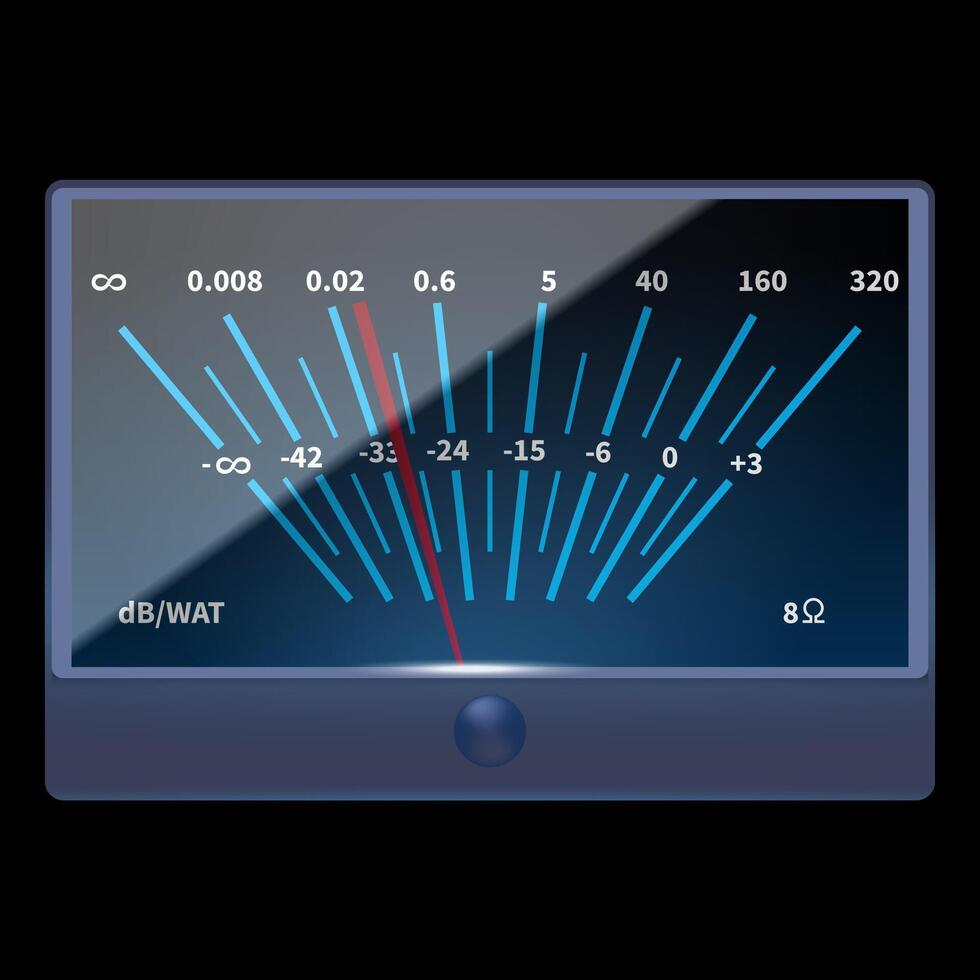
For example, when someone speaks into a microphone, the audio signal rises and falls with the speaker’s voice. A meter can show those changes so an operator can see whether the signal is very weak, at a useful level, or approaching an excessive level.
The term VU means “volume unit.” Professional audio systems have traditionally used VU meters to monitor average signal levels rather than simply showing every short peak. Shure explains that VU meters and peak program meters perform related jobs but respond differently: a VU meter represents average level, while a peak meter focuses on signal peaks.
This distinction is important because a meter that looks similar to a VU meter is not necessarily measuring exactly the same thing.
Why Do People Search for Bumetro?
The unusual spelling can lead people to search for bumetro because they have seen the term in a product description, electronics project, audio forum, software interface, video, or online article.
There are several possible reasons for this.
First, “bumetro” can appear as a misspelling of “vumetro.” Spanish and some other languages use forms of the word “vúmetro” to describe a VU meter. The Office québécois de la langue française lists “vumètre” and “VU-mètre” as terms corresponding to the English “volume unit meter.”
Second, hobby electronics communities sometimes use informal spellings. Search results for Arduino projects, for example, contain references to “bumetro” while the surrounding discussion identifies the intended device as a VU meter or audio level indicator.
Third, newer websites may use Bumetro as a name for an urban-mobility idea. However, these pages should be treated carefully unless they provide evidence from an established company, transportation authority, or recognized technology organization.
The safest interpretation is therefore to examine the context in which the word appears.
Bumetro and VU Meter: Are They the Same Thing?
In audio and electronics contexts, bumetro is often intended to mean VU meter or vumetro.
A VU meter is a visual monitoring tool. It does not make audio louder, improve the quality of a microphone, or automatically fix distortion. Its main job is to help a person understand the level of an audio signal.
A simple example is a recording studio.
Imagine that a singer is recording vocals. If the microphone input is set too low, the recorded signal may be unnecessarily weak. If the input is set too high, the signal can become distorted or clipped. Watching a suitable audio meter gives the engineer another source of information while setting the gain.
Modern digital systems often use several kinds of meters at once. A loudness meter, RMS-style meter, VU meter, peak meter, and true-peak meter can each provide different information.
This is why saying “bumetro measures volume” is only a rough description. A more accurate explanation is that the term may refer to a visual audio-level meter, particularly a VU-style meter.
What Does VU Mean?
VU stands for Volume Unit.
The term was developed for audio signal measurement and became an important part of professional audio practice. The VU meter was created to provide a standardized way to visually represent the level of an audio signal.
A traditional VU meter uses a needle that moves across a scale. Modern versions may use LEDs or software graphics instead.
The scale is normally expressed in VU or decibels relative to an appropriate reference.
One important point is that VU is not exactly the same as acoustic loudness measured at a listener’s ears. A VU meter is monitoring an electrical or digital audio signal within a system.
This difference matters because a microphone signal, mixer output, amplifier input, and sound-pressure level in a room are different measurements.
How Does a Bumetro or VU Meter Work?
The exact internal operation depends on the design, but the basic process can be explained easily.
An audio source creates an electrical signal.
That signal enters an audio circuit or software system.
The system analyzes the signal level.
The meter converts the measured information into movement, illuminated bars, or a graphical display.
The user watches the display and adjusts the system if necessary.
In a traditional analog meter, the signal is processed and used to drive a meter movement. In a modern digital system, software can calculate a level from digital audio samples and display it on a screen.
The visual response also matters.
A true VU meter has defined response characteristics. Traditional VU behavior is intentionally slower than an instantaneous peak indicator. This helps the display follow average program level rather than jumping dramatically for every tiny transient.
This is one reason a VU meter can appear smooth while a peak meter can look much more active.
Bumetro vs. Peak Meter
One of the most important concepts for understanding a bumetro or VU-style meter is the difference between average level and peak level.
A VU meter primarily represents average signal level.
A peak meter is designed to show short-term peaks.
Consider a snare drum. The initial attack can be extremely fast. A VU meter may not fully show that brief peak because its response is designed around average program level. A peak meter can reveal the transient much more clearly.
Shure describes the difference by noting that VU meters display average volume while peak program meters display peak volume. For complex audio such as speech or music, the difference between average and peak levels can be substantial.
This means a recording can look comfortable on a VU meter while still containing peaks that need careful attention.
For digital recording, this is particularly important because digital clipping can occur when the signal reaches or exceeds the system’s maximum level.
Also Read: Blazertje: Meaning, Style Guide, History & How to Wear It
Why VU Metering Still Matters
Modern audio software can display extremely detailed information, so it is reasonable to ask why traditional VU-style metering remains useful.
The answer is that different meters answer different questions.
A peak meter can tell you how close a signal is to its maximum instantaneous level.
A VU meter can give you a better visual sense of the general operating level.
A loudness meter can provide information about perceived program loudness over longer periods.
A spectrum analyzer can show how energy is distributed across frequencies.
No single meter provides every piece of information.
This is an important insight when interpreting the word bumetro. If someone is using it to describe an audio-level display, the useful question is not simply “Does it show sound?” but “What aspect of the sound level does it show?”
Common Forms of Bumetro or VU Meter
A VU-style meter can take several physical and digital forms.
Analog Needle Meter
The classic design uses a moving needle.
This type of meter is still popular because it is easy to understand and visually appealing. It is found in some studio equipment, vintage audio devices, amplifiers, and specialist hardware.
The needle moves across a calibrated scale as the audio level changes.
LED Bar Meter
An LED meter uses a series of lights.
As the signal becomes stronger, more LEDs illuminate. Different sections may represent different level ranges.
This design is common in mixers, audio interfaces, amplifiers, car audio equipment, and electronic projects.
Software VU Meter
A software meter is displayed on a computer, tablet, or other digital device.
Digital audio workstations commonly provide level meters as part of their mixer interfaces. Software can also create decorative or functional VU meters for music playback.
A software implementation can provide additional information such as peak hold, stereo balance, numerical levels, and different scales.
DIY Arduino Meter
Electronics hobbyists can build simple VU-style displays using microcontrollers such as Arduino.
Projects can connect an audio source or microphone circuit to an analog input, process the signal, and illuminate LEDs according to the measured level.
Arduino-related examples show that a simple LED audio indicator can be constructed without requiring a large professional audio system.
This type of project is useful for learning about analog signals, voltage levels, signal conditioning, programming, and LEDs.
How a DIY Bumetro Project Works
A beginner electronics project can be built around a microphone or line-level audio source, a signal-conditioning circuit, a microcontroller, and LEDs.
The microphone captures sound.
A microphone circuit converts acoustic energy into an electrical signal.
The signal is conditioned so that it is suitable for the input circuit.
A microcontroller reads the changing signal.
Software determines the approximate signal level.
LEDs are activated according to the measured range.
The result is a simple visual display that responds to sound.
However, a microphone should not simply be connected to an Arduino input without considering the electrical requirements. Microphones can produce very small signals, and some microphone types require biasing or a preamplifier.
For a safe beginner project, it is better to use a properly designed microphone module or suitable audio-level circuit rather than connecting an unknown microphone directly to a microcontroller.
What Does a Bumetro Display Actually Tell You?
If bumetro is being used as a VU meter, its display tells you about signal level.
It does not automatically tell you:
- whether the recording sounds good
- whether the microphone is good
- whether the room has good acoustics
- whether the music is balanced
- whether the signal contains unwanted noise
- whether the listener thinks the audio is pleasant
This distinction is often overlooked.
A signal can have a healthy meter reading and still sound bad.
For example, a poorly placed microphone may capture too much room reflection. The meter can show a perfectly normal level even though the recording sounds distant.
Similarly, a distorted microphone can produce an acceptable-looking level while still sounding unpleasant.
Metering is therefore a tool for technical control, not a substitute for listening.
Understanding 0 VU
The meaning of 0 VU depends on the calibration of the system.
In traditional professional analog audio, 0 VU is commonly associated with a nominal reference level. A classic reference is +4 dBu, equivalent to about 1.228 volts RMS under the relevant conditions.
However, modern digital systems require a different way of thinking.
Digital audio commonly uses dBFS, meaning decibels relative to full scale. In this system, 0 dBFS represents the maximum digital level. Digital levels below that are expressed using negative numbers.
This is why someone should not automatically assume that “0” means the same thing on every audio meter.
A 0 VU reading on one calibrated analog system and 0 dBFS on a digital system are not interchangeable concepts.
Bumetro and dBFS
When a VU-style meter is implemented in digital audio software, the display may be connected to a digital scale.
dBFS is commonly used for digital signal levels.
The closer a digital signal gets to 0 dBFS, the less remaining headroom exists before the maximum digital value is reached.
Once a signal is clipped in a digital system, the resulting distortion can be difficult or impossible to repair completely.
This is why many digital recording workflows leave headroom rather than trying to record every signal as close to 0 dBFS as possible.
Some modern audio tools recommend working around particular target ranges, but the correct level depends on the recording system, equipment, workflow, and intended use. A general-purpose VU meter should therefore be interpreted according to its own calibration rather than a single universal number.
Why Headroom Is Important
Headroom is the amount of space between the normal operating level and the maximum level a system can handle.
Suppose a speaker normally talks at a moderate level but suddenly laughs loudly. If the recording system has enough headroom, that louder moment can be captured without clipping.
If the system has almost no headroom, the sudden increase can overload the input.
A VU meter can help an operator maintain a sensible working level, but a peak meter is often needed to see fast transients.
This is one of the strongest reasons to use multiple forms of metering in professional audio.
Bumetro in Recording Studios
Recording studios are one of the most obvious places where VU-style metering has practical value.
A studio may use meters on microphone preamps, mixing consoles, compressors, audio interfaces, outboard equipment, and software.
The engineer may watch the input level while listening to the performance.
For vocals, the meter can help show the general level of the performance.
For instruments, it can help with gain staging.
For a mixer, meters can show whether individual channels or the master bus are receiving an appropriate signal.
The important principle is that the meter supports the engineer’s judgment. It does not replace the engineer’s ears.
Bumetro in Broadcasting
Broadcast environments have long depended on audio-level monitoring.
Radio and television systems need consistent, controlled audio levels. Operators must avoid signals that are too weak while also preventing excessive levels and distortion.
Historical VU metering became important in broadcast and telephone-related signal standardization.
Modern broadcast systems use more advanced metering standards and loudness measurements, but the basic need remains the same: audio operators need reliable visual information about signal levels.
Bumetro in Live Sound
Live sound engineers also rely on visual metering.
During a concert, an engineer may be monitoring dozens of channels.
The meter can provide a quick warning when a channel becomes unusually strong or weak.
However, live audio is more complicated than simply keeping every meter at one number.
A singer may have a much wider dynamic range than a keyboard. A kick drum may contain strong short peaks. A guitar amplifier can have a different signal pattern from a spoken microphone.
Therefore, good live sound requires gain structure, listening, microphone technique, system tuning, and appropriate metering.
Bumetro in Music Production Software
Software has made audio metering more accessible than ever.
A modern digital audio workstation can display meters for individual tracks, buses, effects, and the master output.
Some plugins provide classic needle-style VU displays. Others use LED-style graphics.
Software meters may also combine multiple measurement types.
For example, one interface may show average level, peak level, peak hold, and stereo information simultaneously.
This is useful because music has complex dynamics.
Also Read: InSnoop: The Anonymous Instagram Story Viewer
A highly compressed song may remain close to a similar level for long periods. A classical performance can move from extremely quiet passages to powerful peaks. Both recordings can require completely different approaches to level management.
Bumetro and Microphones
A microphone does not measure loudness in the same way that a human ear does.
It converts changes in air pressure into an electrical signal.
That electrical signal then moves through a signal chain.
A typical chain might look like this:
Sound source → microphone → preamplifier → mixer or interface → digital system → meter → recording or playback system.
A VU-style meter can be placed at different points in this chain.
This matters because a healthy level at one point does not necessarily mean the entire chain is correctly configured.
For example, a microphone preamp may be overloaded before the signal reaches a later meter. The later meter might not clearly reveal the problem.
Good gain staging therefore requires understanding where each meter is located.
Common Misunderstandings About Bumetro
Several misconceptions can make the term confusing.
Bumetro Is Not a Standard Measurement Unit
Bumetro itself is not a recognized universal audio measurement unit.
The established term is VU, or Volume Unit, when discussing a standard VU meter.
A VU Meter Does Not Measure Room Loudness
A VU meter usually monitors an electrical or digital audio signal.
It is not automatically an SPL meter.
Sound pressure level is generally measured in decibels SPL using an appropriate sound-level meter.
A VU Meter Does Not Show Every Peak
Traditional VU behavior is relatively slow.
A fast transient can be much higher than the level suggested by the VU needle.
A Meter Cannot Tell You Whether Audio Sounds Good
Good audio depends on many factors.
A technically healthy signal can still sound noisy, harsh, dull, muddy, or badly balanced.
Red Does Not Always Mean the Same Thing
Different equipment uses different meter designs and calibration systems. Users should consult the equipment documentation instead of assuming that every red section means exactly the same thing.
Bumetro vs. Loudness Meter
Loudness metering has become increasingly important in modern audio.
A loudness meter attempts to represent perceived loudness over a defined time period and may follow standardized measurement approaches.
A VU meter is different.
VU metering is traditionally associated with average electrical signal level and specific meter ballistics.
Loudness measurement can consider factors that better correspond with how people perceive program loudness.
For modern streaming, broadcast, and post-production workflows, loudness standards can therefore be more useful than simply watching a traditional VU meter.
Bumetro vs. RMS Meter
RMS stands for root mean square.
RMS-based measurement provides information about the energy or effective level of a signal over a period.
A traditional VU meter has a particular response and calibration behavior. Although VU readings and RMS measurements can sometimes appear similar, they should not automatically be treated as identical.
The difference becomes especially important with dynamic signals.
Two audio signals can have similar average measurements while having very different peak structures.
Bumetro vs. Spectrum Analyzer
A VU meter and spectrum analyzer answer completely different questions.
A VU meter focuses on signal level.
A spectrum analyzer shows how energy is distributed across frequencies.
For example, a recording might have an acceptable overall meter level but too much low-frequency energy.
The VU meter alone would not explain the problem.
A spectrum analyzer could reveal excessive energy in the bass region.
This is why professional audio workflows use several visual tools instead of relying on a single meter.
Can Bumetro Be Used for Home Audio?
Yes, if the term is being used to describe a VU-style display.
Home audio equipment can use visual meters to make music playback more engaging. Some amplifiers and receivers include meters for both practical and decorative reasons.
A home user can also install software meters on a computer.
However, the meter should not be treated as a precise indicator of how loud the music sounds in the room.
Speaker sensitivity, amplifier power, room acoustics, listening distance, and frequency content all affect perceived loudness.
Can You Build a Bumetro at Home?
A simple VU-style display can be built as a hobby electronics project.
The project may include:
- a microphone or line-level audio source
- a suitable input circuit
- signal conditioning
- a microcontroller or dedicated meter circuit
- LEDs
- resistors
- a power supply
- software, if a programmable controller is used
The easiest beginner approach is usually an existing audio-level sensor or microphone module combined with an LED display.
A more advanced project can process the audio digitally and calculate an average or RMS-like value before controlling the LEDs.
Arduino projects have demonstrated simple LED-based meters that convert measured voltage ranges into visual levels.
Safety Considerations for DIY Bumetro Projects
Even a small electronics project deserves basic safety precautions.
Do not connect unknown audio equipment directly to a microcontroller without understanding the voltage range.
Do not connect a household mains supply to a homemade circuit unless the design is specifically engineered for mains voltage and you have the required technical knowledge.
Use an appropriate low-voltage power source for beginner projects.
Keep the signal level within the input range of the electronics.
Use current-limiting resistors with LEDs when required.
If the project connects to professional audio equipment, understand whether the connection is balanced or unbalanced and whether the signal level is compatible.
These simple precautions can prevent damaged equipment and electrical hazards.
How to Choose a VU Meter
If you are shopping for a device that is described as a bumetro or VU meter, start by identifying what you actually need.
For a recording studio, look for accurate and appropriately calibrated metering.
For a home audio system, appearance may matter as much as technical specifications.
For a DIY project, simplicity and compatibility are more important.
For broadcast work, the meter should meet the relevant technical requirements.
For software, check whether the meter provides average, peak, RMS, loudness, or other measurements.
Do not purchase a product simply because its display looks like a VU meter. Read what the manufacturer says the meter actually measures.
How to Read a VU Meter
Reading a basic VU meter is straightforward.
The scale usually moves from a lower level on the left toward a higher level on the right.
As the audio signal becomes stronger, the indicator moves upward or toward the right.
A signal around the nominal operating region is generally considered healthy for the system’s calibration.
A reading that stays extremely low may indicate that the signal is too weak.
A reading that remains excessively high may indicate that the system is being driven too hard.
But the correct target depends on the equipment and calibration.
This is why there is no universal instruction such as “always keep the bumetro at exactly this number.”
Why Digital Audio Makes Metering More Complex
Digital audio has changed the way engineers think about levels.
Analog systems have traditionally allowed a certain amount of level above nominal operating level before serious distortion occurs.
Digital systems have a hard upper boundary.
This makes peak management particularly important.
A digital meter can show a signal that appears comfortable on an average-level display while short peaks approach the maximum.
Modern production systems therefore often combine average-level displays with peak or true-peak indicators.
A good workflow does not simply ask whether the average level looks good. It also asks whether short peaks remain under control.
The Role of Metering in Better Audio Quality
Metering is most useful when it supports a broader workflow.
A good recording begins with a suitable sound source.
Microphone placement matters.
Room acoustics matter.
Gain staging matters.
Signal processing matters.
Monitoring matters.
Metering provides visual confirmation.
This is a useful way to think about bumetro: if the term is referring to a VU-style meter, it is one component in a much larger audio-production system.
The meter cannot compensate for poor recording technique.
Bumetro in Education
A simple VU meter can be an excellent teaching project.
Students can learn about:
- sound waves
- microphones
- voltage
- analog signals
- digital sampling
- microcontrollers
- programming
- LEDs
- signal levels
- calibration
A project can start with a simple microphone and a few LEDs.
Students can then improve it by adding more LEDs, a graphical display, stereo channels, peak detection, adjustable sensitivity, or a computer interface.
This makes the concept useful beyond entertainment.
It connects physics, electronics, computer science, and audio engineering in one practical project.
Bumetro and Modern Smart Devices
Software has made it possible to create sophisticated meters using ordinary computers and mobile devices.
A modern application can analyze an audio stream in real time and display level information.
More advanced software can calculate multiple measurements at once.
However, the quality of the result depends on the device’s input hardware, software algorithm, calibration, and measurement standard.
A smartphone microphone meter, for example, should not automatically be treated as a professional sound-level measurement instrument.
The same principle applies to any software that calls itself a meter.
Is Bumetro an Urban Transportation Platform?
Some recent web content presents Bumetro as a concept related to urban mobility and transportation. One 2026 article describes Bumetro as an emerging urban-mobility idea focused on making city transportation more convenient and sustainable.
However, this usage should be approached cautiously.
There is a major difference between a term appearing on a website and a technology being established as an official transportation service.
For a U.S. reader researching a transportation product, it would be wise to look for independent confirmation from government transportation agencies, established companies, official documentation, app stores, or reputable transportation publications before assuming that Bumetro is a recognized operating service.
This is especially important because unusual keywords can be reused by unrelated websites.
How to Understand Bumetro in Search Results
If you encounter the word bumetro online, examine the surrounding information.
Ask:
What industry is being discussed?
Is the page talking about audio?
Does it mention VU meters?
Is it an electronics project?
Is it a product name?
Does it discuss transportation?
Is there an official company or organization behind the term?
Are there technical specifications?
Are reputable sources cited?
This approach is more reliable than assuming that every page using the keyword is describing the same thing.
Why the Term Bumetro Can Be Confusing
Search engines often connect similar spellings.
Words such as bumetro, vumetro, vúmetro, VU meter, volume meter, audio meter, and sound-level indicator may appear close together because users and websites do not always use terminology consistently.
For SEO purposes, this creates a special challenge.
A useful article should not pretend that an uncertain keyword has a definition that does not exist.
Instead, it should explain the likely meaning, identify related terms, and clearly separate established terminology from newer or less-supported uses.
That approach is also better for readers because it avoids creating false confidence.
The Importance of Accurate Terminology
Technical language matters.
Calling every audio meter a VU meter can cause confusion.
Calling a sound-pressure meter a VU meter is incorrect.
Calling a peak meter a traditional VU meter is also inaccurate.
Likewise, treating an informal spelling such as bumetro as a formally standardized technical term can mislead readers.
The established English term is VU meter.
The term “VU meter” is defined as a meter used with sound-reproducing or recording equipment to indicate average sound levels.
This gives readers a reliable foundation for further research.
How Professionals Use Meters More Effectively
Experienced audio professionals do not watch one meter and make every decision from it.
They combine visual information with listening.
For example, an engineer may monitor the channel meter, bus meter, master peak meter, and loudness meter while also listening through accurate monitoring speakers or headphones.
If a vocal sounds distorted but the main meter looks normal, the engineer investigates the signal path.
Also Read: Foenegriek: Benefits, Uses, Nutrition, Safety, and What Science Says
If the master level is healthy but the mix sounds too bass-heavy, frequency analysis may be used.
If a recording is technically clean but feels too loud compared with other content, loudness measurements may be considered.
This broader approach is much more reliable than focusing on the bumetro keyword alone.
The Future of Audio Metering
Audio metering continues to evolve.
Traditional needle meters remain popular because they are simple and visually intuitive.
LED meters provide fast visual feedback.
Software meters can provide much more information.
Modern systems can combine peak detection, loudness analysis, spectrum analysis, stereo information, and historical level tracking.
Artificial intelligence and advanced signal processing may also make automated audio analysis more useful.
However, the basic purpose remains unchanged: people need understandable information about audio signals.
Whether the display is a physical needle or a sophisticated software interface, metering remains an important part of audio production.
Frequently Asked Questions About Bumetro
Is bumetro a real word?
Bumetro is not a universally standardized English technical term. In many audio-related contexts, it appears to be an informal spelling or variation associated with “vumetro” or “VU meter.”
What is the correct term for bumetro in audio?
The established English term is “VU meter,” which means Volume Unit meter. In Spanish, “vúmetro” is used for the same general concept.
What does a VU meter measure?
A VU meter represents the level of an audio signal, traditionally emphasizing average signal level rather than instantaneous peaks.
Does bumetro measure decibels?
If bumetro refers to a VU-style audio meter, its scale may be expressed in volume units or a related decibel reference. The exact scale depends on the equipment.
Is a VU meter the same as a peak meter?
No. A VU meter primarily represents average level, while a peak meter is designed to capture short signal peaks.
Can I use a VU meter for vocals?
Yes. VU metering can be useful when recording vocals because it gives a visual indication of the general signal level. However, peak metering is also useful for detecting fast transients.
Can I build a bumetro with Arduino?
Yes, if by bumetro you mean a simple VU-style LED audio meter. Arduino-based projects can read a suitable signal and control LEDs according to signal strength.
Is a VU meter useful for beginners?
Yes. It is one of the easiest ways for beginners to understand the relationship between an audio signal and a visual level display.
Does a VU meter tell me how loud my room is?
Not necessarily. A VU meter generally monitors an audio signal in an electronic or digital system. Measuring room sound pressure requires an appropriate SPL measurement system.
Why does my VU meter move slowly?
Traditional VU meters intentionally use a relatively slow response so that the display represents average program level rather than reacting dramatically to every short peak.
Why does my peak meter move more than my VU meter?
Peak meters respond to short and fast changes that a traditional VU meter may not show fully.
What is 0 VU?
0 VU is a nominal reference point whose exact electrical meaning depends on the system’s calibration. In traditional professional analog audio, 0 VU is commonly associated with +4 dBu.
Is 0 VU the same as 0 dBFS?
No. They belong to different reference systems. Digital audio uses dBFS, where 0 dBFS represents the maximum digital level.
Can a VU meter prevent clipping?
Not by itself. It can help manage average levels, but peak or true-peak metering is also important for identifying fast peaks that could cause digital clipping.
Are LED meters accurate?
They can be accurate when properly designed and calibrated. However, an LED display may be a decorative indicator rather than a standardized measurement instrument, so specifications matter.
Is bumetro related to public transportation?
Some recent web pages use Bumetro in an urban-mobility context, but there is not enough authoritative evidence to treat it as a universally recognized U.S. transportation system. Readers should verify any transportation claim through official sources.
Why are there different spellings of bumetro?
The variation may result from informal spelling, language differences, transliteration, or confusion with the established term “vumetro” or “VU meter.”
What should I search for if I want reliable information about bumetro?
For audio-related information, search for “VU meter,” “Volume Unit meter,” “vúmetro,” “audio level meter,” or “peak meter.” These terms have clearer technical meanings.
Final Thoughts on Bumetro
The most important thing to understand about bumetro is that the word does not have one universally established meaning.
In audio and electronics discussions, it is frequently connected with “vumetro” or “VU meter,” a device used to provide a visual representation of audio signal level. VU meters have a long history in recording, broadcasting, mixing, and sound equipment, and the basic idea remains useful today.
A VU meter is valuable because it turns an invisible electrical or digital audio signal into something the user can see. That visual information can make gain staging, recording, mixing, and troubleshooting easier.
At the same time, a VU meter is not the same as a peak meter, loudness meter, spectrum analyzer, or SPL meter. Each measurement tool provides different information.
The spelling “bumetro” should therefore be interpreted according to context. If it appears in an electronics project, it may be referring to a simple VU-style audio indicator. If it appears in a Spanish-language context, it may relate to “vúmetro.” If it appears in an urban-mobility article, the reader should verify whether the term represents a genuine transportation service, a developing concept, or simply a website-specific name.
For anyone researching bumetro today, the best approach is not to rely on the keyword alone. Look at the industry, technical terminology, supporting evidence, and source quality. This helps separate established information from informal usage.
Ultimately, the most useful established concept behind many uses of bumetro is the VU meter: a practical visual tool that helps people understand audio signal levels. Although modern software offers far more advanced measurement options, the simple idea of watching an audio signal rise and fall remains useful in studios, broadcasting, live sound, education, electronics projects, and home audio.
That combination of simple visual feedback and practical technical value explains why VU-style metering continues to appear in both classic equipment and modern digital systems.